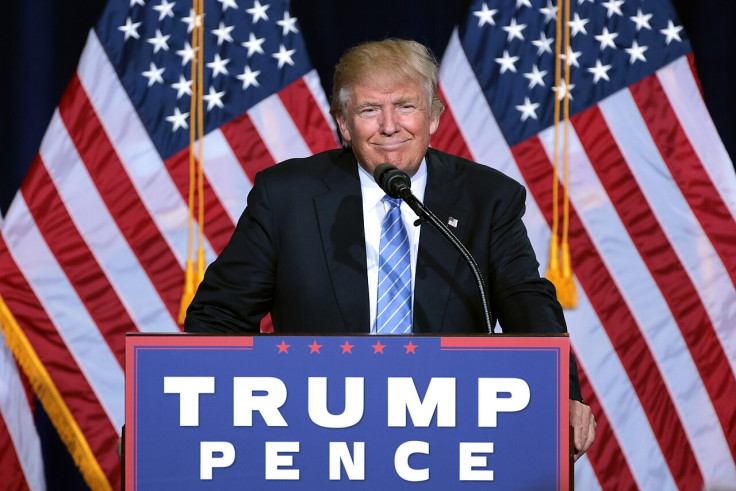
Donald Trump said on Saturday that the US and Iran were close to a deal to end the war and reopen the Strait of Hormuz, but the details remain murky and both sides appear to be describing the talks differently. The president said the agreement had been 'largely negotiated,' while Iranian officials signalled that they were still working through a memorandum of understanding and had not settled the nuclear question.
The news came after several days of urgent diplomacy aimed at stopping the conflict from widening again. Trump had recently threatened fresh strikes on Iran, while Tehran responded with increasingly blunt rhetoric, leaving the weekend announcement somewhere between breakthrough and placeholder.
BREAKING: US offering 'significant' sanctions relief for 'serious' Iranian deal on nuclear material, doesn't expect to sign agreement Sunday, senior administration official tells Fox News' @TreyYingst https://t.co/epqut0JvnU
— Fox News (@FoxNews) May 24, 2026
US and Iran Still Divided Over Key Terms
Trump's social media post suggested a deal had moved beyond the casual stages and into something resembling a draft agreement. He said he had spoken with Arab leaders, as well as officials in Pakistan and Turkey, about a memorandum of understanding 'pertaining to PEACE,' and said the arrangement was subject to finalisation by the US, Iran and other countries involved.
Iran's Foreign Ministry spokesman, Esmail Baghaei, was also careful in his wording. He said Tehran was in the 'final stage' of drafting a memorandum of understanding and could reach a 'mutually acceptable solution,' but that phrasing was notably less dramatic than Trump's claim that an agreement had already been largely negotiated. In diplomacy, the difference between a framework and a deal is usually where the trouble begins.
Netanyahu: Trump agrees Iran deal must dismantle enrichment sites, remove nuclear material
— Ynet Global (@ynetnews) May 24, 2026
Trump says talks with Tehran are moving forward but warns there can be no mistakes, as Iranian officials dispute his claims on Hormuz and wa...https://t.co/vK2Ly27Mx4 pic.twitter.com/hGUhTSNcCq
Two US officials, speaking on condition of anonymity, said that one of the key issues under discussion involves Iran relinquishing its stockpile of highly enriched uranium. They added that the specific mechanisms for carrying this out would likely be addressed in subsequent rounds of negotiations on Iran's nuclear programme.
On the Iranian side, three senior officials presented a different account, stating that the proposed memorandum would include provisions to halt fighting on all fronts, reopen the Strait of Hormuz without tolls, lift the US naval blockade on Iran, and unlock approximately $25 billion in frozen assets.
It is not yet clear whether both governments are even describing the same proposal. That uncertainty sits at the centre of the story. A ceasefire can be announced in one capital and argued over in the other before the ink is dry.
Trump announced deal is imminent, matter of hours to finalise details, SoH will open and everyone is on board. In last hours we learned:
— Tyrael21 (@Tyrael21X) May 24, 2026
1) Iran keeps SoH control, Rubio said this is no go
2) nuclear not discussed now
3)Israel and UAE are against it
Just bizarre 🤡 pic.twitter.com/XSAA4cp7FA
Iran's Nuclear Stockpile Remains the Biggest Obstacle
The most awkward part of the emerging deal is also the most dangerous, Iran's nuclear stockpile. The International Atomic Energy Agency says Iran holds about 970 pounds of uranium enriched to 60%, a level far beyond civilian use and uncomfortably close to weapons-grade.
Under the 2015 nuclear deal, Iran handed over most of its stockpile to a monitored arrangement, and that model may be back on the table in some form. Another possibility would be to dilute the uranium to lower enrichment levels that could not be quickly turned into a weapon. The technical answers are still missing, though, and that may be the point. The current talks appear to be trying to separate the war from the nuclear file, even if the two are plainly connected.
#UPDATE on US-Iran peace deal:
— CGTN (@CGTNOfficial) May 24, 2026
- US President Donald Trump said on Saturday that a peace agreement with Iran has been "largely negotiated," pending finalization among the US, Iran and other countries in the Middle East.
- "In addition to many other elements of the… https://t.co/hYdagSUxzs pic.twitter.com/znT6D5KRgK
The officials said the United States has sought a 20-year moratorium on enrichment, while Iran has argued for a much shorter timeline. That is the sort of gulf that has broken previous negotiations before they ever became politically usable. For now, the best description may be that both sides are inching around the same problem rather than solving it.
Political Resistance
Even the hint of a deal was enough to draw fire from hawkish Republicans and allies of Israel. Senator Roger Wicker, who chairs the Senate Armed Services Committee, wrote before Trump's announcement that a 'rumored 60-day cease-fire' based on trust in Iran would be a 'disaster.'
BREAKING: US offering 'significant' sanctions relief for 'serious' Iranian deal on nuclear material, doesn't expect to sign agreement Sunday -FOX
— Breaking911 (@Breaking911) May 24, 2026
An Israeli official said Benjamin Netanyahu discussed the proposal with Trump on Saturday and described it as an understanding about reopening the Strait of Hormuz, which would then unlock broader talks on ending the war. The official also said Netanyahu told Trump the arrangement would not limit Israel's ability to act against threats, including in Lebanon. The war may be framed as a bilateral deal, but the region keeps poking through the edges.
Hezbollah's clashes with Israel have already strained the ceasefire that Trump announced in April, and that history is making this new push harder to read with confidence. There is a version of events in which this becomes a genuine step back from war. There is another in which it becomes one more provisional document, discussed, floated and fought over while everyone waits for the next phone call.
NOW: Speaker Johnson reveals President Trump is going to STUN the critics and go full America First on the Iran deal
— Sergeant News Network (@sgtnewsnetwork) May 24, 2026
"Iran will not have a nuclear weapon, we'll take care of the nuclear dust, we'll get the Strait of Hormuz reopened, great for gas prices...ALL the regional allies… pic.twitter.com/OPxJnkYot1
Unresolved Nuclear Dispute
The Strait of Hormuz is at the heart of the bargaining because it matters far beyond the war itself. Any reopening of the waterway would affect global shipping and give Iran a powerful economic lever, especially if tolls were lifted and access to frozen assets were restored. But those are exactly the kinds of concessions that tend to unravel when the nuclear details remain unresolved.
For all the noise, the basic fact is this, the US and Iran are talking, but they are not yet telling the same story. Trump has chosen the language of momentum. Tehran has chosen the language of a draft. The gap between the two may decide whether this becomes diplomacy or just another paper promise drifting through a very dangerous week.