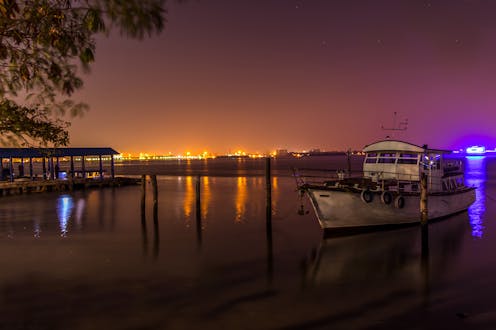
Cities are artificially lit to allow humans to make use of the night. This light pollution means that stars are often barely visible in urban skies. But reduced stargazing is not the only impact of artificial light at night.
Urban development in coastal areas is increasingly exposing marine ecosystems to artificial light. This exposure is particularly acute in and near some of the world’s largest coastal cities and may carry physiological and behavioural consequences for the organisms that inhabit their coastal waters.