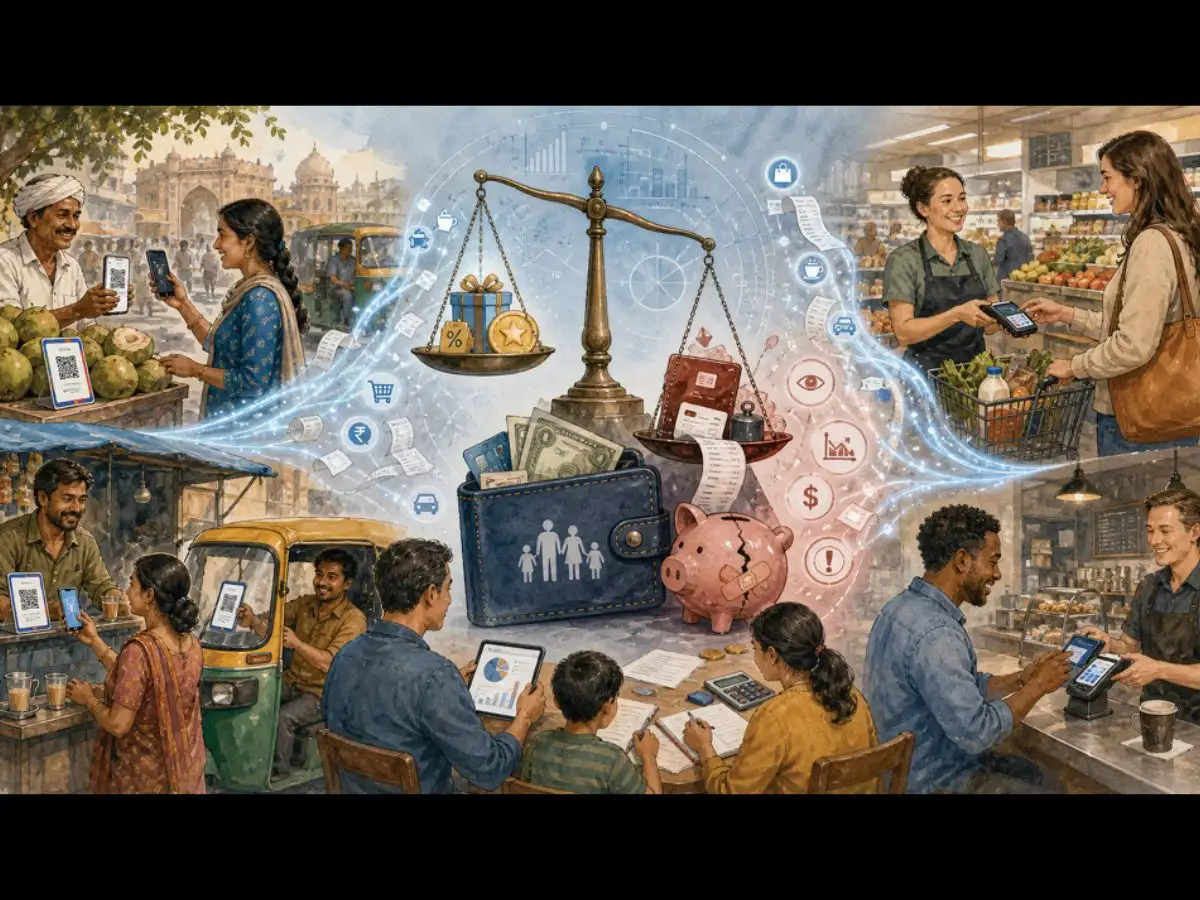
While travelling in India, it is beautiful to see the widespread acceptance of cashless payments. From coconut vendors to the auto rickshaw drivers, roadside tea stalls to the fancy restaurants, everywhere consumers happily pay off for their purchases with their smartphones and merchants are loath to accept cash. In the United States, it is common to see consumers swipe their credit cards to make payments big and small. How do these systems impact household personal finance?
The Indian system has often been reliant on an electronic debit card, with money drawn from the user’s bank account. Households may be spending more due to the ease of payment. Behavioural scientists refer to cashless consumption as ‘the separation of the pleasure of purchase and the pain of payment’. Consumers may be overstepping their paying capability due to this separation. In the Indian case, the payments come from the user’s bank balance, which is immediately reduced after making it.