Get all your news in one place.
100's of premium titles.
One app.
Start reading
MyLifeXP
MyLifeXP
Lifestyle
Noopur Kumari

UPI MDR Explained: 5 Things Users Must Know Now

A new UPI rule has raised one big question among users: Will paying through UPI now cost extra? The answer is not as alarming as the headlines may suggest. From October 15, 2026, a new Merchant Discount Rate, or MDR, will apply to specified merchant transactions above ₹2,000. But there is an important detail many users may miss: MDR is not a customer charge. The government has clarified that individuals will continue to make UPI payments without transaction or platform fees.

P2P UPI Payments Stay Free

If you send ₹500 to a friend, ₹5,000 to a family member or even a larger amount through a person-to-person UPI transfer, the new MDR framework does not apply. The government has clearly stated that all P2P UPI transactions will remain free, regardless of the amount transferred. No transaction fee, platform fee or similar charge can be imposed on individuals for sending or receiving money through UPI. P2P transactions account for a substantial share of UPI value, so everyday transfers between individuals will continue without an MDR-related cost.

Payments Up to ₹2,000 Stay Free

The ₹2,000 figure is important, but it does not mean customers will suddenly be charged after crossing it. Under the new framework, P2M transactions up to ₹2,000 remain free of MDR. This covers many everyday payments such as buying groceries, ordering food or paying a local shop through a UPI QR code. The government says more than 95% of P2M transaction volume falls within the small-value category. This means the everyday UPI payments most people make will continue under the existing customer-free model.

What Happens Above ₹2,000?

This is where the new framework comes into play. A 0.4% MDR will apply to specified P2M transactions above ₹2,000. For transactions of ₹75,000 and above, the MDR is capped at ₹300 per transaction. The charge is part of the merchant payment ecosystem and is distributed among participating entities such as banks, payment service providers and UPI application providers. Most importantly, the government has clarified that MDR is not a fee collected from the customer. Banks have also been advised to ensure merchants do not pass this cost on to customers.

Small Merchants Get Protection

A ₹2,000-plus payment does not automatically mean every small shopkeeper will face MDR. The framework includes a separate zero-MDR provision for eligible small merchants. Small merchants, including street vendors and neighbourhood businesses receiving up to ₹1 lakh per month through UPI QR codes under the P2PM category, will continue to enjoy zero MDR on their transactions. This means the merchant's overall category matters, rather than simply looking at the amount of one individual payment. A qualifying small merchant receiving a payment above ₹2,000 does not automatically lose the zero-MDR benefit.

Essential Payments Have a Special Rate

Not every transaction above ₹2,000 follows the standard 0.4% structure. The government has specified a flat ₹5 MDR for transactions above ₹2,000 in certain essential and thin-margin sectors, including railways, telecommunications, insurance, fuel and agricultural inputs. There is also a separate rate for capital-market related payments such as mutual funds, securities, stockbrokers and dealers. These transactions attract an MDR of 0.02%, capped at ₹300 per transaction. The different rates show that the framework is based on transaction and merchant categories rather than applying one identical charge to every UPI payment.

UPI Apps Cannot Add Platform Fees

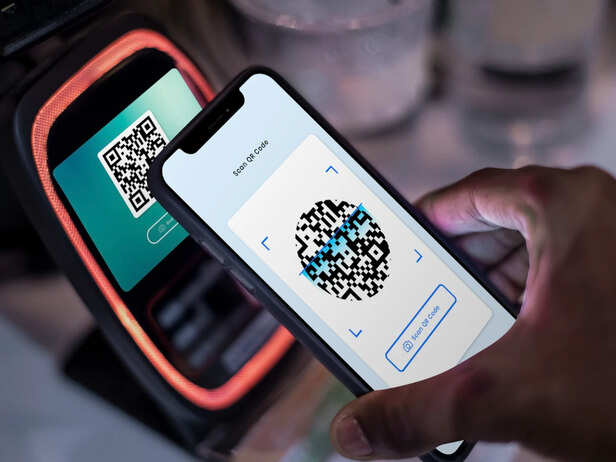
One of the biggest concerns is whether UPI apps could use the new MDR framework to introduce platform fees for users. The government has explicitly said that UPI application providers cannot impose platform fees or hidden charges on UPI payments. Individuals will also continue to have free UPI usage without monthly quotas, volume restrictions or tiered limits on free transactions. Daily transaction limits set by banks or NPCI are different. Those limits are security and risk-management measures, not fees. So scanning a QR code and paying a merchant does not itself create a new customer-side MDR charge.

Most Merchant Payments Stay Unaffected

The biggest takeaway is the scale of the change. According to the government's latest clarification, MDR will apply to only about 4% of merchant transactions, leaving approximately 96% of P2M transactions unaffected. The updated framework takes effect on October 15, 2026. Existing UPI QR infrastructure also does not need to be replaced simply because of these MDR provisions. For users, the practical message is straightforward: P2P payments remain free, merchant payments up to ₹2,000 remain free of MDR, and customers are not supposed to pay MDR. The new charge operates within the merchant-side payment ecosystem

Unlock insightful tips and inspiration on personal growth, productivity, and well-being. Stay motivated and updated with the latest at My Life XP

Sign up to read this article
Read news from 100's of titles, curated specifically for you.
Already a member? Sign in here
Related Stories
Top stories on inkl right now
One subscription that gives you access to news from hundreds of sites
Already a member? Sign in here
Our Picks
Fourteen days free
Download the app
One app. One membership.
100+ trusted global sources.