A student at the University of Kent who survived a meningitis infection has revealed the pain and fear of losing her ability to see and speak.
Law student Annabelle Mackay, 21, told the BBC she feels grateful to be alive after she was rushed to hospital with the severe infection.

Ms Mackay said she suspects she may have contracted meningitis during a night out at Club Chemistry in Canterbury on March 5, or at a different venue the evening prior.
She initially thought she was suffering from Covid-19 symptoms and took a test, which came back negative.
“Then I started to be quite delirious, and I wasn’t really making any sense and I was also really sensitive to light, so then that’s when I thought something was really, really wrong,” Ms Mackay said.
Confusion and an aversion to bright lights are among the symptoms of meningitis.

Other symptoms of meningitis and sepsis can include a high temperature, cold hands and feet, vomiting, muscle and joint pain, pale, mottled or blotchy skin, spots or a rash, a headache, a stiff neck, being very sleepy and seizures.
Footage shared with the BBC showed Ms Mackay, who was wearing a blindfold and headphones, being led out of the front door of a house by a woman holding her by her arms.
Ms Mackay said she lost the ability to talk and does not remember being taken to the hospital in an ambulance.
She said: “I was still in quite a state of delirium, and at that time I lost my sight as well, which was really scary, especially for my friends and family.
Symptoms of meningitis
NHS
Symptoms of meningitis include:
- a high temperature
- cold hands and feet
- vomiting
- confusion
- breathing quickly
- muscle and joint pain
- pale, mottled or blotchy skin (this may be harder to see on brown or black skin)
- spots or a rash (this may be harder to see on brown or black skin)
- headache
- a stiff neck
- a dislike of bright lights
- being very sleepy or difficult to wake
- fits (seizures)
“I wasn’t paying as much attention to it because I was just in so much pain in my body that I didn’t have time to process that I couldn’t see, but it was definitely really scary for my family and my friends.”
“I feel so grateful to be alive and be here. I’m still dealing with the after-effects now, but I think I just need to focus on my recovery and getting better and back to myself.”
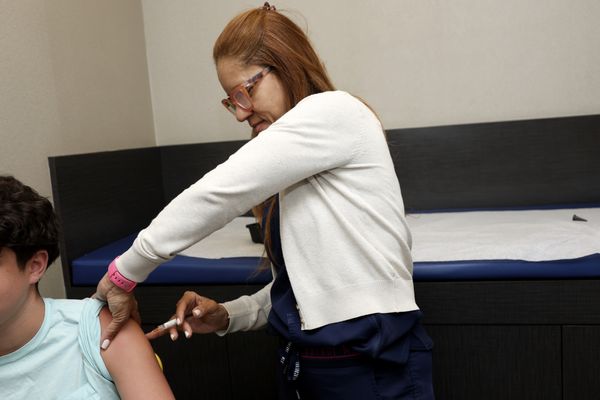
More than 100 students queuing for meningitis vaccines at the University of Kent campus in Canterbury were turned away on Friday, as Kent County Council’s director of public health Anjan Ghosh said “sporadic” household clusters could appear in other parts of the UK.
The UK Health Security Agency (UKHSA) said earlier on Friday that the number of cases linked to the outbreak has reached 29, up from 27.
Some 18 cases have been confirmed, alongside a further 11 “probable cases” – all with links to Kent, the UKHSA said.
Meningitis B latest: ‘Worst case scenario’ super-spreader warning issued
Thousands to gather for enthronement of first female Archbishop of Canterbury
Health chiefs warn deadly meningitis strain mutation could be fuelling rapid spread
How pythons could be the key to the next weight-loss drug
Americans still know about alcohol’s link to an increased cancer risk
Dietician who lied her way into NHS despite not knowing ‘basic anatomy’ banned