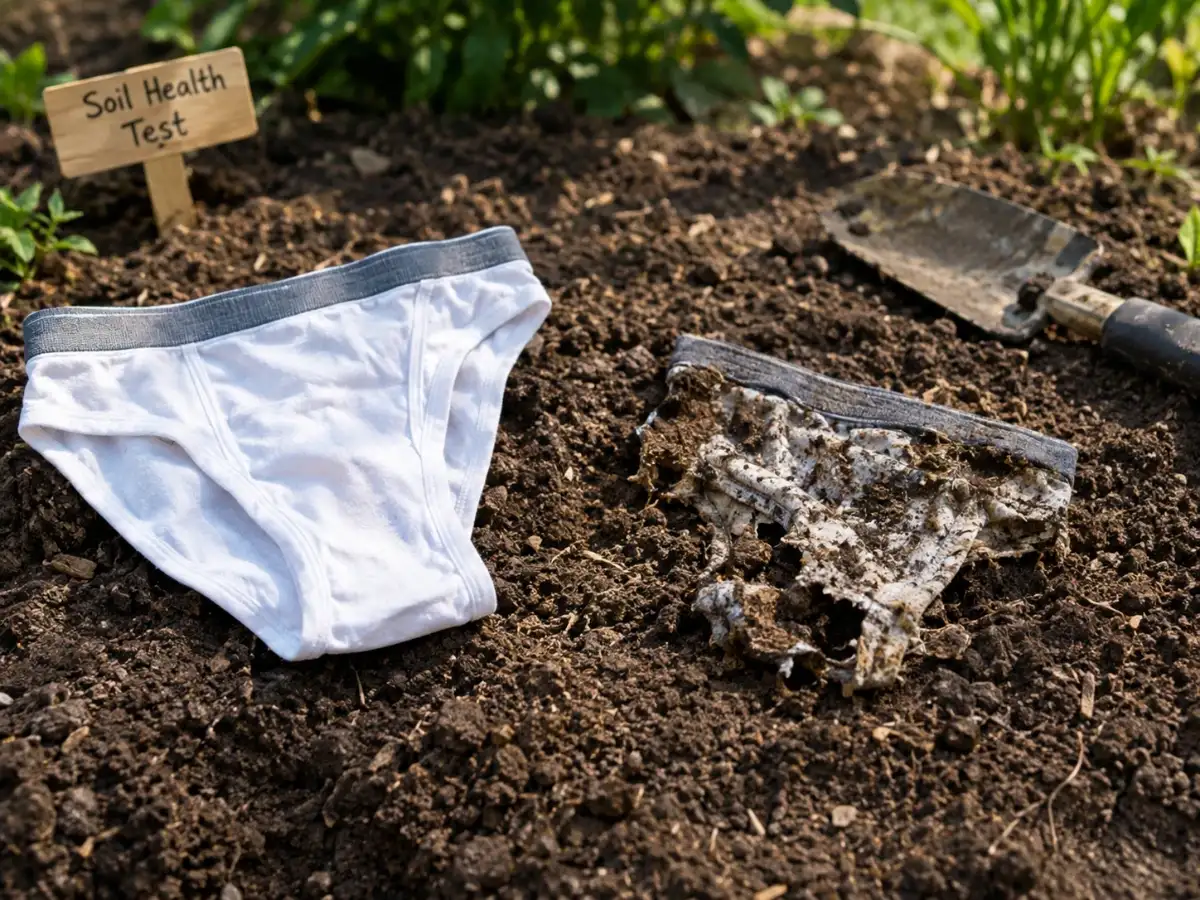
The University of Idaho has used the simple cotton underwear test in its Magic Valley Soil Health Project, where it has collected information about the condition of the soil in 34 fields for almost three years. In the test, cotton fabric is buried underground to give an indication of microbial activity in the soil. The soil contains billions of microbes such as bacteria and fungi that keep decomposing organic materials without making any noise. The more active the microbes are, the quicker they can decompose organic materials, including cotton. Therefore, the condition of a newly buried pair of briefs after two months can provide visual evidence of activity underground.
This way of thinking is part of an overall change in perceptions when it comes to soil. For a long time, soil was something that simply happened, something to till, plant into, and forget about. More gardeners and small-scale growers are paying attention to soil quality. Healthy soil can support healthier plants, help hold on to water, and reduce the need for some chemical inputs, among other things.

How a pair of underwear got to become a soil hero
The test itself couldn’t get any simpler. At the University of Idaho Extension, the Soil Your Undies test is used as a simple visual assessment. The team takes a brand new pair of cotton underwear, buries it, leaves it in the ground for eight weeks, then digs it up. Because cotton is a natural material, soil microorganisms feed on it; after eight weeks, the underwear may be badly decomposed, while the elastic waistband often remains mostly intact. The remaining material can then be weighed to calculate the loss rate.
Based on the published research summary of the project, the simple visual assessment was supplemented by a more complex technical approach involving tests such as phospholipid fatty acid analysis and the Haney test, which focus on nutrient cycling and microbial biomass. The early findings from the fields being tested, as stated in the research, indicated that the highest levels of biological activity were observed in fields with no-till perennial management practices. This finding is relevant to gardening and farming because reduced soil disturbance can help support biological activity and soil structure, which are associated with nutrient cycling and water retention.