Ongoing strength in the nation's jobs market has lifted the change of another interest rate rise in the coming months, experts warn.
Australia's unemployment rate held steady at 4.1 per cent for January with nearly 18,000 jobs created, according to Bureau of Statistics data released on Thursday.
While the reading was slightly below expectations, it is still historically strong, particularly when considered alongside December's bumper release that revealed an extra 65,000 jobs had been created.
AMP chief economist Shane Oliver said the numbers together added to the risk of a second interest rate rise in 2026 - particularly combined with recent high inflation readings.
"The labour market remains fairly strong... this further dents any prospect for any rate cut," he told AAP.
While official data was yet to be released, government spending on public sector roles was likely keeping the jobs market tight, Mr Oliver added.
Other economists agreed the jobs data would make interest rate increases more likely.
"In our view, the Reserve Bank will raise the cash rate further, most likely in the first half of this year to combat inflationary pressures, including those stemming from the labour market," EY chief economist Cherelle Murphy said.
Most analysts who expect a hike believe it will happen in May, not at the RBA's next board meeting in March.
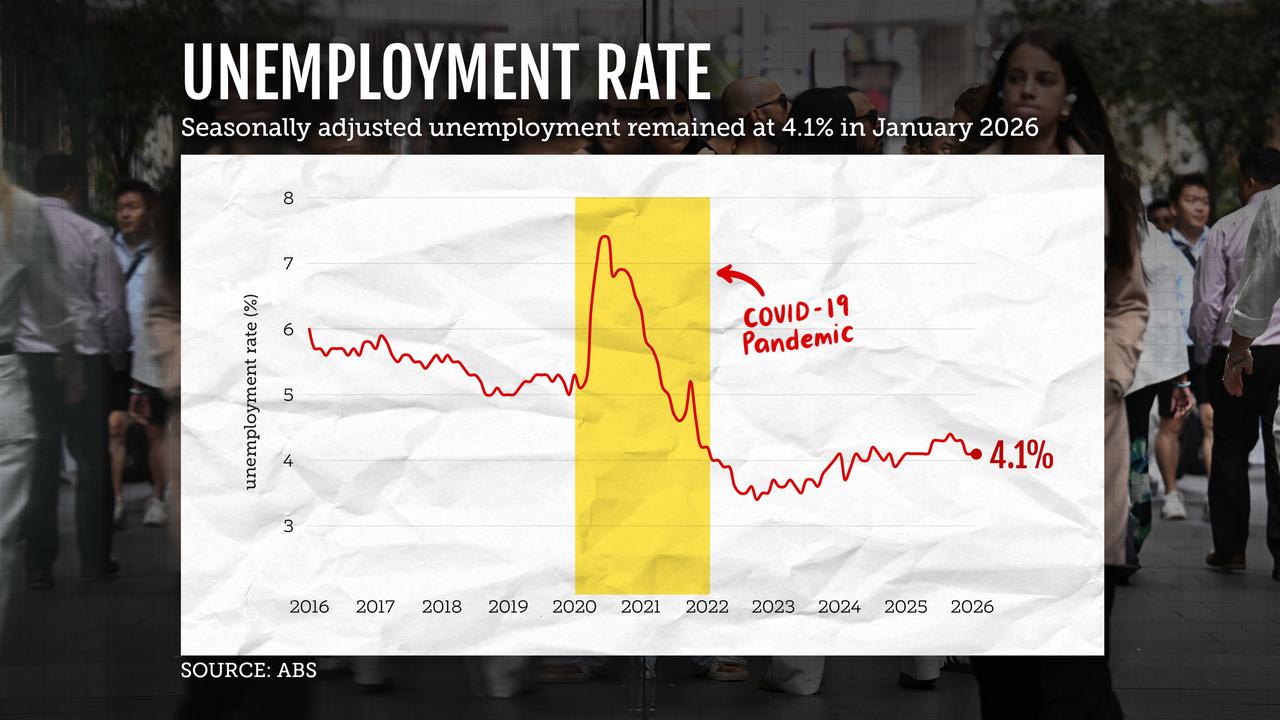
The Bureau of Statistics data shows the number of people in full-time work increased by 50,000, but that was partly offset by a 33,000-strong fall in the number of part-time employees.
Treasurer Jim Chalmers said the jobs market was remaining resilient during a challenging economic period.
"The unemployment rate has remained steady at 4.1 per cent, meaning it continues to remain at very low levels by historical standards and participation remains close to record highs," he said.
But opposition workplace relations spokeswoman Jane Hume said the data showed Australians were working harder while real wages went backwards.
"Australians are doing their bit, they're turning up to work, they're taking on extra hours and in many cases they're juggling multiple jobs, but they're still falling behind," she said.
The Reserve Bank has been warning about tightness in the nation's labour market - a concern the January figures will do little to allay.
A number of other crucial data points will be released before the RBA's next interest rate decision, including inflation figures later in February.
The central bank raised the official cash rate by 25 basis points during its meeting at the start of February, imposing more pain on borrowers in a bid to tackle rising inflation.
Wage figures released on Wednesday showed pay packets were not keeping up with inflation.
Seasonally adjusted wages rose to 3.4 per cent for the year to December, but below the 3.8 per cent for annual inflation.
It's the first time there has been a drop in real wages since September 2023.