Get all your news in one place.
100's of premium titles.
One app.
Start reading
LiveScience
LiveScience
Skyler Ware

Undersea lava rubble acts as a 'sponge' for carbon dioxide, study finds

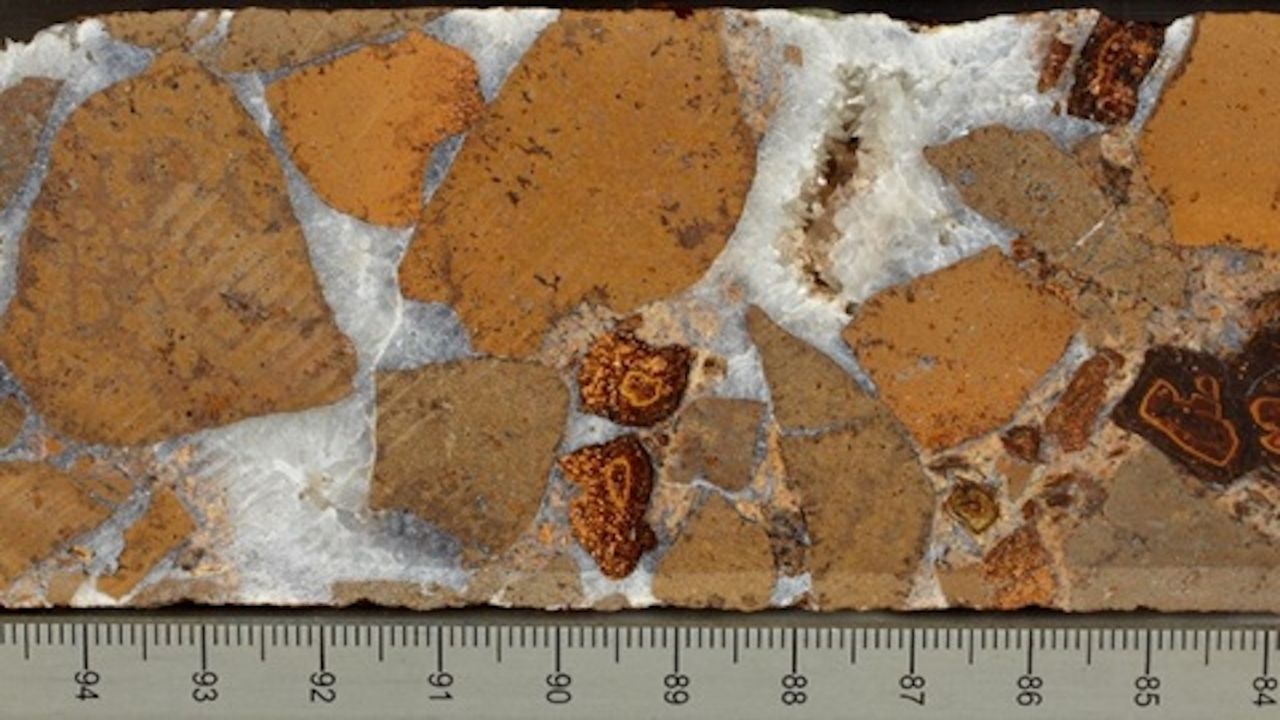
Image of brownish orange rocks (lava breccia) encased in white rock (calcium carbonate). .

Ancient lava rubble on the seafloor can store huge amounts of carbon dioxide like a giant "sponge," a new study finds.

Cores collected from beneath the southern Atlantic Ocean show that this rubble — which formed through volcanic activity and spread across the ocean floor over millions of years — stores between two and 40 times as much carbon dioxide as the upper crust at the bottom of the ocean, according to research published Nov. 24 in the journal Nature Geoscience. The findings may help scientists better understand how Earth's climate changed in the past.

Sign up to read this article
Read news from 100's of titles, curated specifically for you.
Already a member? Sign in here
Related Stories
Top stories on inkl right now
One subscription that gives you access to news from hundreds of sites
Already a member? Sign in here
Our Picks
Fourteen days free
Download the app
One app. One membership.
100+ trusted global sources.