Get all your news in one place.
100’s of premium titles.
One app.
Start reading
The Independent UK
The Independent UK
National
Edith M. Lederer

UN Security Council approves Trump’s plan authorising a stabilisation force in Gaza

The United Nations Security Council approved a U.S. plan for Gaza that authorises an international stabilisation force to provide security in the devastated territory.

The vote was a crucial next step for the fragile ceasefire between Israel and Hamas and the possible future path to an independent Palestinian state.
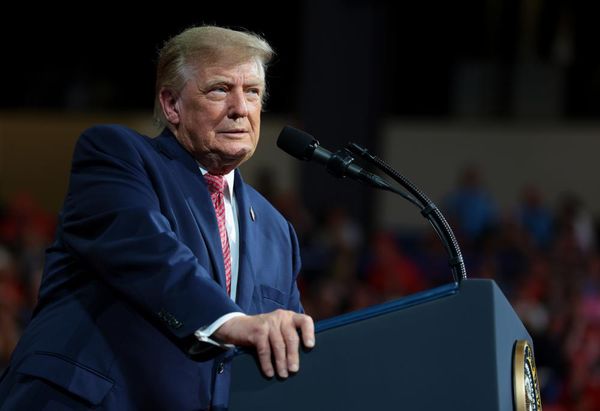
The U.S. resolution endorses President Donald Trump’s 20-point ceasefire plan, which calls for a yet-to-be-established Board of Peace as a transitional authority that Trump would head.

It also authorises the stabilisation force and gives it a wide mandate, including overseeing the borders, providing security and demilitarizing the territory. Authorisation for the board and force expires at the end of 2027.

Arab and other Muslim countries that expressed interest in providing troops for an international force had signaled that Security Council authorisation was essential for their participation.

Russia, which had circulated a rival resolution, abstained along with China on the 13-0 vote. The U.S. and other countries had hoped Moscow would not use its veto power on the United Nations’ most powerful body to block the resolution’s adoption.

Stronger language on Palestinian state helps get the U.S. plan over the finish line

During nearly two weeks of negotiations on the U.S. resolution, Arab nations and the Palestinians had pressed the United States to strengthen the original weak language about Palestinian self-determination.

A temporary camp in Deir al-Balah, in the central Gaza Strip (AP)

The U.S. revised it to say that after the Palestinian Authority — which now governs parts of the West Bank — makes reforms and after redevelopment of the devastated Gaza Strip advances, “the conditions may finally be in place for a credible pathway to Palestinian self-determination and statehood.”

“The United States will establish a dialogue between Israel and the Palestinians to agree on a political horizon for peaceful and prosperous coexistence,” it adds.

That language angered Israeli prime minister, Benjamin Netanyahu, who vowed Sunday to oppose any attempt to establish a Palestinian state. He has long asserted that creating a Palestinian state would reward Hamas and eventually lead to an even larger Hamas-run state on Israel’s borders.

A key to the resolution’s adoption was support from Arab and Muslim nations pushing for a ceasefire and potentially contributing to the international force. The U.S. mission to the United Nations distributed a joint statement Friday with Qatar, Egypt, United Arab Emirates, Saudi Arabia, Indonesia, Pakistan, Jordan and Turkey calling for “swift adoption” of the U.S. proposal.

Russia had floated its own plan

The vote took place amid hopes that Gaza’s fragile ceasefire would be maintained after a war set off by Hamas’ surprise attack on southern Israel on October 7, 2023, which killed about 1,200 people. Israel’s more than two-year offensive has killed over 69,000 Palestinians, according to the Gaza health ministry, which doesn’t distinguish between civilians and combatants but says the majority are women and children.

Israeli strikes have killed 236 Palestinians since the ceasefire came into effect.

Russia, last week suddenly, circulated a rival proposal with stronger language supporting a Palestinian state and stressed that the West Bank and Gaza must be joined as a state under the Palestinian Authority.

It also stripped out references to the transitional board and asked U.N. Secretary-General Antonio Guterres to provide options for an international force to provide security in Gaza and for implementing the ceasefire plan, stressing the importance of a Security Council role.

What else the U.S. proposal says

The U.S. resolution calls for the stabilisation force to ensure “the process of demilitarizing the Gaza Strip” and “the permanent decommissioning of weapons from non-state armed groups.” A big question is how to disarm Hamas, which has not fully accepted that step.

It authorises the force “to use all necessary measures to carry out its mandate” in compliance with international law, which is U.N. language for the use of military force.

The resolution says the stabilization troops will help secure border areas, along with a Palestinian police force that they have trained and vetted, and they will coordinate with other countries to secure the flow of humanitarian assistance. It says the force should closely consult and cooperate with neighboring Egypt and Israel.

As the international force establishes control and brings stability, the resolution says Israeli forces will withdraw from Gaza “based on standards, milestones, and timeframes linked to demilitarization.” These must be agreed to by the stabilization force, Israeli forces, the U.S. and the guarantors of the ceasefire, it says.

Sign up to read this article
Read news from 100’s of titles, curated specifically for you.
Already a member? Sign in here
Related Stories
Top stories on inkl right now
One subscription that gives you access to news from hundreds of sites
Already a member? Sign in here
Our Picks
Fourteen days free
Download the app
One app. One membership.
100+ trusted global sources.