Poland is ending the special status that gave Ukrainian refugees equal access to the labour market, social benefits and healthcare. The system expires on Thursday, meaning many will now face stricter rules to work or receive support.
Four years after Russia’s large-scale invasion of Ukraine began, support from European neighbours along its border is weakening.
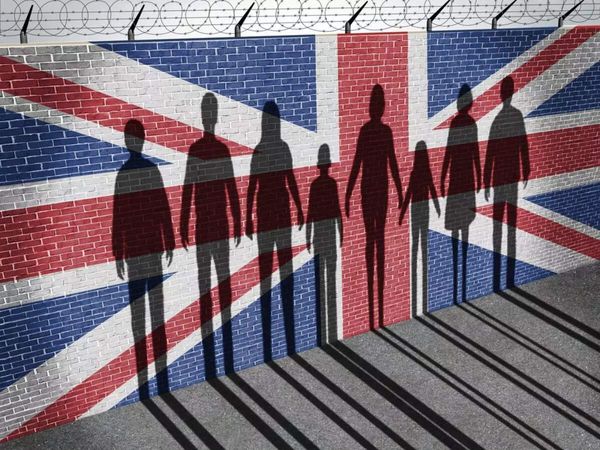
In Poland, the wave of solidarity seen in February 2022 has given way to a new policy towards Ukrainians.
From Thursday, their special refugee status will end, placing them on the same footing as other foreigners.
Political shift
Nationalist leader Karol Nawrocki campaigned for the presidency last August with the slogan: “Poland first, Poles first”, describing Ukrainians as “ungrateful” and “a burden on society”.
Amid growing anti-Ukrainian sentiment in Poland, he said the country needed to end “a completely incomprehensible and unacceptable situation” that allowed “foreigners to benefit from aid at taxpayers’ expense without contributing themselves”.
In September, Nawrocki vetoed a law that would have extended the special status, preventing parliament from renewing it.
Under the revised rules, Ukrainians must obtain work permits for employers who want to hire them. They will also lose access to social benefits and healthcare if they cannot prove they have a job.
The government of Prime Minister Donald Tusk defended the change.
“Most of those who reside in Poland work; their children go to school. We can therefore now gradually eliminate these extraordinary measures and move from temporary solutions to systemic ones,” the government said.
Poland’s new president brings hard line on refugees, abortion and rule of law
Employers worried
Marija Jakubowicz, who handles administrative formalities for refugees, said the change is bad news for both employers and Ukrainians.
“Employers no longer needed additional resources to hire Ukrainians. And Ukrainians were no longer forced to accept poor jobs or work for unscrupulous employers,” she told RFI’s correspondent.
Ukrainians make up 66 percent of the immigrant workforce in Poland. Employers’ associations say the new conditions will make it harder to hire workers they need.
Nadia lives in Poland with her two children and relies on the disability allowance received by her 16-year-old daughter, who has cerebral palsy. She says the support is not enough to cover medical treatment, including an operation on her daughter’s leg in January.
“After paying my rent, I have barely €200 left to live on. Of course, the assistance has to stop at some point. But I have nowhere else to go,” she said.
Ukrainian refugees in France face uncertainty as emergency protection phased out
Unable to work, Nadia has considered leaving Poland for what she called a more “generous” country. If she stays, she has one year to apply for a residence permit, something Ukrainians were previously exempt from.
Kajetan Wroblewski volunteers with an organisation helping refugees who continue to arrive in Poland.
Some newcomers hope similarities between Polish and Ukrainian will make integration easier. But Wroblewski says he often discourages them.
“It’s better to understand nothing in Finland but have a bed and food to eat than to sleep under a bridge in Poland,” he told RFI, criticising what he described as the state’s disengagement and public apathy.
According to a CBOS poll released in early January 2026, 46 percent of Poles now oppose accepting Ukrainian refugees, compared with 3 percent at the start of the war.
The survey’s authors say this is the worst result recorded since the poll began in 2014, after Russia annexed Crimea.
This article was partially adapted from the original version in French