Get all your news in one place.
100’s of premium titles.
One app.
Start reading
Radio France Internationale
World
RFI

Ukraine marks four years of conflict, as losses rise with no end in sight

People hold a giant Ukrainian flag during a march for Ukraine ahead of the fourth anniversary of Russia's invasion, in Paris on 21 February 2026. AFP - BERTRAND GUAY

As the war in Ukraine enters its fifth year, the relentless fighting continues to exact a heavy toll on the population amid slow advances and stalled negotiations.

Four years after Russia launched its full-scale invasion of Ukraine, Europe’s largest conflict since the Second World War grinds on – reshaping the continent’s security order while exacting a staggering human toll. Wtih the war entering its fifth year on Tuesday, there is little indication that a decisive end is near, despite renewed diplomatic efforts.

Talks brokered by the United States, part of the Trump administration’s year-long push for peace, have brought delegations from Moscow and Kyiv to the table. Yet fundamental disagreements – over the fate of Russian-occupied territories and Ukraine’s long-term security guarantees – continue to block meaningful progress.

On the battlefield and far beyond it, the cost of the war remains immense.

Ukrainian rescuers work at the site of a heavily damaged house following an air attack in Sofiivska Borshchagivka, Kyiv region on 22 February 2026. AFP - HENRY NICHOLLS

Kyiv faces worst winter of war as Russia pounds Ukraine's power system

Casualties mount as transparency falters

Estimates suggest the scale of military losses is vast, though precise figures remain elusive. A recent report by the Center for Strategic and International Studies puts Russian casualties – killed, wounded or missing – at around 1.2 million between February 2022 and December 2025. Of these, as many as 325,000 troops are believed to have been killed, marking the highest death toll for any major power in a conflict since the Second World War.

Moscow has not provided regular updates. Its last official figure, released in January 2023, acknowledged just over 6,000 military deaths.

Ukraine has also suffered heavily. The same report estimates between 500,000 and 600,000 Ukrainian casualties, including up to 140,000 deaths. President Volodymyr Zelensky said earlier this month that 55,000 Ukrainian soldiers have been killed, adding that many more remain missing.

The 65th Mechanised Brigade of Ukrainian Armed Forces pictured on 22 February 2026, Ukrainian recruits complete basic military training at an undisclosed location in Zaporizhzhia region. AFP - ANDRIY ANDRIYENKO

With neither side publishing timely or comprehensive data, and independent verification largely impossible, the true scale of losses is likely to remain uncertain for years.

Civilians, meanwhile, continue to bear the brunt of the war. The United Nations has recorded more than 40,600 civilian injuries and confirmed thousands of deaths since the invasion – though it stresses the real figures are almost certainly higher. At least 763 children are known to have been killed.

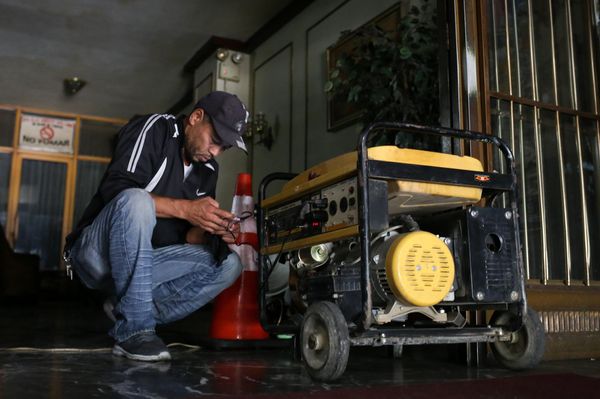
Last year alone was the deadliest for civilians since 2022, with 2,514 killed and 12,142 injured in 2025 – a 31 percent increase compared with 2024. Persistent Russian aerial strikes have left millions facing repeated power outages and water shortages, underscoring the war’s enduring impact on daily life.

Zelensky French TV interview: 'If Ukraine doesn't stop Putin, he will invade Europe'

A war of attrition with global consequences

Despite the enormous human and material costs, territorial changes have been relatively limited. According to the Institute for the Study of War, Russia has gained just 0.79 percent of Ukraine’s land over the past year – a reflection of the grinding, attritional nature of the conflict.

Before the full-scale invasion, Moscow already controlled nearly 7 percent of Ukrainian territory, including Crimea and parts of the eastern Donetsk and Luhansk regions.

International support for Ukraine has shifted over time. Military aid from foreign partners fell by 20 percent last year compared with the annual average between 2022 and 2024, according to Germany’s Kiel Institute. A key factor was the United States halting shipments of American-funded weapons following Donald Trump’s return to office.

Ukraine’s assessment of Russia’s projected objectives to the end of 2026 – highlighting occupied areas, expected advances east of the Dnipro River, and planned expansion across southern and eastern regions. © ISW

European countries have stepped in, boosting their military assistance by 67 percent over the same period. Humanitarian and financial aid, however, declined by 5 percent.

The war has also triggered one of the largest displacement crises in recent history. Around 5.3 million Ukrainians have sought refuge across Europe, while a further 3.7 million remain internally displaced. Before the invasion, Ukraine’s population exceeded 40 million.

Healthcare infrastructure has been repeatedly targeted. The World Health Organization reports thousands of attacks affecting medical services since February 2022, including 2,347 strikes on healthcare facilities as well as damage to ambulances and medical supply storage.

Taken together, the figures show that the conflict is still grinding on, with far-reaching consequences beyond the battlefront.

(With newswires)

Sign up to read this article
Read news from 100’s of titles, curated specifically for you.
Already a member? Sign in here
Related Stories
Top stories on inkl right now
One subscription that gives you access to news from hundreds of sites
Already a member? Sign in here
Our Picks
Fourteen days free
Download the app
One app. One membership.
100+ trusted global sources.