The UK has announced a £2.5 billion investment into next-generation nuclear fusion in a major push towards realising its potential to produce near-limitless clean energy.
Science minister Patrick Vallance said the move is part of the UK’s ambition to achieve more energy self-sufficiency and end reliance on foreign imports.

“By backing our fusion industry, we are not only securing our future energy independence, but from innovation and research to engineers, we are also providing the skilled clean energy jobs of the future for British people,” Lord Vallance said.
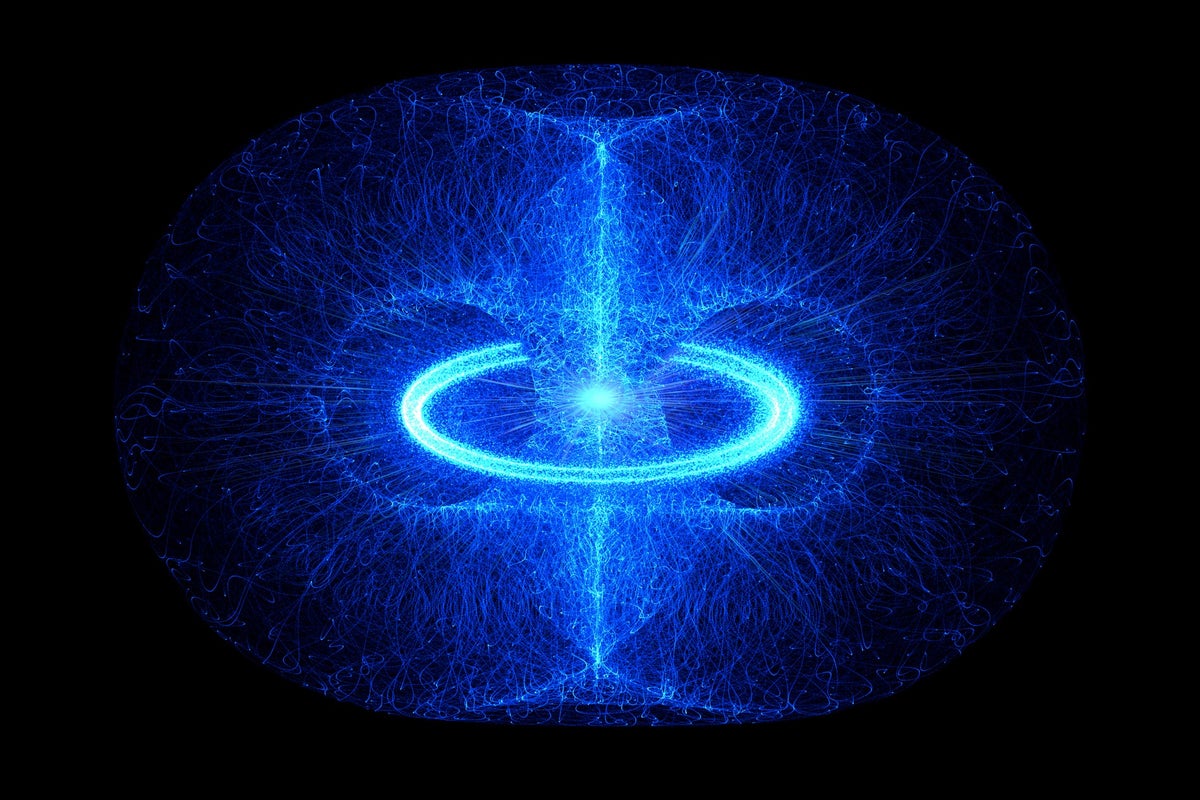
Nuclear fusion has been described as the “holy grail” of clean energy, as it requires no fossil fuels and leaves behind no hazardous waste.
It instead replicates the same natural processes that occur within the Sun in order to produce vast amounts of energy.
Global investment in nuclear fusion has surged in recent years, as governments and companies race to unlock its potential and solve one of the world’s greatest challenges of decarbonising the energy supply.
The latest UK investment will help fund the construction of one of the world’s first prototype fusion power plants, as well as create up to 10,000 jobs over the next five years.
The prototype nuclear fusion power plant project, called STEP, will be built on the site of a decommissioned coal-fired power station in Nottinghamshire and is expected to be operational by the early 2040s.
“It’s quite an aggressive programme,” said Paul Methven, chief executive of the government-owned UK Industrial Fusion Solutions.
“We need to show that we can achieve genuine ‘wall socket’ energy which has not been done before.”
As part of the UK fusion strategy, the government also announced the country’s first AI supercomputer dedicated to fusion energy.
The £45 million machine, named Sunrise, is targeted for operation in June this year and is expected to be the world’s most powerful AI supercomputer dedicated to fusion energy.
Dr Rob Akers, the director of advanced computing at the UK Atomic Energy Authority (UKAEA), likened the UK’s approach to nuclear fusion development to the US space programme in the 1960s, which saw the first humans walk on the Moon.
“UKAEA us taking lessons from the Apollo programme: we learn fastest when we can test, iterate, and improve safely in the virtual world before we commit to our real-world mission,” he said.
“Sunrise will bring that capability to fusion by combining high-fidelity simulation with physics-informed AI to develop predictive digital twins that reduce the cost, risk and time of learning that would otherwise require expensive and time-consuming physical testing.”
Trump ally Peter Thiel brings Antichrist lectures to Vatican’s doorstep
One word could change how you think of ChatGPT
Your anonymous social media accounts could be uncovered by AI, experts warn
Criminals hijack thousands of devices to create never-before-seen cyber weapon
Samsung says televisions are ‘transforming’ after 20 years as biggest TV maker
Sweeping cuts at Meta could see 16,000 jobs lost as company pumps money into AI