Charities and campaigners have condemned the UK government’ slashing of funding to help protect the natural world and help lower-income nations deal with the climate crisis, warning the cuts will hit the world's most vulnerable communities the hardest.
Campaigners have called the move "strategically reckless," warning it will drive global allies away at a critical geopolitical moment.
The criticism follows an investigation by The Guardian highlighting that several programmes worth hundreds of millions of pounds are being substantially reduced or effectively ended, even as the government insists it remains "on track" to meet its £11.6 billion climate finance pledge for the period from 2021 to 2026.
The government plans to reduce the next five-year round of international climate finance from £11.6bn to £9bn, the newspaper reported. The move comes at a time when richer countries, including the UK, have pledged to help triple global climate finance to $300bn a year by 2035.
"Our natural world is a source of joy and hope in an increasingly uncertain age, yet the UK government is taking an axe to the very programmes successfully restoring it,” said Felix Lane, political campaigner at Greenpeace UK.
Andreas Sieber, head of political strategy at the environmental organisation 350.org, said the approach was "wrong, unnecessary and strategically reckless."
"The UK could instead tax the windfall profits fossil fuel companies are making from gas price spikes linked to the war with Iran," he said. "At a time when Europe needs more allies in the Global South, not fewer, these decisions risk driving partners away while the poorest communities pay the price."
Tim Ingram, head of UK advocacy at WaterAid, said the cuts were unacceptable at a time when climate change was already straining access to clean water and sanitation in developing countries.
"It's just not good enough," he said. "If the UK continues to slash its climate and nature programmes, we can't tackle the shared challenges of global health and food security, and climate resilience."
The Guardian investigation also suggested that at least £2bn of the £11.6bn commitment is expected to be met through an accounting change introduced by the last Conservative government, which allows 30 per cent of general aid to the world's least developed countries to be counted as climate finance, even where it has no explicit climate or nature components.
"The United Kingdom built its industrial empire on 150 years of fossil fuels — emitting carbon that still hangs in our atmosphere today, scorching our lands, swallowing our coasts, and destroying the harvests communities depend on to survive. Developing nations did not ignite this crisis, but our people are dying in it,” said Harjeet Singh, a climate activist and founding director of Satat Sampada Climate Foundation.
“Redirecting aid budgets and calling it climate finance is not leadership. The UK must not mistake accounting manoeuvres for climate action. Trillions in climate finance are needed annually in developing countries, and the UK must pay its fair share.” he added. ”The world is watching. And history will not be kind to those who had the power and the responsibility to act — and chose instead to balance their books on the backs of the most vulnerable."

The government has so far refused to offer details on individual programmes, with The Independent reaching out for a comment. A government spokesperson told The Independent last month: "The UK remains committed to providing international climate finance, playing our part alongside other developed countries. The UK is on track to deliver £11.6bn in international climate finance by the end of this financial year. We are modernising our approach to ensure we focus on greater impact."
“We continue to publish regular, transparent information to enable people in the UK and internationally to track our progress, and we will publish... allocations for the next three years shortly.”
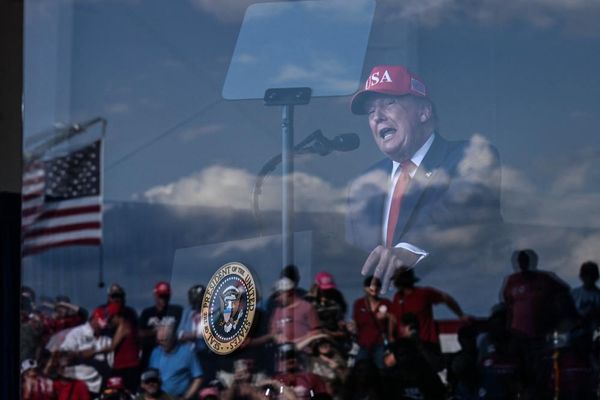
The government's retreat comes as the United States, under Donald Trump, has backed away from its climate finance commitments, leaving other developed countries under growing pressure to fill the gap.
Among the programmes reportedly affected is the £100m Biodiverse Landscapes Fund, originally intended to protect vital ecosystems across six regions in Africa, South America and Asia — now reduced to two. The future of the £500m Blue Planet Fund, set up to protect marine environments after Sir David Attenborough's documentary series raised global concern, has also been thrown into doubt.
Adrian Gahan of Campaign for Nature who helped build a public nature finance tracker, wrote on LinkedIn that the government’s silence had been costly.
"What happens when the UK government makes a globally significant international nature finance commitment in 2021 and then does not tell anyone how the money is being spent over the subsequent five years?" he wrote. "Political and public support for the funding slips away, despite its value."
Mr Lane said: “David Attenborough’s Blue Planet II was a seminal moment that galvanised a global movement to protect our oceans. As his 100th birthday approaches, Ministers must finally heed his warning: 'if we save the sea, we save our planet.'
“If this government is serious about international ocean leadership, it must stop these short-sighted cuts. It must act on its commitment to protect 30 per cent of the ocean by 2030 and focus on establishing a network of ocean sanctuaries across the Atlantic, including the Sargasso Sea."
This article has been produced as part of The Independent’s Rethinking Global Aid project
How the climate crisis threatens our food — and the people that grow it
Families in Zimbabwe struggle to survive a year after Trump’s aid cuts
Severe weather swings leave families battling floods and farmers facing bad year
Shellfish population recovers after Highland loch given protected status
Canada’s Carney signs uranium deal with Modi during historic India visit
Oil climbs as Iran conflict threatens vital Strait of Hormuz