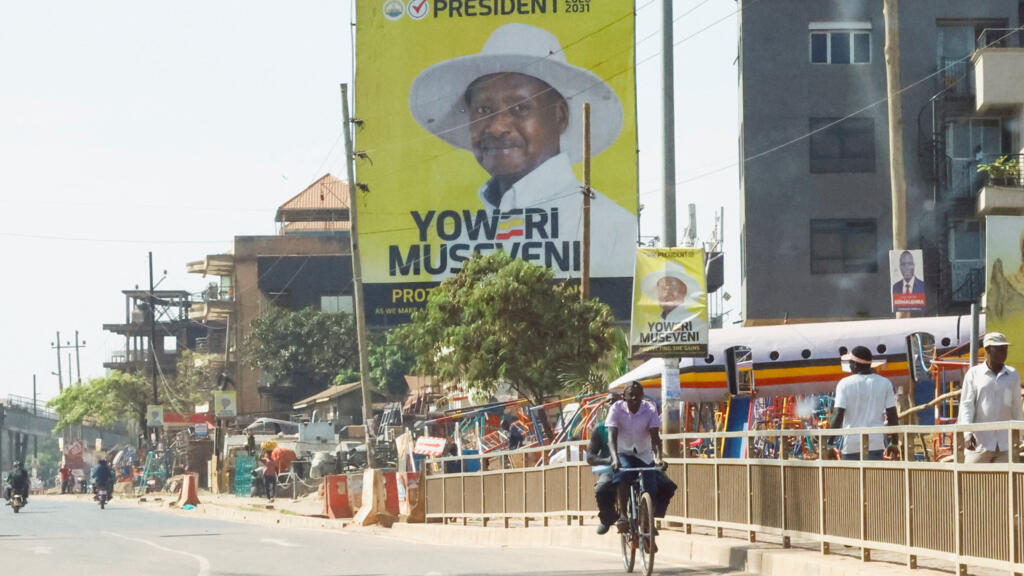
Uganda’s main opposition candidate, Bobi Wine, was under house arrest, his party said, as early results on Friday showed veteran President Yoweri Museveni with a commanding lead in the presidential election.
Partial results released in the capital, Kampala, showed Museveni well ahead of his closest rival, as analysts said the outcome and further pressure on the opposition had been widely expected.
Museveni, who is 81, has ruled Uganda since he seized power in 1986 and is seeking what his party has described as a decisive victory.
The electoral commission announced early results after Thursday’s vote, showing Museveni with at least 76 percent of ballots counted from nearly half of polling stations.
Bobi Wine was on 19.85 percent, with the remaining votes shared among six other candidates.
House arrest
Wine, whose legal name is Robert Kyagulanyi, had called on supporters to protest, although there were no signs of demonstrations.
Late on Thursday, his party, the National Unity Platform (NUP), said security forces had surrounded his home.
“The military and police have surrounded the residence of President Kyagulanyi Ssentamu Robert, effectively placing him and his wife under house arrest,” the party wrote on social media.
It said “security officers have unlawfully jumped over the perimeter fence and are now erecting tents within his compound”.
The popular music star turned politician has emerged as Museveni’s main challenger in recent years and also ran in the 2021 election.
He alleged widespread fraud during the current polls, which were held under an internet blackout after a campaign marked by violence.
Uganda orders internet blackout ahead of presidential elections
Voting problems
Museveni said after casting his ballot that he expected to win with 80 percent of the vote “if there’s no cheating”.
National and international non-governmental organisations, including Amnesty International, have accused him of brutal repression of the opposition in the run-up to the vote.
The government imposed an internet blackout earlier in the week, while election day was marked by technical problems across the country.
Biometric machines used to verify voters’ identities malfunctioned in several areas, including when Museveni voted, and some ballot papers were delivered hours late.
There was also a heavy security presence nationwide during voting.

Succession worries
Analysts say the election was a foregone conclusion given Museveni controls the state and security apparatus and has crushed challengers during his four decades in power.
African affairs expert Jeffrey Smith, of the pro-democracy think tank Vanguard Africa, told RFI this outcome was expected.
"I suspect we'll see an overwhelming reported victory for Museveni and a concerted government crackdown thereafter," Smith said.
Concerns were now focused on what comes next for the country, he added – pointing to Uganda’s young population and warning of deeper instability.
"Uganda's crisis is much bigger than Uganda, and that's why it's a crisis that demands urgent, authoritative action from both local and global actors," he said.
If the results are confirmed, Museveni will begin a seventh term in office. He has said on several occasions that he wants his son, army chief Muhoozi Kainerugaba, to succeed him.
The United Nations rights office said last week the elections were taking place in an environment marked by “widespread repression and intimidation” against the opposition.
Final results from the presidential and parliamentary elections are due by 2am GMT on Saturday.
(with newswires)