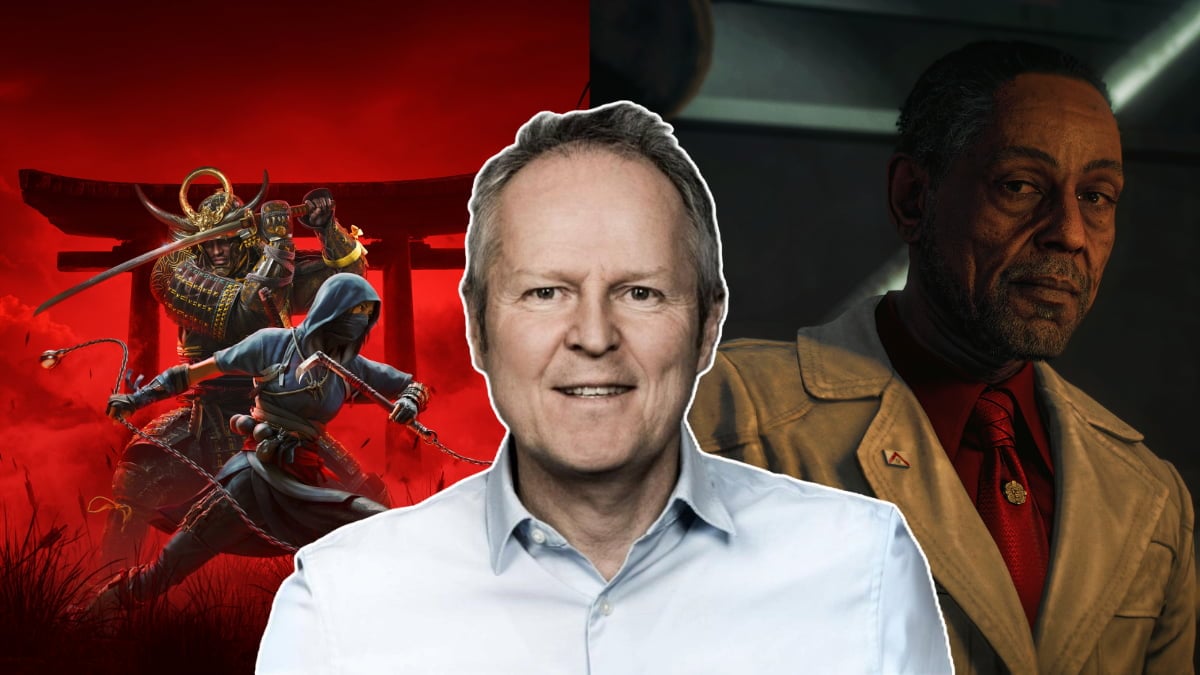
Ubisoft is betting big on its biggest names, such as Assassin’s Creed and Far Cry, as it looks to steady itself after several turbulent years.
In a recent interview with Variety, outlining the company’s three-year transformation plan, CEO Yves Guillemot confirmed that multiple Assassin’s Creed titles are currently in development, spanning both single-player and multiplayer games. He also revealed that two new Far Cry projects are in the works, alongside several brand new IPs that have yet to be announced.
The confirmation arrives at a crucial time for Ubisoft. Over the past few years, the publisher has faced mixed community reception across key releases, project delays, and high-profile cancellations. While Assassin’s Creed remains one of the most commercially reliable franchises in gaming, recent entries have sparked debates among fans about franchise fatigue, open-world bloat, and the balance between RPG systems and classic stealth roots.
Far Cry has faced similar scrutiny. Though the series continues to sell well with the last one featuring prominent Hollywood names like Giancarlo Esposito, the discussion around its formula has grown louder. Some players are calling for more meaningful evolution rather than iterative updates. At the same time, live service efforts have produced uneven results and long development cycles, including the heavily delayed Skull and Bones, which have amplified concerns about production efficiency.
Ubisoft’s stock performance has reflected that uncertainty. A series of delays, cost-cutting measures exceeding $200 million, and canceled projects such as the Prince of Persia: The Sands of Time remake have raised investor questions about long-term direction. Internally, the company has also undergone restructuring, studio closures, and leadership adjustments.
Guillemot’s answer is a structural reset. Ubisoft is reorganizing into five “creative houses,” each focused on specific genres and franchises, with greater autonomy and clearer financial accountability. The goal is to give development teams a sharper focus, reduce internal complexity, and improve the predictability of their release pipeline.
Under this new model, established brands like Assassin’s Creed and Far Cry will anchor Ubisoft’s roadmap. At the same time, the CEO stressed that new IP remains a priority, with several original projects already in progress. Teams are encouraged to pitch new concepts, which are then assigned to the most suitable creative house for development.
Whether that reset delivers will depend on execution. Ubisoft’s future will be defined by focus, franchise focus, and a renewed push for relevance with new games.