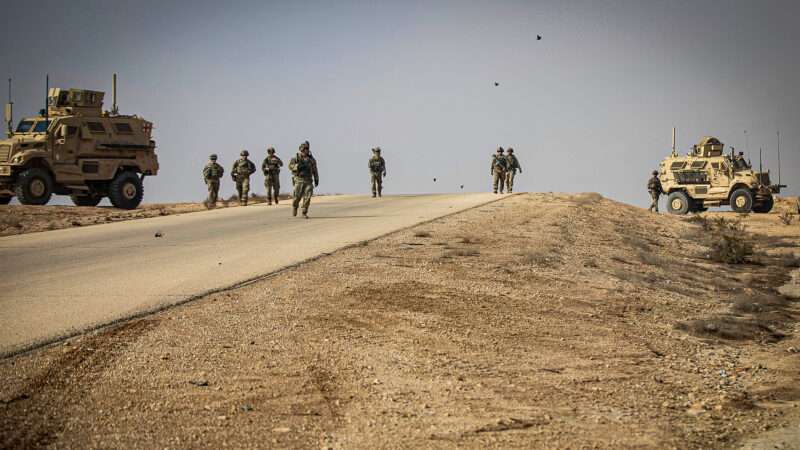
On Wednesday, Erbil Air Base in northern Iraq witnessed something remarkable: the final withdrawal of U.S. soldiers from the country.
The exodus marked the end of more than two decades of U.S. intervention in Iraq, which began when President George W. Bush sent some 150,000 soldiers into the country to depose Saddam Hussein's regime in 2003. Despite Bush's infamously premature declaration of victory in May 2003, tens of thousands of U.S. forces spent the next eight years battling insurgents across the destabilized country. That war led to the deaths of 4,500 U.S. soldiers and over 120,000 Iraqi civilians. The U.S. withdrew the last of its soldiers from the conflict in December 2011, in a brief pause in the intervention. Just three years later, thousands of U.S. troops returned as part of Operation Inherent Resolve (OIR)—an international coalition meant to combat and contain the Islamic State group (I.S.) in the country—to support Iraqi and Kurdish soldiers, where they have remained for the past 12 years.