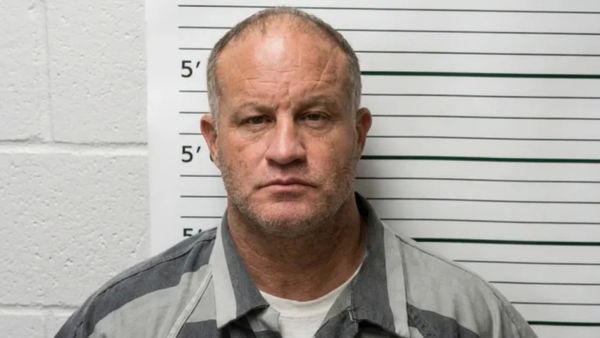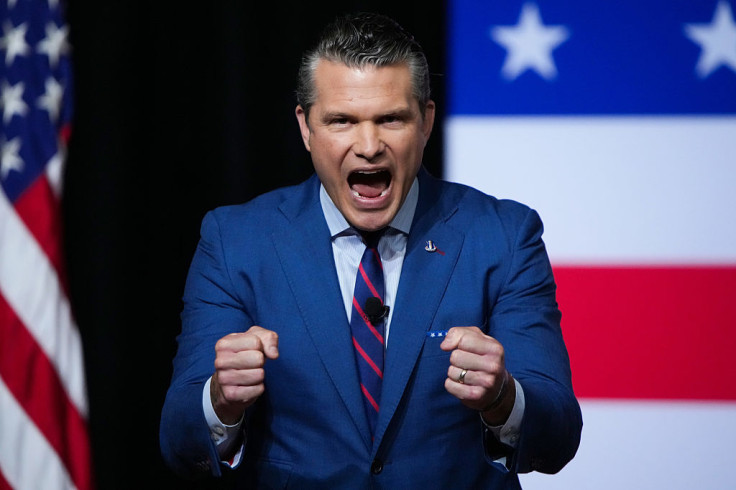
Defense Secretary Pete Hegseth said Sunday that the U.S. military could conduct additional operations in Latin America similar to the recent strike in Venezuela that killed Héctor Rusthenford Guerrero Flores, known as "Niño Guerrero," the founder of the transnational criminal organization Tren de Aragua.
Appearing on CBS's Face the Nation, the defense secretary was asked whether Americans should expect similar actions in countries such as Ecuador and Guatemala, where Washington has expanded security cooperation in recent months. "Yes, they should," Hegseth replied.
Hegseth said future operations would be carried out through a regional initiative known as the Americas Counter Cartel Coalition, or A3C, which seeks to coordinate U.S. military and intelligence resources with governments across Central and South America.
"It's called the Americas Counter Cartel Coalition, A3C, and we're forming it with partner governments all around Central and South America to go after, defeat and destroy foreign terrorist organizations [and] drug cartels," Hegseth told Margaret Brennan.
The comments came days after President Donald Trump announced that U.S. Southern Command had carried out what he described as a "swift and lethal kinetic strike" that killed Guerrero, one of the hemisphere's most wanted criminal figures. The United States had previously offered a $5 million reward for information leading to his capture.
According to Trump, the operation was conducted in coordination with Venezuelan authorities. The White House, Pentagon and U.S. Southern Command have not released additional details about where or when the strike occurred.
Hegseth said the operation reflected a broader shift in how the administration views groups such as Tren de Aragua, which Washington has designated a foreign terrorist organization.
"They invited our military in because they have a foreign terrorist organization on their soil in Tren de Aragua," Hegseth said. "The founder and leader—we were able to identify where he was and kill him, just like we would kill al-Qaeda or ISIS."
He also linked the strategy to what he described as a renewed U.S. role in the region. "It's an incredible reinforcement of the Monroe Doctrine—now the Donroe Doctrine," Hegseth said. "We're taking back control of our hemisphere."
The operation has drawn attention beyond Venezuela because of questions about its broader impact on Tren de Aragua. Chilean prosecutor Héctor Barros, who leads major investigations into the group, told El País earlier this week that Guerrero's death was significant but unlikely to dismantle the organization.
Barros said other senior figures, including Johan José Romero, known as "Johan Petrica," and Giovanni Vicente Mosquera Serrano, alias "El Viejo," could assume leadership roles. "This is not a criminal structure sustained solely by the leadership of Niño Guerrero," he said. "Most likely, the power he had will be assumed by another person."