Brazil — currently the single largest buyer of U.S. diesel in September—faces an abrupt fuel crisis if the Trump administration moves forward with a reported 90-day export ban, according to multiple energy analysts, arriving at the worst possible moment: nine days before the country's first presidential election round.
This matters now because Brazil is simultaneously running fuel subsidies to protect voters from record-high energy prices—a political lifeline that a U.S. export restriction could instantly unravel.

The Trigger: Record Prices, Political Pressure, and a Presidential Statement
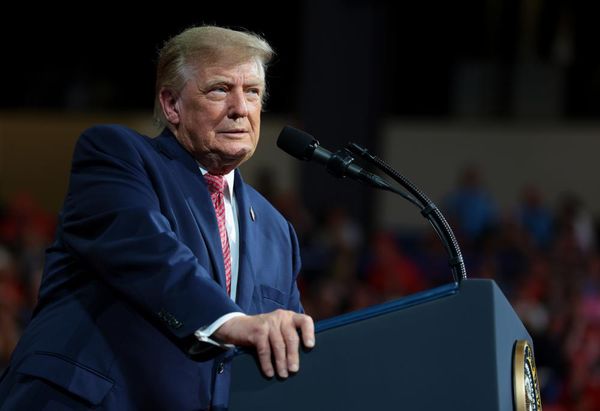
U.S. average diesel prices climbed to $6.51 per gallon as of September 24, according to AAA—a new record that has sharpened Republican anxiety ahead of November's midterm elections. Trump voiced personal support for an export ban while speaking to reporters on the sidelines of the United Nations General Assembly on Tuesday, telling them, "I've said let's not send out the diesel. We make a lot of diesel."
The following day, Politico published a report—citing five people familiar with the internal discussions—that the administration was preparing a 90-day export ban despite significant internal opposition and stiff industry resistance. The White House pushed back quickly, with senior officials calling the report false. Energy Secretary Chris Wright told The Wall Street Journal the same day that the administration was examining restrictions rather than a blanket ban, explaining the complexity of refinery operations. In a separate statement from the prior week, Wright had warned that a full ban would produce "more expensive gasoline right away" by forcing refineries to scale back overall output. Despite the official denials, futures markets moved sharply, and shares of major U.S. refinery operators Valero, Marathon Petroleum, and Phillips 66 fell in the hours following the Politico report.
Brazil's Exposure: The Worst-Timed Fuel Shock in Years
If the measure goes into effect, Latin America stands to absorb the sharpest initial impact—and Brazil sits at the center of that risk. In September 2026, Brazil ranks as the top buyer of U.S.-made diesel and similar distillate fuels, according to data from energy analytics firms Kpler and Vortexa. The surge in Brazilian demand is tied to the start of the country's agricultural planting season, when tractors, freight trucks, and harvesting equipment draw heavily on diesel supplies.
Brazil currently produces roughly 70 percent of its diesel consumption domestically, according to data from Brazil's National Petroleum Agency. Petrobras has since set a target of full self-sufficiency by 2031, but the current import gap—around 30 percent of national demand—has become increasingly dependent on American supply. Two compounding disruptions drove that shift: U.S. military operations against Iran constrained flows through the Strait of Hormuz, while Ukrainian drone strikes on Russian refinery infrastructure prompted Moscow to impose its own ban on most diesel exports, redirecting Brazilian buyers toward U.S. Gulf Coast suppliers. American diesel exports reached a record 1.6 million barrels per day in August, up from roughly 1 million barrels per day in February, before the Iran conflict began, according to Reuters citing Kpler data.
Lula's Fuel Subsidies Under Threat
President Luiz Inácio Lula da Silva signed a decree and a provisional measure on September 9 aimed at bringing pump prices down, weeks before voting begins. Armando Castelar Pinheiro, an economics professor at the Federal University of Rio de Janeiro, told the Associated Press the measures carry "a significant electoral component," adding that without the political calendar, "there would be some subsidy, but it would likely be lower."
The Brazilian government has also maintained subsidies on road-use diesel since early 2026, when prices began climbing steeply following the outbreak of the U.S.-Iran conflict. The program equalizes a portion of costs for producers and importers to keep pump prices below import parity. According to a market analysis by Itaú BBA cited by local media, diesel in Brazil is currently priced approximately 28 percent below international market parity—a gap that depends entirely on stable import flows to remain fiscally sustainable. A sudden disruption in U.S. supply would force Brasília either to absorb sharply higher global spot prices into that subsidy framework, or to let pump prices spike at the most politically sensitive moment in four years.
Lula, running for a fourth nonconsecutive term at the age of 80, is locked in a statistical dead heat with Senator Flávio Bolsonaro, the 45-year-old son of former President Jair Bolsonaro—who is currently serving prison time following a conviction connected to a coup attempt. Recent polls place roughly 51 percent of Brazilians in the disapproval column for the current government, with both leading candidates tied within the margin of error in every runoff simulation. Fuel costs register as one of the sharpest pressure points voters will weigh when they go to the polls on October 4.
The Mexico Comparison: Shared Exposure, Unequal Leverage
Mexico's situation mirrors Brazil's in terms of physical vulnerability but diverges substantially when it comes to diplomatic standing. U.S. distillate exports to Mexico reached approximately 288,000 barrels per day as of June 2026—covering more than 40 percent of the country's national diesel supply—making Mexico's exposure to a potential ban comparable to Brazil's in percentage terms and larger in absolute volume. The Atlantic Council warned this week that if Mexico were cut off from American diesel imports, physical fuel outages could begin developing within days, with cascading effects on agricultural production and food prices that would eventually reach U.S. consumers as well.
USMCA—the trade framework governing commerce between the United States, Mexico, and Canada—provides Mexico with exemptions from certain U.S. import tariffs on qualifying goods. It does not, however, create any legal protection against a U.S. export restriction. Whether USMCA could be cited to carve Mexico out of a diesel export ban remains an open legal question, and analysts described it this week as one of the most consequential unresolved variables in the ban scenario. What the agreement does provide is institutional access: Mexico's trade negotiators maintain direct diplomatic channels to Washington through a structure that Brazil simply does not have—a meaningful advantage for lobbying toward a negotiated exemption, even if no outcome is guaranteed.
Industry Pushback and Global Ripple Effects
The American Petroleum Institute framed any restriction as self-defeating, stating in a formal release that limiting U.S. diesel exports would "wreak havoc on fuel markets at home and abroad, destabilize refinery operations and deepen a global refining crisis." The trade group pointed out that Gulf Coast refineries produce more diesel than the surrounding region actually consumes, but that infrastructure constraints make it impossible to simply redirect those surpluses to every domestic market in need.
Analysts at Citi warned that even a partial U.S. restriction could generate product shortfalls across South America, Europe, Africa, and Australia, as global buyers scramble for a reduced supply pool at the same moment Brazil most needs import flows to remain open. Energy economist Philip Verleger estimated that a full ban could push world diesel prices up by as much as 100 percent, given the fuel's historically rigid demand curve.
For U.S. households, the trade-off runs deeper than the domestic pump price. Higher transport costs inside Brazil flow directly into production expenses for the country's key agricultural exports—including coffee, soybeans, and orange juice—goods that move through Brazilian supply chains powered by diesel trucks and that ultimately reach American grocery shelves.
The administration's next move is expected as soon as this week. Whether it issues a formal restriction, implements the more limited voluntary measures Wright alluded to, or retreats from the proposal entirely, the downstream consequences will stretch well beyond American fuel stations—landing hardest in a country nine days from one of its most consequential elections in a generation.