Paraguay and the United States put pen to paper this week on a new civil nuclear cooperation agreement, extending a bilateral relationship that has been warming steadily since Paraguay's conservative government took office in 2023. The signing took place Tuesday at the State Department's Colin L. Powell Treaty Room, adding atomic energy to a partnership that already touches security, trade and migration. It comes as Washington works to lock in aligned governments across Latin America — a strategic push that a Paraguayan commentator recently framed as a race against Beijing's growing economic footprint in the region.
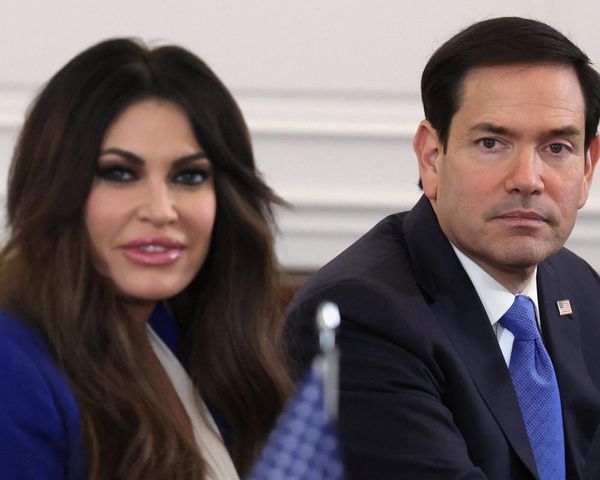
Rubio and Paraguayan Foreign Minister Rubén Ramírez Lezcano formally signed the memorandum of understanding, with the State Department's own transcript of the ceremony confirming Vice President Pedro Alliana also attended. President Santiago Peña stayed in Asunción; he and Rubio had spoken by phone the previous day, a call in which the two men stressed the importance of sustained regional coordination on Venezuela, according to ABC Color's rundown of the day's diplomacy. Deputy Secretary Christopher Landau and Under Secretary Allison Hooker rounded out the U.S. side, per the department's public daily schedule.
Inside the 123 Agreement
The memorandum itself doesn't launch a nuclear power program — it's a framework built on what's known in U.S. law as a "123 Agreement," a reference to Section 123 of the 1954 Atomic Energy Act. The statute allows Washington to export civilian nuclear technology and materials to partner countries for power generation or research, so long as the recipient satisfies International Atomic Energy Agency safeguards; in exchange, the U.S. keeps oversight rights to confirm nothing gets diverted toward weapons work.
Washington has signed similar deals with more than two dozen nations since the law passed, among them regional neighbors Argentina, Brazil and Mexico, and has more recently added Ecuador and El Salvador, according to an Energy for Growth Hub survey of nuclear activity across the hemisphere. Paraguay already draws nearly all of its electricity from hydropower and is eyeing small modular reactors mainly to diversify its grid — and notably, it signed its own nuclear cooperation memorandum with Russia back in 2017, per the same research, meaning this week's agreement plants a U.S. flag on ground Moscow reached first.
At the signing, Rubio cast the pact as an attempt to outlast any single administration on either side, telling reporters the goal is a relationship that becomes "something permanent" rather than something tied to a particular government.
Why Paraguay, Specifically
Part of the answer has little to do with energy at all. Paraguay is the only country in South America — and one of roughly a dozen worldwide — that maintains formal diplomatic relations with Taiwan rather than Beijing, a stance it has held since 1957 despite years of Chinese pressure, as Latinoamérica21's analysis of the country's strategic position details. Asunción's payoff for holding that line has included deepening ties with Taipei, among them a jointly financed artificial-intelligence and data-center project announced in May and beef exports to Taiwan that topped $288 million last year. For Washington, deepening a nuclear relationship with a government that has already resisted Beijing's overtures is a relatively low-cost way to keep that alignment locked in.
Venezuela, Nicaragua and the Security Backdrop
The nuclear signing didn't happen in a vacuum. Paraguay cut diplomatic ties with Caracas in 2019 and has since built a reputation as one of Washington's steadiest partners on regional security. That cooperation now extends to the aftermath of the U.S. military operation that captured Nicolás Maduro in early January — Venezuela's National Assembly swore in Vice President Delcy Rodríguez as acting president two days later.
This week, the two governments also formally requested an emergency session of the Organization of American States Permanent Council to address the political situation in Nicaragua, and Tuesday's talks separately touched on the estimated $12 billion to $15 billion in illicit trafficking flows believed to move annually through the Paraguay-Argentina-Brazil border region, per Cuba Headlines.
What It Signals for U.S.-South America Ties
Put together, the nuclear pact reads less like a standalone energy story and more like one data point in a wider pattern: the Trump administration, with Rubio as its main emissary, has been using trade, migration, security and now nuclear cooperation to cement relationships with governments already leaning its way, against the backdrop of a broader rightward shift across the region — the argument made in a Washington Times opinion column. For smaller South American states watching from the sidelines, the message is hard to miss: alignment with Washington on China, Venezuela and Taiwan tends to come with tangible technology-sharing benefits, while governments hedging toward Beijing or maintaining ties with Caracas-aligned regimes are less likely to see the same offers. Whether this memorandum grows into a full operating nuclear partnership, or stays largely symbolic, depends on follow-through neither government has spelled out yet.