The U.S. and Iran agreed to halt strikes in the Strait of Hormuz after renewed strikes put the ceasefire under strain again.
Axios detailed that attacks carried out by both countries were a result of different interpretations of the memorandum of understanding to end the war, especially traffic through the Strait of Hormuz.

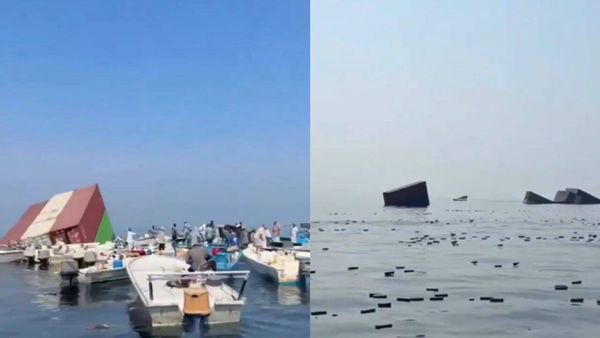
President Donald Trump on Friday accused Iran of committing what he called a "foolish violation" of the ceasefire. He said the Iranian military shot at least four One Way Attack Drones at Ships transversing the Strait of Hormuz," claiming that one drone struck the upper deck of a large cargo vessel while three others were intercepted.
Tehran struck cargo ships moving through Oman's end of the key waterway as it seeks to enforce its control of all traffic, particularly through its side. The country is estimating it could make $40 billion a year if it effectively manages to control shipping there.
Citing Iranian officials familiar with the matter, The Wall Street Journal detailed that, if implemented, the plan would be a significant windfall for the regime as it would provide a source of income it did not have before the war. The outlet went on to note that Tehran is presenting the idea to other countries in the region and wants its neighbors to be a part of it and share the revenues to make it more appealing.
The U.S. conducted retaliatory strikes on at least two different occasions since Friday's attacks.
As tensions continued to escalate, the countries announced on Sunday that they agreed to halt the attacks ahead of talks scheduled for Tuesday in Qatar. "We decided to stop all the kinetic activity," a senior U.S. official told Axios.
In this context, Iranian President Masoud Pezeshkian said on Monday that $6 billion in frozen assets belonging to the country would be released by Doha. He praised the deal reached with the U.S., calling it a "great victory for the Iranian people."
"Based on the plans made, $6 billion out of the total $12 billion of Iranian resources in Qatar will be released and returned to the country, and necessary follow-ups are being carried out," Pezeshkian added.
The Associated Press noted that, according to U.S. officials, no frozen Iranian assets have been released so far, and Qatar has not acknowledged any such transfers.