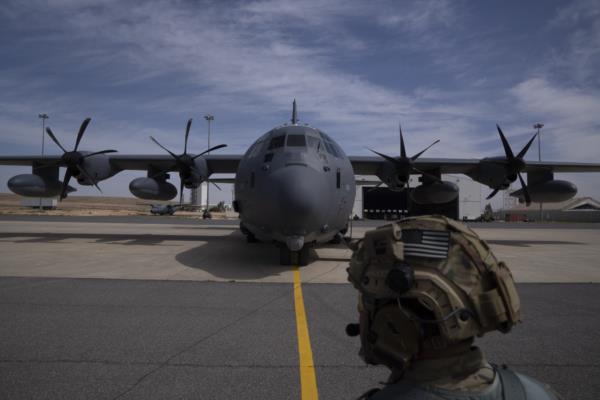
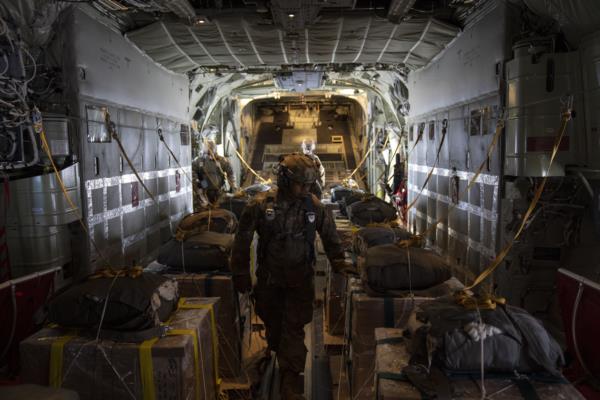
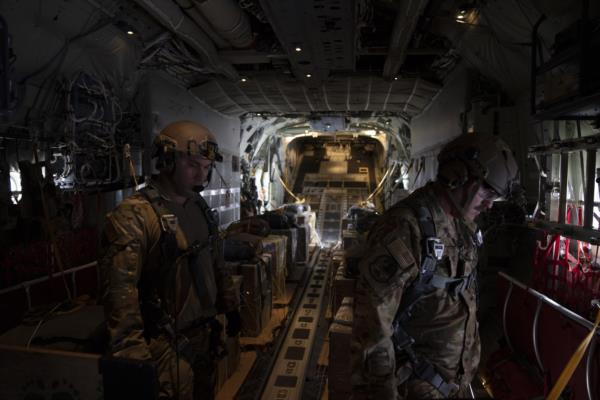
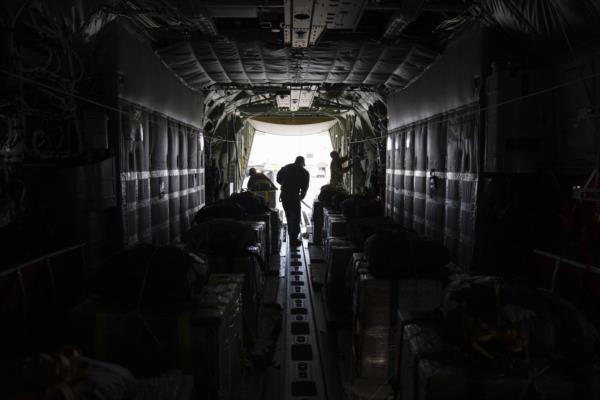
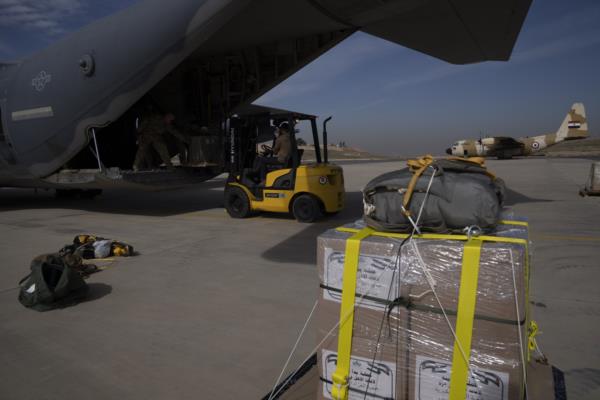
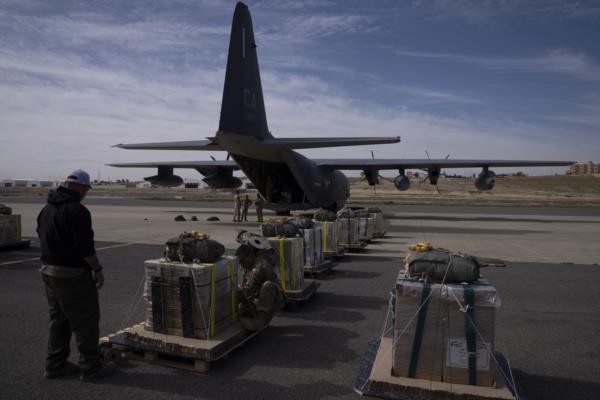
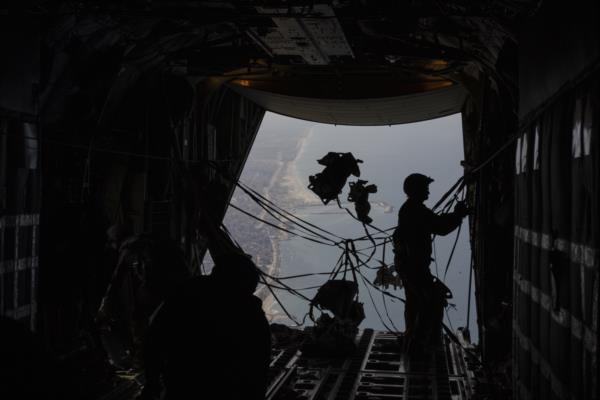
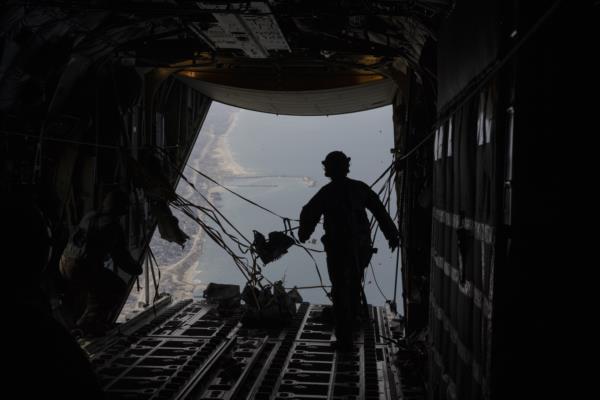
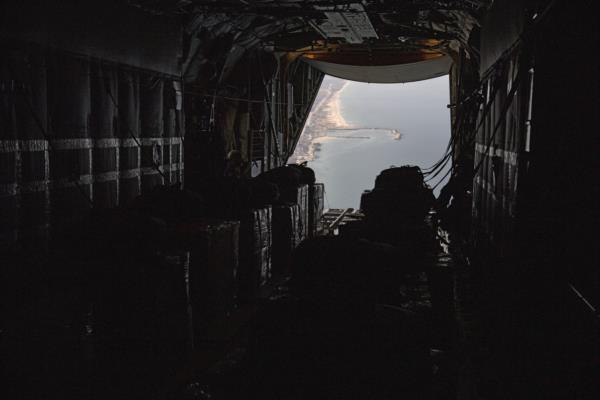
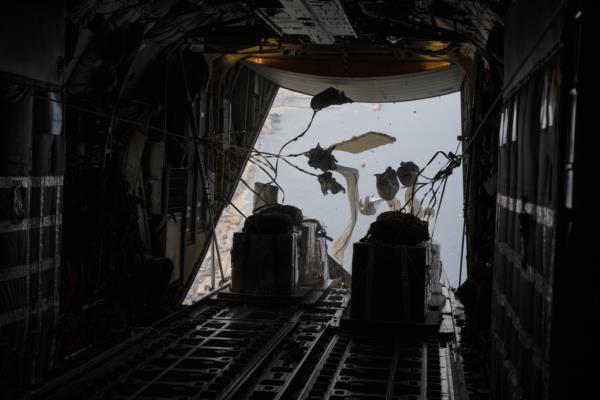
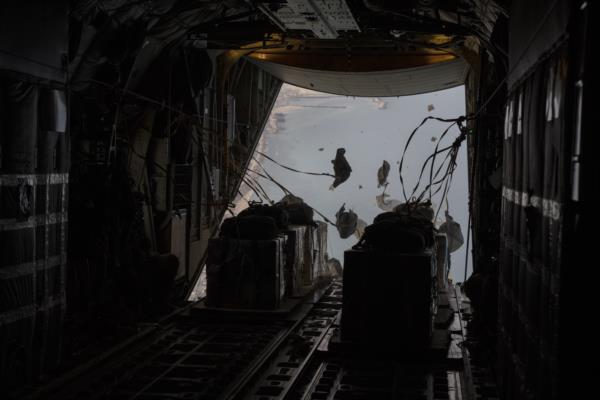
American military pilots recently conducted the 11th airdrop of humanitarian aid to Gaza, delivering three tons of essential supplies including food, water, and hygiene products. The aid, provided by Jordan, was dropped from a C-130 transport plane as part of ongoing efforts to assist the region amidst the devastation caused by six months of conflict.
The airdrops have become a crucial lifeline for Gaza, where ground transport of aid has been severely hindered by political and security challenges. The situation is particularly dire in the northern part of Gaza, where up to 300,000 Palestinians have been cut off from essential supplies since October.
Despite concerns about the effectiveness of airdrops compared to traditional truck deliveries, the international community has rallied to support the effort. The U.S. plans to construct a sea bridge to facilitate aid transport, but it may take several weeks to become operational.




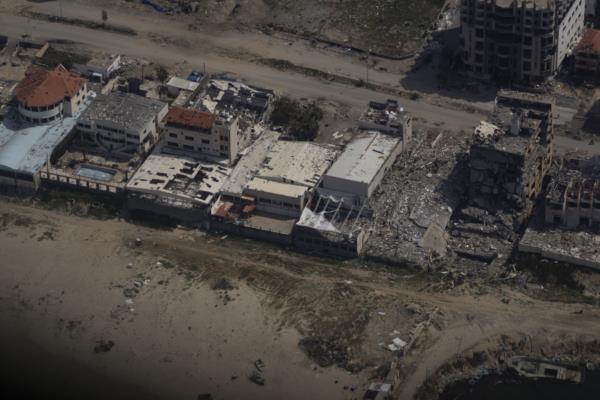
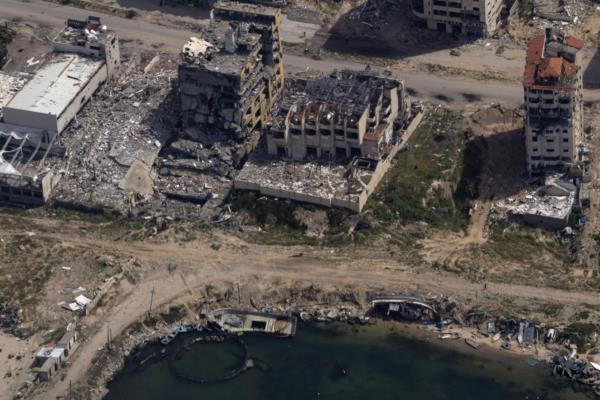
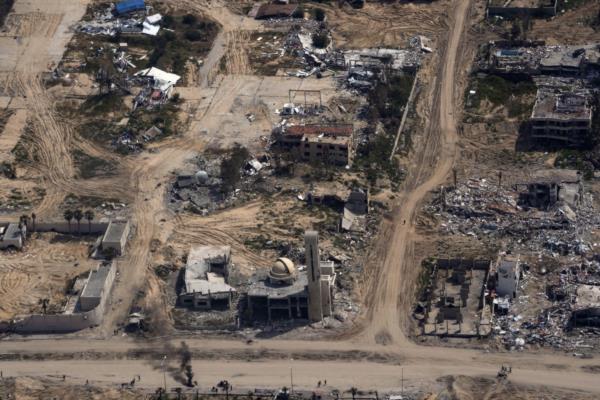
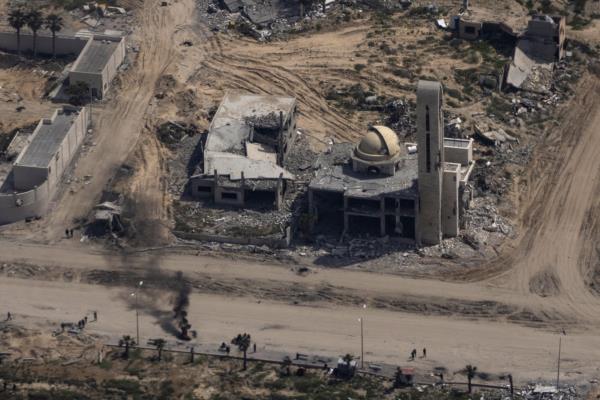



The Israeli offensive, triggered by an attack on southern Israel by Hamas, has resulted in significant casualties and pushed a quarter of Gaza's population to the brink of starvation, according to UN reports. The need for humanitarian assistance remains urgent as the conflict continues to take its toll on civilians.
While airdrops present logistical challenges and risks, efforts are being made to ensure the safety of aid recipients. The equipment used is designed to minimize the potential for harm, with precautions taken to prevent accidents during the delivery process.
As aid continues to be delivered to Gaza from the sky, the hope is that these efforts will provide much-needed relief to those affected by the ongoing conflict. International support remains crucial in addressing the humanitarian crisis in Gaza and helping the region rebuild in the aftermath of the devastating war.