Get all your news in one place.
100's of premium titles.
One app.
Start reading
International Business Times UK
Politics
Chelsie Napiza

Two-Year-Old Euthanised in Netherlands After Specialists Initially Said Other Treatments Could Help

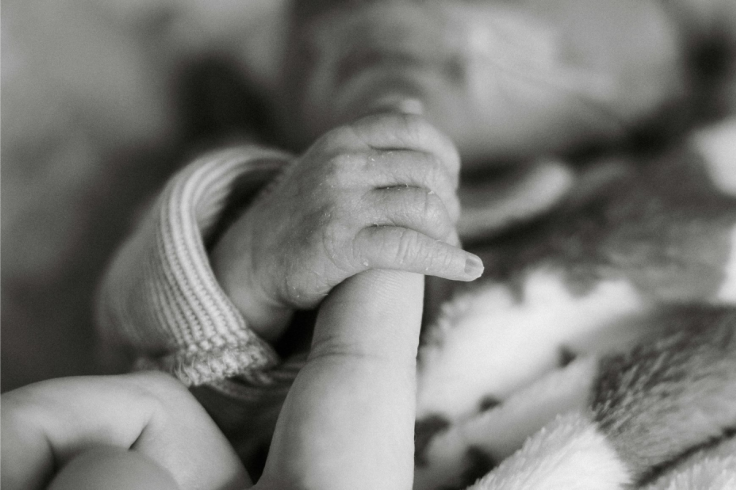
The Netherlands' first reported child euthanasia case under expanded rules involved a nearly two-year-old with severe disabilities (Credit: Joshua Taylor / Unsplash)

The first child to have their life ended under the Netherlands' expanded rules for children aged one to 12 was almost two years old, according to the official review of the case.

The child, described in the committee judgment as almost 24 months old, died at the end of 2025 after being born extremely prematurely and suffering very extensive brain damage, severe epilepsy and cerebral palsy.
Dutch authorities classify the procedure as termination of life, or levensbeëindiging, rather than euthanasia, because the child could not make a request; international coverage has widely described it as euthanasia.

The review committee found the doctor acted with due care, and the Public Prosecution Service decided not to prosecute.

A Developmental Age of Six Weeks at Almost Two

The child's medical history is set out in the committee's published judgment, case LK-2026-001. Born at 26 weeks and three days, the child suffered multiple infections with sepsis, and an MRI scan later showed very extensive brain damage.

Diagnoses followed of cerebral palsy, cerebral visual impairment and infantile epileptic spasms syndrome, formerly known as West syndrome, identified at eight months.

The committee recorded that there had been a complete lack of development and improvement over the child's short life. At almost two years old, the child's developmental age was estimated at six weeks, with no verbal development and only minimal communication possible.

Daily life involved persistent physical distress. The child had severe sleep problems, swallowing difficulties that created a risk of aspiration pneumonia, and trouble clearing mucus from the lungs and airways, which caused shortness of breath and a considerably higher risk of respiratory infections.

When it became clear there was no prospect of improvement, the parents asked the child's physician to end the child's life.

Irreversible, but Not Yet Unbearable

The first independent assessment did not support ending the child's life. The physicians consulted found the situation irreversible, with no realistic chance of improvement, but concluded that the child was not continuously suffering unbearably at that point and that reasonable alternatives remained, including palliative options and medication that might improve seizure control, the judgment records.

The treating doctor followed that advice. The recommended medication was tried, but it produced additional problems through side effects and was eventually stopped.

A later independent physician reached a different view. That doctor found the child's unbearable suffering clearly visible, citing continuous discomfort, apart from occasional better moments, and very frequent seizures. The treating doctor then ended the child's life through a gradually induced deep sedation, using sedatives and painkillers followed by coma-inducing anaesthetics, and the child died.

The committee concluded that the doctor had acted with due care and could reasonably conclude that the child's suffering was unbearable and without prospect of improvement, with no reasonable alternative. It also noted that, at the time, there was no established guideline for performing life termination in children under 12.

The doctor has spoken about the strain. 'As a doctor, you are in an extremely vulnerable position, because this has never happened before. It still feels as if a sword of Damocles has been hanging over your head for almost a year,' the physician told Dutch media, as reported by Euronews.

Five to 10 Children a Year Under the 2024 Rules

The framework is recent and narrow. A ministerial regulation that entered into force on 1 February 2024 extended the review system to cover children aged one to 12 who are terminally ill and suffering unbearably with no prospect of improvement, where there is no reasonable alternative, including through palliative care. Before then, it covered newborns in exceptional circumstances and, with consent requirements, those aged 12 and over.

The doctor decides in consultation with the parents, and the child is involved where that is possible, according to government guidance. In this case, the child could not communicate, and the committee found the parents' wish to be voluntary and consistent.

The rules still lack their own criteria. The regulation does not yet contain a separate set of formal due-care standards for this age group, so the committee uses the neonatal criteria as a starting point alongside standards provisionally approved by the Dutch Association for Paediatrics in October 2024. The government had estimated the framework would apply to around five to 10 children a year, and no cases were reported in 2024.

The legal protection is conditional. For this age group, a doctor who ends a child's life can rely on a necessity defence within the criminal law if the professional and procedural requirements are met, the Public Prosecution Service explains.

Unlawful intentional termination of life remains a criminal offence, and the maximum penalty for termination of life on request is 12 years in prison.

The case sits within a much larger national picture. The Netherlands legalised euthanasia under strict statutory conditions in 2002, and the regional review committees received 10,341 euthanasia notifications in 2025, up 3.8 per cent on 9,958 in 2024.

The first case under the new rules was decided only after an initial finding that the child was not yet suffering unbearably, and after the treatment that the finding recommended had failed.

Sign up to read this article
Read news from 100's of titles, curated specifically for you.
Already a member? Sign in here
Related Stories
Top stories on inkl right now
One subscription that gives you access to news from hundreds of sites
Already a member? Sign in here
Our Picks
Fourteen days free
Download the app
One app. One membership.
100+ trusted global sources.