
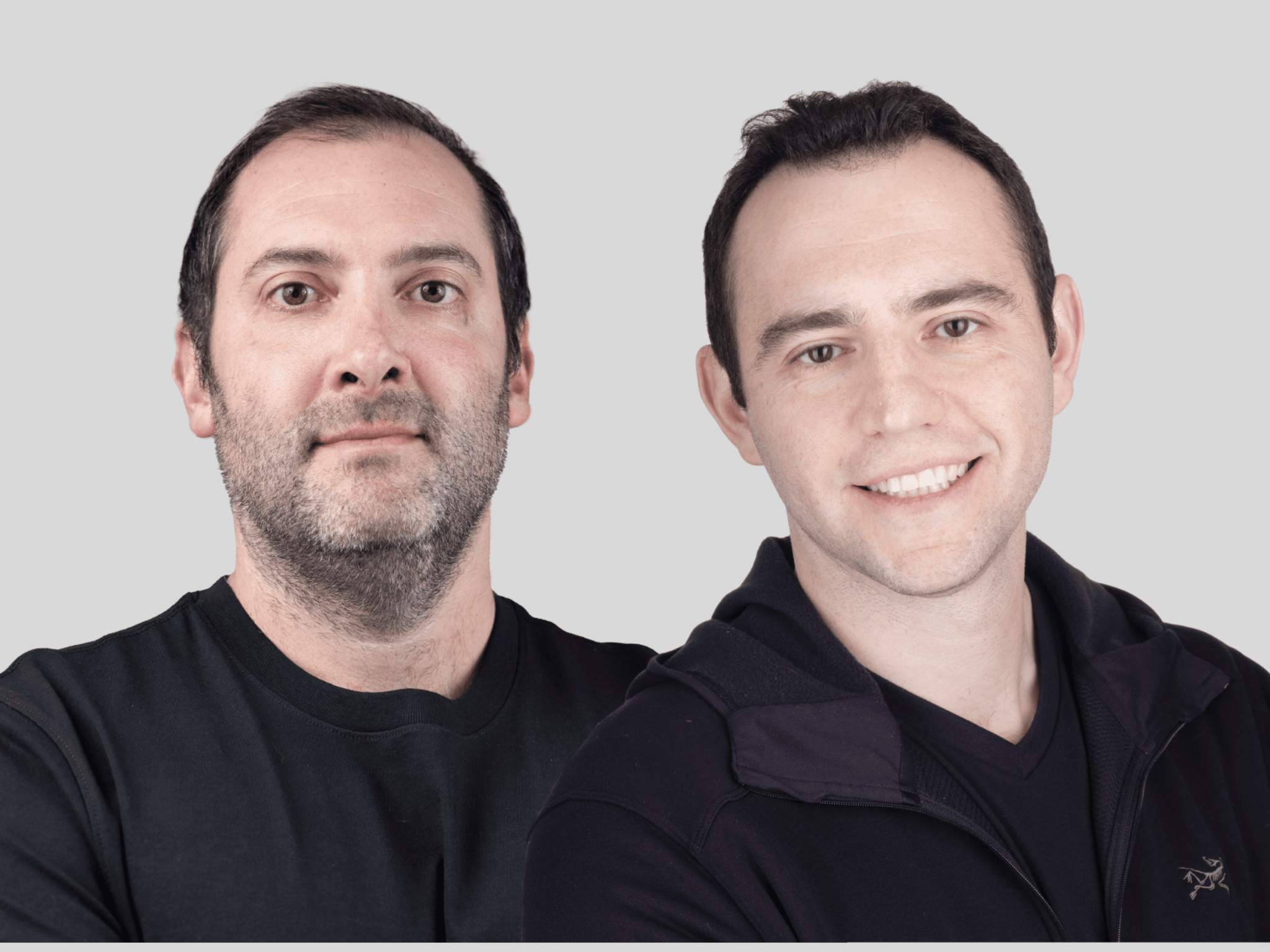
Alex Ksendzovsky and Jon Pomeraniec were in a Washington, D.C. Airbnb, but they weren’t on vacation. They were feeding stock market data into a dish of living brain cells.
It was 2021, and the two neurosurgeons were testing Ksendzovsky’s far-fetched college idea: that brain cells could predict the S&P 500. They encoded daily prices into electrical patterns and fed those patterns into a dish filled with living neurons. Then they watched. The neurons didn’t just respond—they recognized patterns in the data. What started as a wild experiment revealed something bigger: that living neurons could be used as a form of compute.

“It was the first proof point,” said Pomeraniec. “We could actually take information from the real world, translate it into a communicable language with biology, put it into a dish full of living neurons, draw something out, and analyze it. And there was no turning back.”
Five years later, Ksendzovsky and Pomeraniec’s The Biological Computing Co. (TBC) has raised $25 million in seed funding, Fortune has learned. Primary led the round, with participation from Builders VC, E1 Ventures, Proximity, Refactor Capital, Tusk Ventures, and Wonder Ventures. The startup’s goal is as simple as it’s futuristic: To position biological computing as a genuine alternative to silicon and transformers.
“The brain’s a lot more energy efficient than silicon, billions of times more efficient,” Ksendzovsky told Fortune. “So, one of the things we’re able to do is abstract the way neurons respond to information, and mathematically model them… Our current AI systems have gotten to the point where they’ve been extremely inefficient, and require way too much data to train. That’s because they’ve become very unbiological.”
Biological computing, as an idea, traces back to the 1940s and 1950s. And by the 1990s, the idea that living systems could be full-fledged information processors took hold, as researchers built simple systems with DNA and bacteria. However, biological compute has historically been hard to control, optimize, and scale, which has kept its real world applications limited.
But Ksendzovsky and Pomeraniec believe much is possible, and they’re planning to abstract neuron behavior into products, like an algorithm discovery platform or software adapter. And since you’re probably wondering how this works, it goes something like this: Grow neurons on a grid of electrodes, take some data (for instance, an image or video sequence), convert that data into a pattern of electrical stimulation. Then, the neurons receive that stimulation and “think”: they fire, interact, and form a neural response pattern. They record that electrical activity, and then can turn that data into software. Some simple current use cases include improving images, speeding up classification tasks, and improving video rollout.
Down the line, Ksendzovsky and Pomeraniec believe that biology is the answer to the man-made compute crunch of the AI boom.
“Our big picture ten-to-20 year plan… is using neurons in real-time compute,” said Ksendzovsky. “In five to ten years, we want these biological networks to be part of the compute circuit, actually sending information in real-time… Data centers can then be less power-hungry, with real biological networks significantly helping. That’s the world that we’re building towards.”
See you tomorrow,
Allie Garfinkle
X: @agarfinks
Email: alexandra.garfinkle@fortune.com
Submit a deal for the Term Sheet newsletter here.
Joey Abrams curated the deals section of today’s newsletter. Subscribe here.