
Get all your news in one place.
100's of premium titles.
One app.
Start reading
Euronews
Euronews
Gavin Blackburn

Two drones from Russia crash in Latvia with one causing oil depot fire, army says

Several drones entered Latvian airspace from Russia overnight, with two of them crashing and one causing a brief fire at an oil depot, the army said on Thursday.

"Several unmanned aerial vehicles entered Latvian airspace" the army of the EU and NATO member bordering Russia said in a statement, adding that two of them "crashed."

One of the drones crashed at an oil storage site in Rezekne, in the east of the country, the national police said. A fire broke out but was quickly brought under control by firefighters.

"As long as Russian aggression against Ukraine continues, it is possible that such incidents will be repeated, when a foreign unmanned aircraft enters Latvian airspace or approaches it," the army said.

It was not immediately clear where the drones originated.

Drones believed to be from Russia hit Latvia and neighbouring Estonia in March.

A drone shows an aerial view of the Estonia-Russia border near Vinski, 15 September, 2025 (A drone shows an aerial view of the Estonia-Russia border near Vinski, 15 September, 2025)

One drone "struck the chimney of the Auvere power plant" in Estonia, the country's internal security ISS said in a statement, while another fell on Latvian territory.

"These are the effects of Russia’s large-scale war of aggression," said ISS Director General Margo Palloson, expressing concern about "the occurrence of such incidents in the future."

High alert

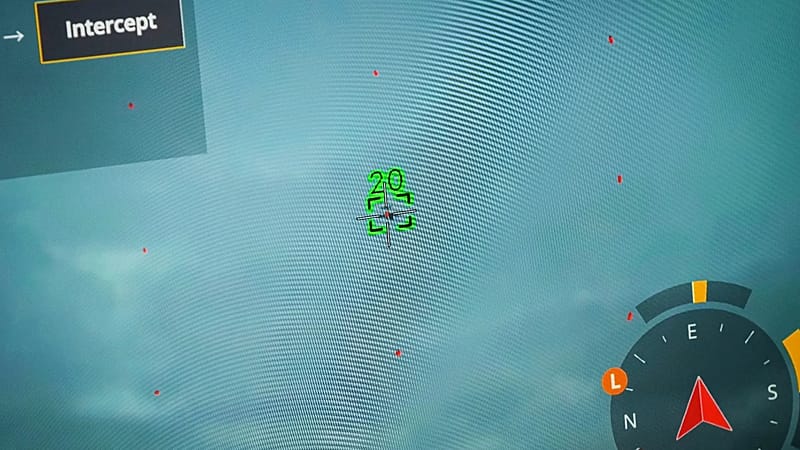
Europe as a whole is on high alert after drone flyovers into NATO airspace reached an unprecedented scale last September, prompting European leaders to agree to develop a "drone wall" along their borders to better detect, track and intercept drones violating Europe's airspace.

In November, NATO military officials said a new US anti-drone system had been deployed to the alliance’s eastern flank.

And following a violation of Polish airspace, NATO Secretary General Mark Rutte announced the formation of the Eastern Sentry programme, which aims to deter further Russian incursions.

Emergency services personnel work to extinguish a fire following a Russian drone attack in Kharkiv region, 6 May, 2026 (Emergency services personnel work to extinguish a fire following a Russian drone attack in Kharkiv region, 6 May, 2026)

Some European officials described the incidents as Moscow testing NATO’s response, which raised questions about how prepared the alliance is against potential threats from Russia.

The Kremlin has dismissed allegations that Russia is behind some of the unidentified drone flights in Europe as "unfounded."

Sign up to read this article
Read news from 100's of titles, curated specifically for you.
Already a member? Sign in here
Related Stories
Top stories on inkl right now
One subscription that gives you access to news from hundreds of sites
Already a member? Sign in here
Our Picks
Fourteen days free
Download the app
One app. One membership.
100+ trusted global sources.