
Get all your news in one place.
100's of premium titles.
One app.
Start reading
PC Gamer
PC Gamer
Jess Kinghorn

TSMC's latest bank report is exactly as you'd expect it to be: mo' wafers, mo' money

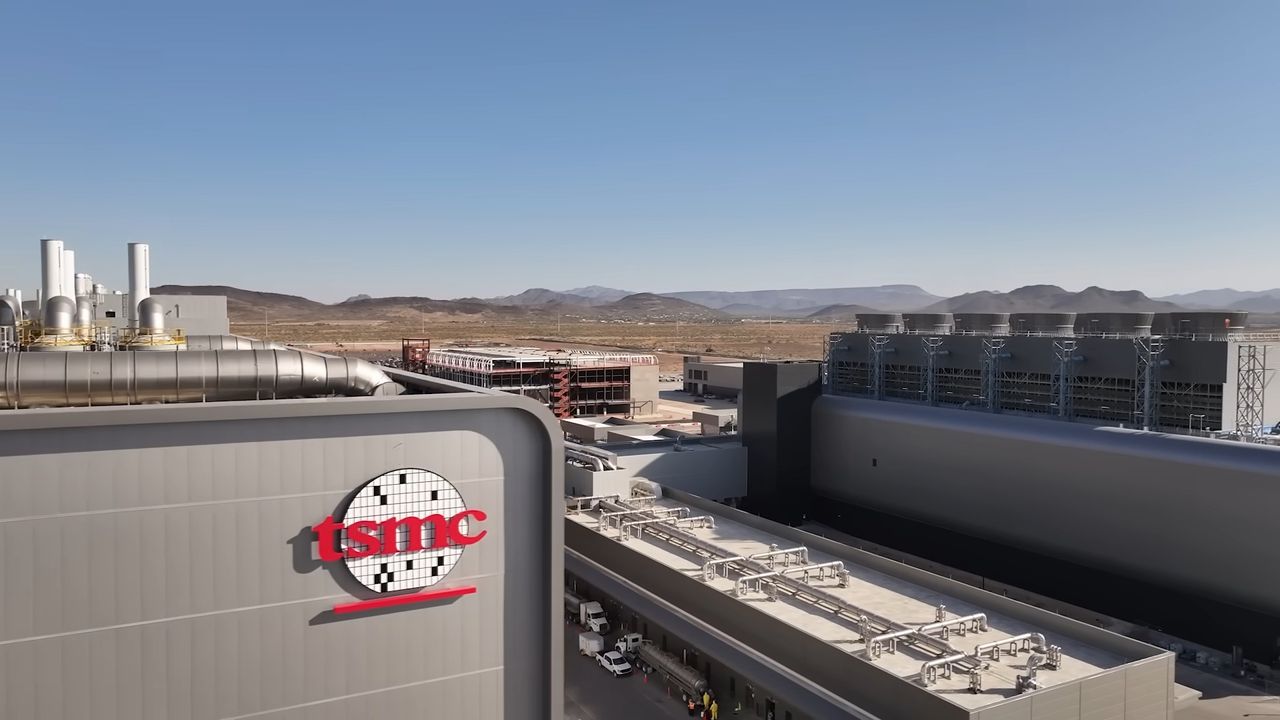
The outside of TSMC Arizona, showing the desert and the mountains in the distance next to the TSMC logo.

While AI's explosive growth hasn't been good news for consumers, because it's directly caused the global memory crisis, but it sure does keep manufacturers exceedingly busy. Case in point, TSMC has revealed profits that both blow past its original projections and smash earlier records.

TSMC had previously issued guidance to its investors predicting that it would make somewhere between $34.6 and $35.8 billion. That's no small potatoes by any means, but between the start of the year and the end of March, the company did in fact make $35.90 billion in net revenue.

That's a 40% increase year-on-year, and the eighth quarter in a row where the company has seen double-digit growth. As such, TSMC has since adjusted its Q2 projection to between $39.0 and $40.2 billion, a massive step up from the $30.07 billion made during 2025's second quarter.

This should come as no surprise when you consider that TSMC has also seen a 28% year-on-year growth in wafer shipments. As Jacob's RAMpocalypse explainer lays out, we're experiencing a chip shortage because the AI industry has a seemingly bottomless appetite for system memory (though it's not just RAM that's affected, with SSD prices also getting silly for one thing).

During a recent earnings call, chief executive C.C. Wei described AI-related ​demand as "extremely robust." TSMC also said that 3-nanometre wafers (which are becoming more frequently used for AI chips thanks to Nvidia's imminent Rubin generation) accounted for "25% of total wafer revenue." The bulk of revenue still came from wafers made on earlier processes, though, with 5 nm wafers, for instance, accounting for 36% of total wafer revenue.

It's important to remember that not all of TSMC's revenue comes from fabricating silicon for AI chips. However, it's not hard to see why the company spent $165 billion alone on its plans for a 'gigafab' cluster in Phoenix, Arizona. This US-based chip fab project is already set up to make four-nanometre wafers, but 3 nm is planned to get underway next year.

'Extremely robust' almost feels like an understatement—TSMC is reportedly booked up until 2028, and even the next-gen Arizona fabs have had their projected capacity fully booked before they've even finished construction. In other words, don't expect the supply crisis or, by extension, consumer pricing to ease any time soon.

Sign up to read this article
Read news from 100's of titles, curated specifically for you.
Already a member? Sign in here
Related Stories
Top stories on inkl right now
One subscription that gives you access to news from hundreds of sites
Already a member? Sign in here
Our Picks
Fourteen days free
Download the app
One app. One membership.
100+ trusted global sources.