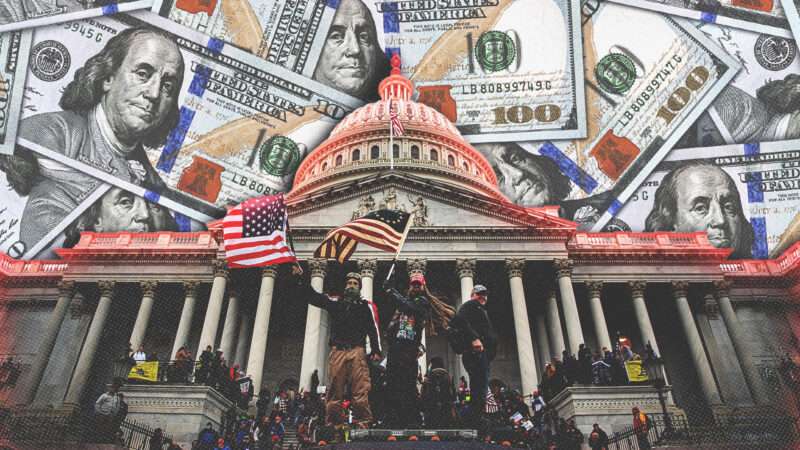
The Trump administration's announcement that it had established a large, taxpayer-financed "Anti-Weaponization Fund" was an odd addition to an already-odd news cycle. The pool of $1,776,000,000—1776, get it?—was born out of a settlement between President Donald Trump and the IRS; the chief executive had, in some sense, sued himself after a contractor leaked his tax returns to The New York Times in 2019. Those funds will be used, the Justice Department said, "to hear and redress claims of others who suffered weaponization and lawfare."
The development has drawn widespread criticism for reasons one might assume: allegations of corruption and self-dealing. But its inception raises larger questions about what processes exist for alleged victims of government misconduct, how hard it is for anyone to get compensation when their constitutional rights are violated, and why that is.