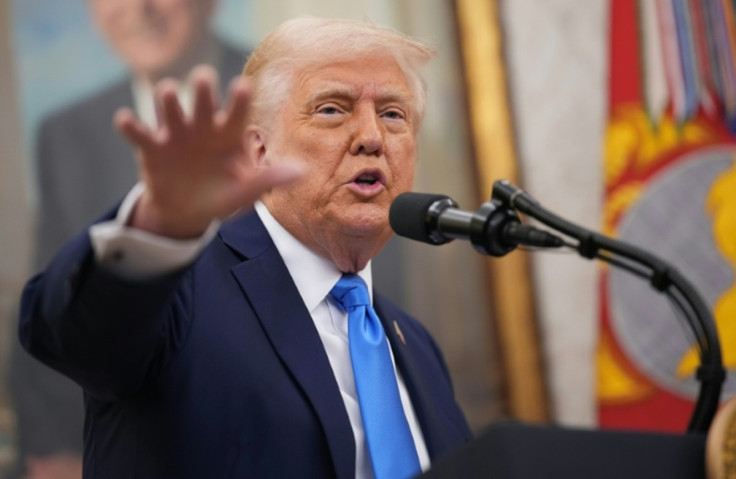
Donald Trump's second White House seriously explored suspending a core constitutional protection to speed mass deportations and curb protests, according to newly disclosed internal memos written in Washington in 2025 by senior staff secretary Will Scharf. The confidential documents, detailed in reporting for the forthcoming book Regime Change: Inside the Imperial Presidency of Donald Trump, show that aides weighed using both the suspension of habeas corpus and the Insurrection Act as tools against unauthorised immigrants and demonstrators.
The revelations trace back to the early months of Trump's second term, after his emphatic 2024 election win emboldened a hard-line immigration drive from the Oval Office. Stephen Miller, restored as one of the most powerful figures in the West Wing, was again pressing sweeping measures to accelerate deportations and sideline the courts that had frustrated the first Trump administration. What had previously sounded like late-night cable talk was being turned into draft policy, routed through a small circle of loyalists and sceptics.
JUST IN: 🇺🇸 Trump administration prepares major ICE surge in New York City. pic.twitter.com/Z1BuqyU8gh
— Remarks (@remarks) June 9, 2026
Trump, Habeas Corpus And The Push To Go Around The Courts
The Supreme Court allowed the administration to keep using the Alien Enemies Act to deport Venezuelans in the US illegally but insisted that migrants could still challenge removal in court through habeas corpus petitions. That ruling slowed deportations and, inside the West Wing, looked to Miller like an opening rather than a defeat.
According to the book's authors, Miller revived an idea he had floated before. If Trump declared that the country was facing an 'invasion' at the southern border, could he claim the power to suspend habeas corpus for unauthorised immigrants altogether The centuries‑old writ forces the government to justify detention before a judge. Take it away, and locked‑up migrants would effectively lose their right to a hearing.
Scharf, a Harvard‑trained lawyer and committed Trump ally rather than a closet dissenter, was disturbed enough to put his concerns in writing. In a memo dated 29 April 2025 and stamped 'confidential', sent to chief of staff Susie Wiles, he reminded colleagues that the Constitution permits suspension of habeas corpus only 'in cases of rebellion or invasion' and that courts have almost uniformly held that only Congress can authorise it.
He went further, pointing out that even when Congress had explicitly suspended the writ, the Supreme Court had insisted that some alternative process with safeguards be provided. Habeas, he wrote, 'prevents, in effect, governmental actors from detaining, imprisoning or executing individuals arbitrarily.' That is cautious lawyer's language for a very blunt warning: try this, and you will almost certainly lose.
Scharf's memo laid out a history few in the building seemed eager to dwell on. Habeas corpus had been formally suspended only four times in US history, each during war or armed rebellion, most recently after Pearl Harbor. Only Abraham Lincoln had claimed the power alone, and even then while Congress was out of session. Even George W Bush's attempt to block Guantánamo detainees from filing habeas petitions had ultimately been struck down in a 2008 Supreme Court ruling.
Behind the dry citations was a simple message. For all persons held on US soil, habeas rights apply, and any unilateral attempt by Trump to sweep them aside would trigger a ferocious court fight and risk a sweeping precedent against the presidency itself.
The day after the memo landed on Wiles's desk, Trump hinted in public that he was thinking about 'one way that's been used by three very highly respected presidents' to get around the courts in a deportation case involving Salvadoran national Kilmar Armando Abrego Garcia. When CNN later reported, citing officials, that he was referring to suspending habeas corpus, Miller stood outside the West Wing and told reporters the option was 'actively' under review in a supposed time of 'invasion.'
The invasion framing, according to the book, was always legally strategic. By recasting irregular migration as a hostile incursion, Trump's team hoped to prise open emergency powers reserved for wartime. Border crossings had already fallen to multidecade lows, but Miller continued to use the language of war.
After weeks of backlash and internal argument, the habeas proposal receded. Trump later acknowledged discussing it but suggested it was too 'big' a step to take over a single case. In truth, the administration adjusted tactics instead of goals. In July 2025, Immigration and Customs Enforcement quietly reinterpreted long‑standing rules so that immigrants arrested inside the US, including people who had lived there for years, were treated as if they had just arrived at the border and could be held without a bond hearing. Federal judges pushed back, but the White House routinely ignored orders it disliked.
Donald Trump, The Insurrection Act And Protests In The Streets
If suspending habeas corpus to stop deportation challenges was the legal nuclear option, the domestic counterpart was the Insurrection Act. That statute allows a president to deploy military forces to quell serious unrest. It had been used in 1992 during the Los Angeles riots, when the city was burning and California's governor begged for help. The situations facing Trump in 2025 were, by any reasonable measure, nowhere near that level.
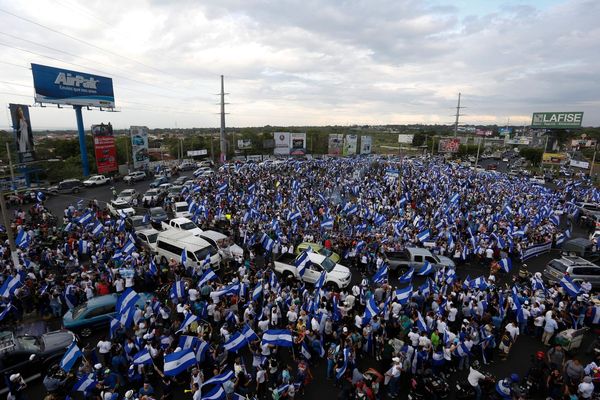
Yet as protests flared over increasingly aggressive immigration raids, Miller and Vice President JD Vance argued that Trump should invoke the Act to deal with what they framed as an 'enemy within.' The immediate trigger was Minnesota. On 7 January, federal agents shot dead Renee Good, a poet and mother of three, during a protest against deportation sweeps. On 24 January, agents killed Alex Pretti, a critical care nurse. Officials branded Good a 'domestic terrorist' and Pretti an 'assassin', but there was no evidence either was a paid agitator.
Unrest grew. Behind closed doors in the West Wing, Vance arrived at a January senior staff meeting and argued that they should 'swiftly' use the Insurrection Act in Minnesota to send a message that disruption of ICE operations would not be tolerated. Miller, usually combative, was more muted but backed the idea, suggesting the law's boundaries had never really been tested.
Scharf again became the internal brake. Drawing on a second confidential memo he had written in October, he told colleagues that the Insurrection Act was a 'break‑the‑glass exception' intended for genuinely dire situations, not politically embarrassing protests. He pointed to the 1992 precedent. Others in the room, including White House counsel David Warrington and deputy chief of staff James Blair, questioned what practical benefit troops on the streets would bring beyond intensifying the public backlash.
'What does the Insurrection Act give us that we don't already have' Blair asked, according to the book. Nobody had a convincing answer. The meeting ended without a decision. Under sustained public pressure, the administration instead eased off. Gregory Bovino, a particularly hard‑line Customs and Border Protection commander‑at‑large, was removed from his post, and ICE pushes in cities were scaled back, at least temporarily.
Publicly, officials insisted all of this was routine policy discussion. Abigail Jackson, a White House spokeswoman, said in a statement that administration members 'often have conversations about many different lawful options to implement the president's agenda with the president always being the ultimate decider.' Nothing in the reporting confirms that Trump ever signed an order suspending habeas corpus or formally invoked the Insurrection Act, so the most explosive ideas remained hypothetical, and should be treated with caution.
Privately, though, the internal memos and eyewitness accounts sketched in Regime Change suggest a presidency repeatedly drawn towards the outer edges of constitutional authority and held back only by a thin layer of loyal sceptics who worried less about abstract rights than about how far Trump could go without breaking the system in ways that would come back to haunt him.