Get all your news in one place.
100's of premium titles.
One app.
Start reading
International Business Times UK
World
Chelsie Napiza

Trump Used Saturday's Shooting to Give Historic Preservationists a 9AM Deadline to Drop Their Lawsuit, or the DOJ Will Kill It for Them

Donald Trump (Credit: The White House)

Hours after a gunman breached security at the White House Correspondents' Dinner, President Donald Trump's Justice Department handed the National Trust for Historic Preservation a blunt choice: drop your lawsuit against his £309 million ($400 million) White House ballroom by 09:00 Monday, or the government will move to end it in court.

Assistant Attorney General Brett Shumate addressed the letter on Sunday 26 April 2026 to Greg Craig of Foley Hoag LLP, outside counsel for the National Trust, less than 24 hours after shots were fired outside the ballroom at the Washington Hilton on the evening of 25 April.
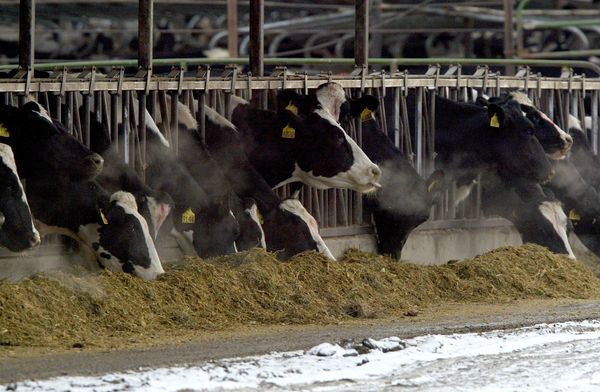
Acting Attorney General Todd Blanche posted a copy of the letter on X alongside a four-word summary of the administration's position: 'It's time to build the ballroom.' The National Trust's spokesperson, Elliot Carter, said Sunday that the group would review the letter with legal counsel.

The Shumate Letter: A Security Argument and a Hard Deadline

'Last night, there was another attempt on President Trump's life,' Shumate opened the letter, which was directed to Craig personally. 'This time, the shooter targeted President Trump at the Washington Hilton, the only ballroom in Washington, D.C. suitable to host large gatherings for the President, where another shooter targeted President Reagan 45 years ago.' Shumate described the Hilton as 'demonstrably unsafe' for presidential events, arguing its size 'presents extraordinary security challenges for the Secret Service.'

The letter's logic was direct. 'When the White House ballroom is complete, President Trump and his successors will no longer need to venture beyond the safety of the White House perimeter to attend large gatherings at the Washington Hilton ballroom,' Shumate wrote. His conclusion followed: 'Put simply, your lawsuit puts the lives of the President, his family, and his staff at grave risk.'

He gave the National Trust until 09:00 Monday 27 April to notify the government of a voluntary dismissal. If the deadline passed without action, Shumate warned, the DOJ would move to dissolve the injunction and dismiss the case, and would record in its court filing that the National Trust had opposed the motion.

Blanche, on X, described the lawsuit as 'the passing aesthetic gripe of a single person' who 'walks in the vicinity of the White House once a month and expects to dislike the East Wing's new design.' Shumate added in the letter: 'I hope yesterday's narrow miss will help you finally realize the folly of a lawsuit that literally serves no purpose except to stop President Trump no matter the cost. Enough is enough.' The president himself, in a Truth Social post earlier on Sunday, wrote that the lawsuit 'must be dropped, immediately,' hours before Blanche published Shumate's letter.

One crucial fact contextualises the administration's security argument. The White House Correspondents' Association Dinner is not a White House event; it is run by the nonprofit White House Correspondents' Association. Attending is a presidential choice. Saturday's dinner was the first Trump had attended during either of his presidencies. The administration did not designate the event as a National Special Security Event, a classification that would have required a higher threshold of security measures, according to the Washington Post.

The Lawsuit That Has Blocked the Ballroom Since December 2025

The National Trust for Historic Preservation filed suit on 12 December 2025, one week after the White House completed the demolition of the historic East Wing to clear the site for construction. The formal case is National Trust for Historic Preservation v. National Park Service, No. 26-5101 (D.D.C.).

The Trust's December press release stated the lawsuit argued 'no president is legally allowed to tear down portions of the White House without any review whatsoever.' It cited the Property Clause of the Constitution, which reserves to Congress the right to dispose of and make rules governing federal property, alongside statutes requiring environmental review and consultation with federal oversight bodies.

The White House ballroom. (Credit: The White House)

Senior US District Judge Richard Leon, a George W. Bush appointee, sided with the Trust. In his ruling, Leon wrote: 'The President of the United States is the steward of the White House for future generations of First Families. He is not, however, the owner!' He concluded that 'no statute comes close to giving the President the authority he claims to have' and issued a preliminary injunction blocking above-ground construction.

The DC Circuit Court of Appeals issued an administrative stay on 18 April 2026, allowing construction to continue through 5 June while it considers the government's appeal. That stay does not resolve the merits. The ballroom, as proposed, would occupy 90,000 square feet on the site of the demolished East Wing, accommodating up to 999 people.

A picture of the White House being demolished. (Credit: @JohnOBrennan2/X formerly Twitter)

Trump says the project is funded by private donations. The government's own court filings confirm that public money is paying for the underground bunker and associated security upgrades. The National Capital Planning Commission approved the project on 2 April 2026, two days after Leon issued his initial injunction blocking above-ground work.

Congress Moves to Make the Lawsuit Legally Irrelevant

The shooting at the Correspondents' Dinner produced immediate political momentum that, if converted into legislation, could render the entire dispute moot. Senator Lindsey Graham of South Carolina announced Sunday that he would introduce standalone legislation expressly authorising and funding the White House ballroom.

Senator Tim Sheehy of Montana said he would seek unanimous consent in the Senate for the measure. 'It is an embarrassment to the strongest nation on Earth that we cannot host gatherings in our nation's capital, including ones attended by our President, without the threat of violence and attempted assassinations,' Sheehy said in a public statement.

The mechanism is straightforward. The National Trust's lawsuit rests on the argument that Trump proceeded without the congressional authorisation that the Constitution and relevant statutes require. A law expressly granting that authorisation would remove the legal basis on which Leon issued his injunction. Legal observers noted it would almost certainly end the litigation before the 5 June hearing. Republican representative Jim Jordan said Sunday on Fox News he supported the project '100%,' describing it as 'obviously a much safer location for these types of events.'

Even Democrats showed openness. Senator John Fetterman of Pennsylvania, who attended Saturday's dinner, said on CNN Sunday that the proposed White House space should be used 'for events exactly like these,' adding that the situation had left attendees in a 'vulnerable' position.

Asked whether the incident would generate new political support for the project, Fetterman answered: 'I certainly hope so.' The White House on Sunday made clear construction would continue regardless of court proceedings, with Trump telling Fox News Channel that by the end of his current term, 'you're going to have a ballroom, the top of the line, security. You're not going to have problems.'

Sign up to read this article
Read news from 100's of titles, curated specifically for you.
Already a member? Sign in here
Related Stories
Top stories on inkl right now
One subscription that gives you access to news from hundreds of sites
Already a member? Sign in here
Our Picks
Fourteen days free
Download the app
One app. One membership.
100+ trusted global sources.