Get all your news in one place.
100’s of premium titles.
One app.
Start reading
International Business Times
Matias Civita

Trump Slams Supreme Court Justices Who Ruled Against Tariffs As 'Disloyal'

During a press briefing at the White House on Friday, President Donald Trump escalated his public conflict with the U.S. judiciary after the Supreme Court struck down the bulk of his global tariff program, branding the justices who ruled against him "unpatriotic and disloyal" and attacking the court's majority as influenced by partisan and foreign interests.

The 6-3 decision, authored by Chief Justice John Roberts and joined by five other justices, held that Trump lacked constitutional authority to impose sweeping tariffs under the International Emergency Economic Powers Act (IEEPA). The ruling agreed with lower court findings that IEEPA does not confer the power to levy tariffs without clear congressional authorization, a point the majority tied to the Constitution's separation of powers.
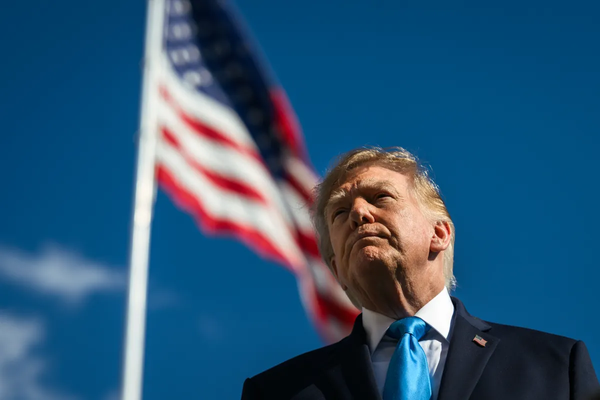
Trump refused to address the legal reasoning behind the decision and instead turned his fire on the justices themselves. "They're very unpatriotic and disloyal to our Constitution," he said, accusing unnamed members of the court of failing to do "what's right for our country.

Trump's rhetoric singled out figures he appointed, including Justices Amy Coney Barrett and Neil Gorsuch, who joined Chief Justice Roberts in the majority opinion against his tariffs. "I'm ashamed of certain members of the court," Trump said, claiming they had become "'fools and lapdogs' of RINOs and the radical left Democrats."

The president also suggested, without evidence, that the decision was influenced by foreign powers and an "unknown political movement." He did not name specific foreign actors but framed the ruling as a betrayal of American interests. The majority opinion noted that tariff authority is traditionally vested in Congress, and that the language of IEEPA does not explicitly grant the president the sweeping authority Trump claimed.

Legal precedent supports this view. The Supreme Court's ruling in Learning Resources v. Trump underscored that words like "regulate" and "importation" within IEEPA cannot reasonably be stretched to encompass tariff powers that the Constitution clearly assigns to Congress.

Justices Clarence Thomas, Brett Kavanaugh, and Samuel Alito dissented, arguing that the tariffs could be justified under a long-standing tradition of presidential influence over trade policy and that striking them down risked chaos in economic policy. Justice Kavanaugh's dissent contended that tariffs remain a "traditional tool" for import regulation, even if the statute at issue did not explicitly mention them. The White House said Trump would seek alternative means to maintain tariffs. At the briefing, Trump announced plans to issue a new 10% global tariff under a different statute.

Sign up to read this article
Read news from 100’s of titles, curated specifically for you.
Already a member? Sign in here
Related Stories
Top stories on inkl right now
One subscription that gives you access to news from hundreds of sites
Already a member? Sign in here
Our Picks
Fourteen days free
Download the app
One app. One membership.
100+ trusted global sources.