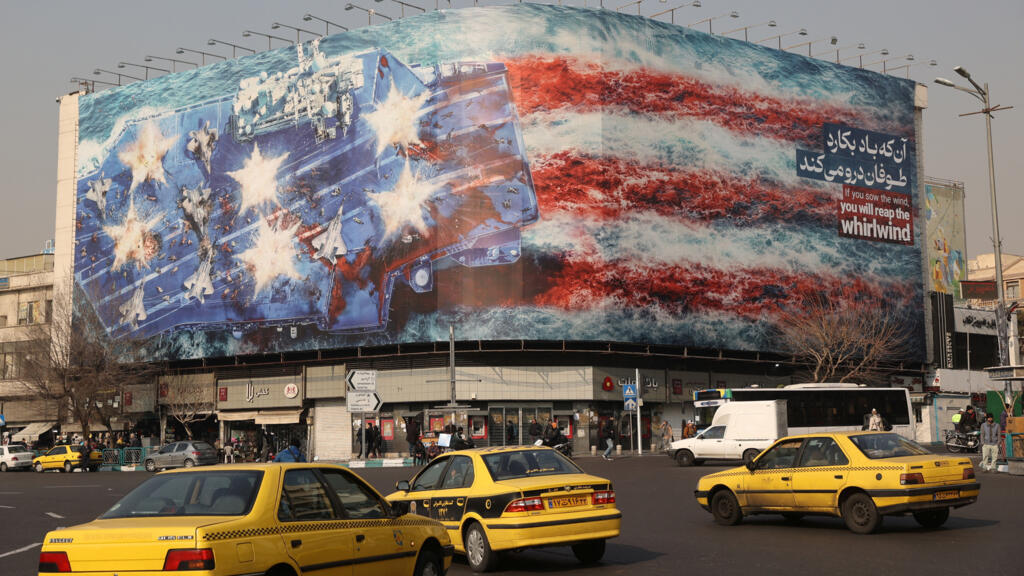
US President Donald Trump said that Washington had "very good talks" on Iran after the two sides held an indirect dialogue in Oman, pledging another round of negotiations next week.
Iran for its part said it expected to hold more negotiations with the United States, hailing a "positive atmosphere" during a day of talks in the Gulf sultanate.
"The Iran-US negotiations in Muscat concluded with an understanding between the parties to continue the talks.
"The parties, while explaining their views and demands, reached an understanding to make a decision regarding the next round of talks in consultation with their capitals," a senior Iranian diplomat was quoted by the semi-official Mehr news agency, which also repeated Trump’s remarks on the meeting.
With an American naval group led by the aircraft carrier Abraham Lincoln in Middle Eastern waters, US and Iranian delegations held talks in Muscat on Friday mediated by Oman without publicly meeting face-to-face.
"We likewise had very good talks on Iran," Trump told reporters on board Air Force One en route to his Mar-a-Lago resort in Florida.
"We're going to meet again early next week," he added.

Shortly after the talks concluded, the US announced new sanctions against shipping entities and vessels, aimed at curbing Iran's oil exports.
Trump also signed an executive order Friday enabling his administration to impose tariffs on goods from countries doing business with Iran, with any potential levies threatening trade with countries including China, Germany and the United Arab Emirates.
Iran confirms talks on nuclear programme with European powers
It was not clear if the moves were linked to the talks, which were the first between the two foes since the United States joined Israel's war with Iran in June with strikes on its nuclear sites.
While Iran warned against further threats after Washington raised the spectre of new military action, Trump said: "If they don't make a deal, the consequences are very steep."
Foreign Minister Abbas Araghchi, who led Iran's delegation in Muscat, said talks "focused exclusively" on the Iranian nuclear program, which the West believes is aimed at making an atomic bomb but Tehran insists is peaceful.
The US delegation, led by Middle East envoy Steve Witkoff and Trump's influential son-in-law Jared Kushner, had also wanted Tehran's backing for militant groups, its ballistic missile program and treatment of protesters on the agenda.

"In a very positive atmosphere, our arguments were exchanged and the views of the other side were shared with us," Araghchi told Iranian state TV, adding that the two sides had "agreed to continue negotiations."
Speaking to the official IRNA news agency, Araghchi expressed hope that Washington would refrain from "threats and pressure" so that "the talks can continue."
(With newswires)