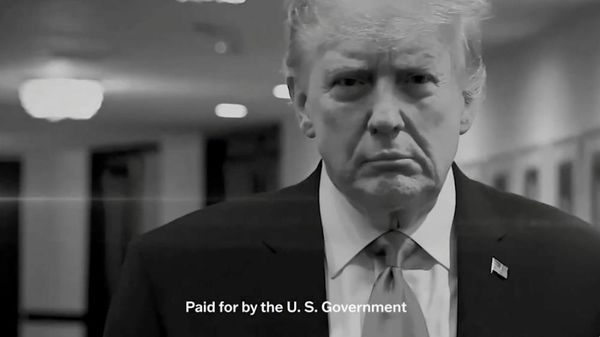
President Donald Trump threatened to destroy Iranian "fast attack ships" if they attempt to disrupt the U.S.'s blockade of the Strait of Hormuz, which went into effect on Monday.
In a social media publication, Trump noted previous attacks against the Iranian navy, saying it is "laying at the bottom of the sea, completely obliterated."

He went on to say that the mentioned ships were not targeted "because we did not consider them much of a threat" but warned that if they move against the blockade, they "will be immediately ELIMINATED, using the same system of kill that we use against the drug dealers on boats at Sea" in the Caribbean and Eastern Pacific.
"It is quick and brutal. P.S. 98.2% of Drugs coming into the U.S. by Ocean or Sea have STOPPED!" Trump added.
Tehran, in turn, said the blockade "amounts to piracy" and threatened a "forceful response" to U.S. actions, including targeting ports across the Gulf.
"Security in the Persian Gulf and the Sea of Oman is either for everyone or for NO ONE," the Islamic Republic of Iran Broadcasting reported Monday, according to The Associated Press.
The U.S. Central Command anticipated that the blockade will impact "vessels of all nations entering or departing Iranian ports and coastal areas." It added that it will allow ships traveling between non-Iranian ports to transit the strait but they won't be able to leave.
Shortly after the announcement, crude prices again climbed past $100 per barrel, reversing earlier declines and signaling fresh volatility.
The Strait of Hormuz remains a critical focal point, acting as a narrow but vital passage that carries roughly one-fifth of the world's oil supply. Even minor interruptions in this corridor tend to send shockwaves through global markets.
The blockade could effectively remove around 2 million barrels of oil per day from global circulation, according to Reuters.
While it does not amount to a full closure of the strait, as ships can travel between non-Iranian ports, the effect is already being felt. Tanker traffic has slowed as shipping companies reassess security risks and weigh the cost of operating in an increasingly uncertain environment, the global news agency reported. As a result, hesitation in the shipping sector is feeding directly into higher prices.
Two key NATO members said they won't join the U.S.'s blockade as tensions between Washington and several members of the alliance continues.
Reuters detailed that Britain and France said they won't be dragged into the conflict by taking part in the operation.