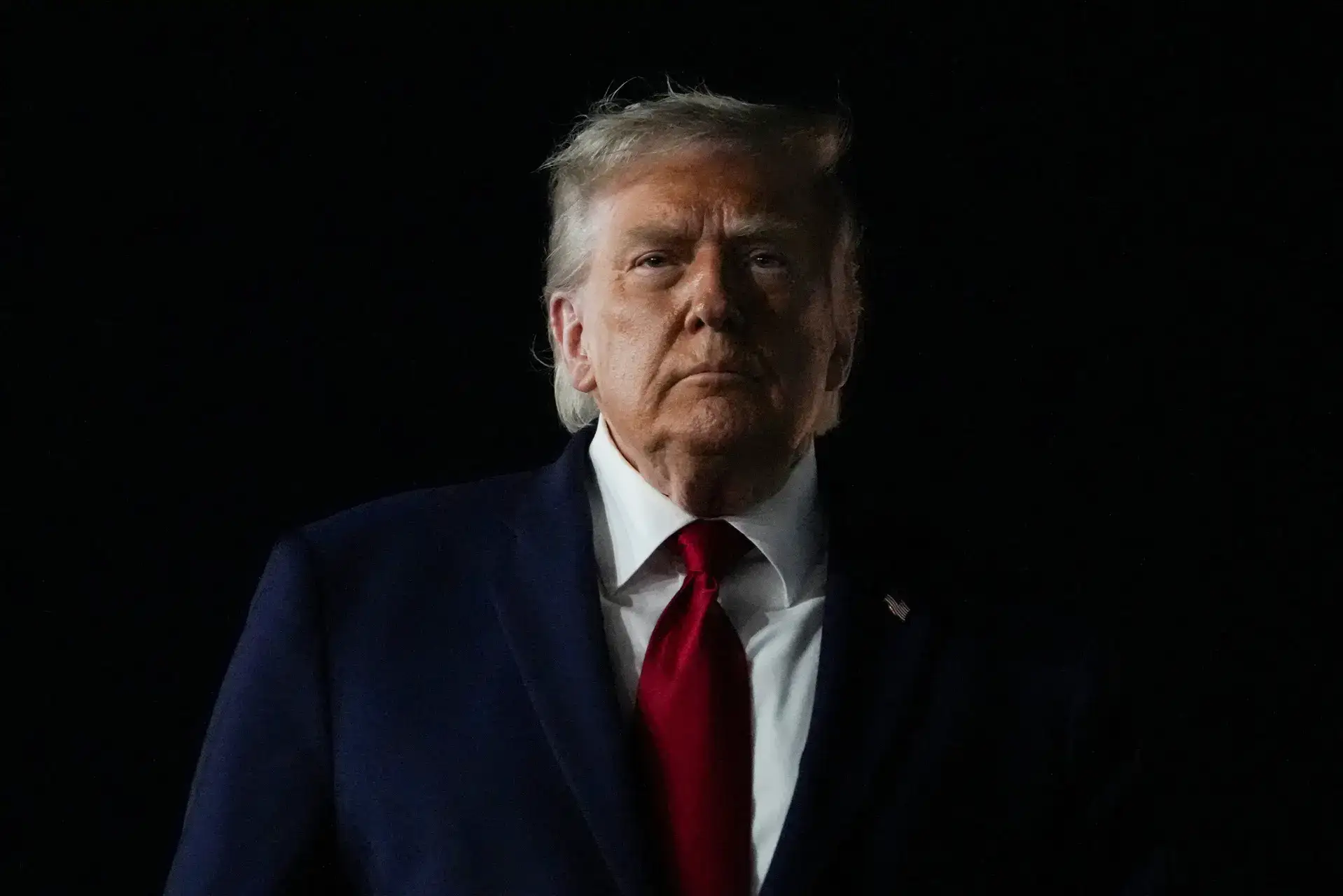
US President Donald Trump said on Tuesday that a Middle East peace deal could be finalised within two to three days, describing ongoing negotiations as being in their "final throes."
"We're in the final throes of what will be a very, very good deal," Trump told reporters on his return from an NBA Finals game, adding that the agreement would come together in "two or three days."
When pressed by reporters on the timeline, Trump said it would not take weeks, just days.
He further added, "We have ongoing negotiations in Iran and with Iran. We could have at least an idea by one or two days from now, but I think it's going well. The blockade continues to hold 100%. Nothing is getting through our blockade. No oil, no income, no nothing..."
Also read: Trump warned Netanyahu against renewed Iran war: Report
The remarks came just a day after Iran said it would halt its military offensive against Israel, following the two countries exchanging missile fire for the first time since April. Iran warned, however, that it would resume operations if Israeli strikes in southern Lebanon continued.
The latest flare-up had been triggered on Sunday when Israel launched airstrikes on Lebanon, prompting Tehran to fire missiles at Israel. Trump had called for attacks to "immediately stop," saying both sides were seeking a ceasefire and that "final" peace negotiations were moving forward.
At the centre of the diplomatic friction is Trump's increasingly open rift with Israeli Prime Minister Benjamin Netanyahu. Trump said over the weekend that Netanyahu would have no choice but to accept any nuclear deal Washington reaches with Tehran, asserting that he alone controls American foreign policy. "He won't have any choice," Trump told the Financial Times. "I call the shots. I call all the shots."
Earlier last week, Trump had a heated phone call with Netanyahu, pressing the Israeli leader to scale back plans for military operations in Lebanon, with Trump at points using expletives to convey his disapproval.
A top Iranian official told CNN on Tuesday that Tehran has "no problem" pushing forward with peace talks, so long as Iran is confident the US side is being honest and sincere. However, separately, Iran signalled it does not see "serious will" from Washington to finalise a deal framework.
Also read: Netanyahu, Trump at odds over the war they started together
Netanyahu, for his part, said Israel had halted attacks on Iran, stopping short of acknowledging a formal ceasefire even as Trump said both countries were aiming for one.
The broader context is a conflict that has been simmering since early 2026. The US and Israel began a series of strikes against Iran in late February 2026, with the stated aim of curtailing Iran's nuclear and ballistic missile programmes. A ceasefire was announced in April, but it has remained fragile, with both sides repeatedly breaching the terms.
Key sticking points in the negotiations include the status of the Strait of Hormuz and the disposal of Iran's highly enriched uranium stockpile. Secretary of State Marco Rubio has said no sanctions on Iran will be lifted in exchange for Iran agreeing to open the strait.
Trump has repeatedly signalled confidence in a deal coming through, though timelines have slipped before. He has previously promised significant progress "in two weeks" on multiple occasions since the April ceasefire was first announced.