Get all your news in one place.
100's of premium titles.
One app.
Start reading
International Business Times
IBT Newsroom

Trump Says "I'm Glad He's Dead" After Robert Mueller Dies at 81 — The Man Who Stood at Ground Zero of 9/11 and the Russia Probe

Former Special Counsel Robert Mueller (Credit: By The White House from Washington, DC)

Robert S. Mueller III — the man who rebuilt the FBI in the smoking ruins of September 11 and later put a sitting president under a microscope — died Friday night at age 81. And the president who has despised him for nearly a decade wasted no time making his feelings known.

Within hours of the death being announced by Mueller's family, President Donald Trump logged onto Truth Social and fired off one of the most raw reactions to a public figure's passing in modern American political history:
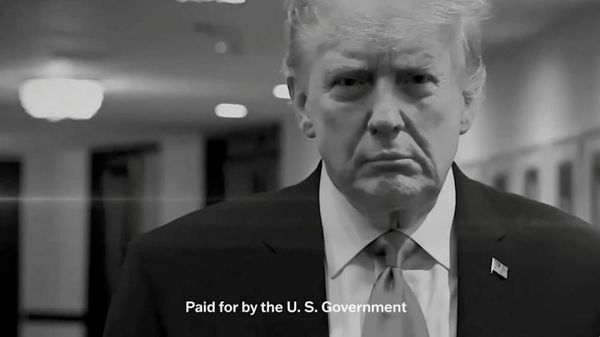
"Robert Mueller just died. Good, I'm glad he's dead. He can no longer hurt innocent people!" — President Donald J. Trump, March 21, 2026

The post drew immediate condemnation from Democrats and veterans' groups — but also encapsulates a feud that has defined American politics since 2017, when Mueller was appointed special counsel to investigate Russian interference in Trump's first presidential campaign.

A Career Built in the Shadows — Until 9/11 Changed Everything

Most Americans had never heard of Robert Mueller when President George W. Bush tapped him to lead the FBI in the summer of 2001. He was a career prosecutor — methodical, private, almost constitutionally allergic to self-promotion. The Senate confirmed him unanimously, 98–0. Seven days later, nineteen hijackers changed the world.

Mueller was sworn in as the sixth FBI director on September 4, 2001. On September 11, the Twin Towers fell, the Pentagon burned, and a Pennsylvania field swallowed Flight 93. Mueller, barely a week into the most powerful law enforcement job in the country, suddenly found himself at the center of American history.

"I had expected to focus on drug cases, white-collar criminal cases and violent crime. September 11th changed all of that." — Robert Mueller, NPR interview, 2013

What followed was arguably the most sweeping transformation of a federal agency in U.S. history. Mueller overhauled the FBI's entire mission — from solving crimes that had already happened to preventing attacks before they occurred. He dispatched agents to more than 30 countries in the weeks after 9/11, restructured headquarters in Washington, and pushed his bureau to build intelligence capabilities it had never had.

Barack Obama, a Democratic president, liked Mueller so much that he asked him to stay on past his 10-year term in 2011. The Senate approved that extension 100–0. He finally left office in 2013, replaced by James Comey. By then, Mueller had served under four presidents — two Republicans, two Democrats — without a whisper of partisan scandal.

From Vietnam Hero to Political Target

Before he was a bureaucrat, Mueller was a soldier. Born in New York City on August 7, 1944, and raised in Philadelphia, he graduated from Princeton in 1966. When a classmate was killed in the Vietnam War, Mueller didn't wait to be drafted — he enlisted in the Marines.

He served two years in Vietnam as a platoon leader. He was wounded in combat. He earned a Bronze Star for rescuing a colleague under intense enemy fire. He earned a Purple Heart. He came home and went to law school at the University of Virginia, graduating in 1973.

The contrast with the man who would one day celebrate his death was not lost on critics. Trump received five military deferments during the Vietnam era, including one for bone spurs.

The Investigation That Defined — and Divided — His Legacy

Mueller had been in private practice for four years when Deputy Attorney General Rod Rosenstein called him back into public service in May 2017. Trump had just fired FBI Director James Comey — and the political firestorm that followed demanded an independent hand.

For 22 months, Mueller and his team worked in near-total silence. No leaks. No television interviews. No public statements. His stern visage and unyielding discipline became a Rorschach test for the nation: to his supporters, he was the last honest man in Washington; to Trump and his allies, he was the face of a "witch hunt."

The investigation resulted in the indictments of 34 people, including 25 Russian nationals and multiple members of Trump's inner circle — among them former campaign chairman Paul Manafort, National Security Advisor Michael Flynn, political operative Roger Stone, and campaign aide George Papadopoulos. Six Trump associates pleaded guilty or were convicted.

But Mueller stopped short of charging Trump himself — citing longstanding Justice Department policy that a sitting president cannot be indicted. Critically, he also refused to exonerate him.

"If we had had confidence that the president clearly did not commit a crime, we would have said so." — Robert Mueller, testimony before Congress, July 2019

A Nation Divided in Its Reaction

Within minutes of Trump's Truth Social post, the political world erupted. The reactions broke almost entirely along partisan lines — though many Republicans stayed notably silent.

— Barack Obama: "Bob Mueller was one of the finest directors in the history of the FBI, transforming the bureau after 9/11 and saving countless lives."

— Sen. Chuck Schumer: "The cruelty is the point. Trump is trying to distract from rising gas prices, his aimless war, ICE abuses, and the Epstein files."

— Andrew McCabe (Former FBI Deputy Director): "He was just an absolute American hero and an American patriot."

— Rep. Seth Moulton (D-MA): "Whether you support the President or not, you know this comment is disgusting. Trump is a horrible human being and an embarrassment to the United States."

Former President George W. Bush — the Republican who first nominated Mueller — issued a statement saying Mueller "led it effectively, helping prevent another terrorist attack on U.S. soil." Senate Minority Leader Mark Warner called him "a dedicated and honorable public servant" who always kept his commitment to the rule of law above partisanship.

The Final Years: Parkinson's, Congressional Subpoenas, and Silence

In his later years, Mueller largely withdrew from public life. He was diagnosed with Parkinson's disease in the summer of 2021, a condition his family disclosed publicly in 2025 after a congressional committee sought to subpoena him in connection with the Jeffrey Epstein investigation. The committee withdrew the subpoena upon learning of his deteriorating health.

He is survived by his wife, Ann Cabell Standish, whom he married in 1966, and their two daughters. Friends recalled that Mueller once relocated his family to Boston specifically to get better treatment for a daughter born with spina bifida at Boston Children's Hospital — a quiet act of devotion that spoke to the man behind the public image.

His family's statement on Saturday was brief: "With deep sadness, we are sharing the news that Bob passed away last night. His family asks that their privacy be respected."

It was exactly the kind of understatement Mueller would have approved of.

Sign up to read this article
Read news from 100's of titles, curated specifically for you.
Already a member? Sign in here
Related Stories
Top stories on inkl right now
One subscription that gives you access to news from hundreds of sites
Already a member? Sign in here
Our Picks
Fourteen days free
Download the app
One app. One membership.
100+ trusted global sources.