Get all your news in one place.
100's of premium titles.
One app.
Start reading
Latin Times
Latin Times
Politics
Pedro Camacho

Trump Says '20 Years Is Enough' for Iran's Nuclear Program as Iranian Foreign Minister Says Tehran Has 'No Trust' in Washington

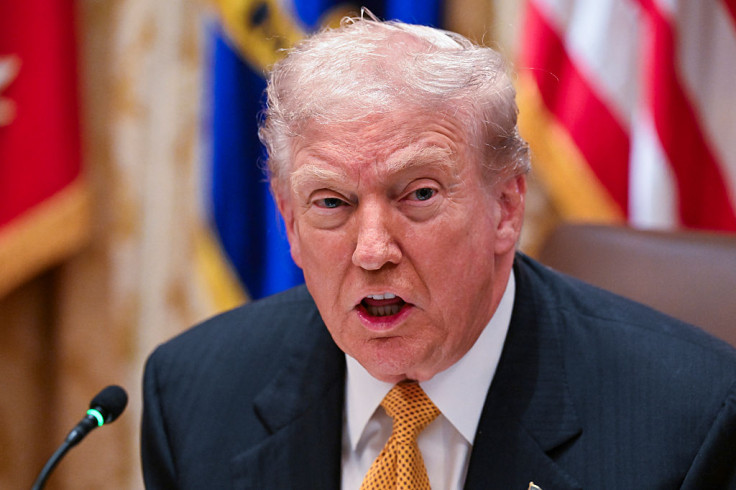
U.S. President Donald Trump (Credit: Photo by Roberto Schmidt/Getty Images)

President Trump said Thursday that Iran's nuclear program should be restricted for at least 20 years, escalating U.S. demands as negotiations over a permanent ceasefire and nuclear agreement remain stalled and Iranian officials publicly question Washington's intentions.

Speaking during his trip to China, Trump signaled support for a long-term limit on Iran's uranium enrichment program, telling reporters that "20 years is enough" as his administration pushes for broader restrictions following months of war between Iran, the United States and Israel. The president added that he looked at the latest proposal from Iran and threw it away, adding: "if they have any nuclear of any form, I don't read the rest of it."

The comments come after previous reports that U.S. negotiators proposed a 20-year suspension of Iranian uranium enrichment during talks earlier this year, an offer Tehran reportedly rejected in favor of a five-year limit.

Hours before, Iranian Foreign Minister Abbas Araghchi had said Tehran has "no trust" in the United States and would negotiate only if Washington proves it is serious about diplomacy, adding a level of uncertainty to Trump's 20-year comments.

"Contradictory messages have made us reluctant about the real intention of the Americans on negotiations," Araghchi said Friday during a visit to New Delhi for a BRICS foreign ministers' meeting reported by Reuters. He added that Pakistan-mediated negotiations between Tehran and Washington had not collapsed but were currently "in difficulty."

Araghchi added that Iran was attempting to preserve the ceasefire "to give diplomacy a chance" while remaining prepared to resume fighting if negotiations fail. He also warned that the situation around the Strait of Hormuz remained "very complicated," adding that ships transiting the waterway should coordinate with Iran's navy unless they belong to countries "at war with Tehran."

The latest exchange comes as tensions in the Gulf continue escalating despite the ceasefire framework announced last month. NPR reported on Thursday renewed incidents involving U.S. and Iranian naval forces near the Strait of Hormuz, while The New York Times reported that Saudi Arabia and the United Arab Emirates separately carried out previously undisclosed retaliatory strikes against Iran during the conflict.

Neither Riyadh nor Abu Dhabi has publicly acknowledged the operations. But the developments suggest the war has evolved beyond a direct U.S.-Iran confrontation into a broader regional conflict, even as diplomatic channels remain technically open.

© 2025 Latin Times. All rights reserved. Do not reproduce without permission.

Sign up to read this article
Read news from 100's of titles, curated specifically for you.
Already a member? Sign in here
Related Stories
Top stories on inkl right now
One subscription that gives you access to news from hundreds of sites
Already a member? Sign in here
Our Picks
Fourteen days free
Download the app
One app. One membership.
100+ trusted global sources.