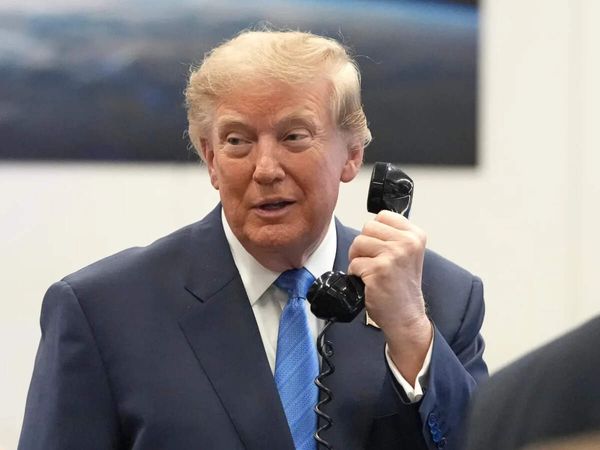
President Donald Trump has unilaterally imposed tariffs on much of the world. Yet the authority to impose tariffs is nowhere to be found in Article II of the Constitution, which is where the limited powers of the president are enumerated. Rather, the authority "to lay and collect Taxes, Duties, Imposts and Excises," as well as the authority "to regulate Commerce with Foreign nations," is to be found exclusively in Article I, which is where the powers of Congress are spelled out.
Trump's trade war thus usurps the constitutional authority of Congress in violation of the separation of powers.
The U.S. Supreme Court has confronted this sort of executive malfeasance before and struck it down with appropriate vigor in a number of notable cases. In Biden v. Nebraska (2023), for example, the Court declared President Joe Biden's student debt cancellation plan to be unlawful because it was an example of "the Executive seizing the power of the Legislature."