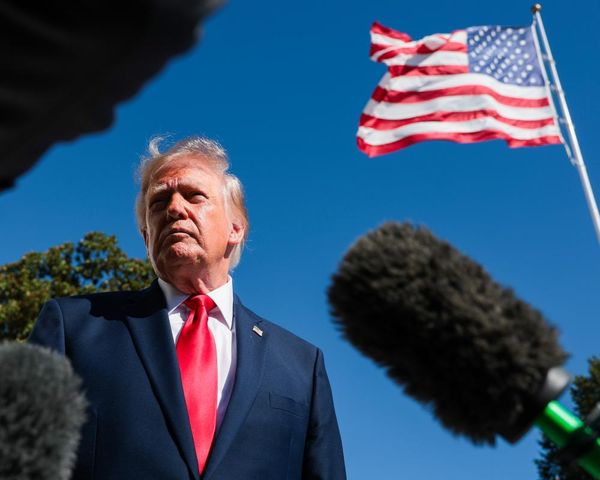
The Trump administration has asked the U.S. Supreme Court to quickly review a case challenging the legality of President Donald Trump's sweeping trade barriers—but the appeal seems likely to run headlong into the same issue that lower courts highlighted when ruling against the tariffs.
In their respective rulings in the tariff case, both the U.S. Court of International Trade and the U.S. Court of Appeals for the Federal District have leaned on the "major questions" doctrine. Under that legal theory, the executive branch can only exercise powers that Congress has explicitly granted. The U.S. Supreme Court invoked that doctrine in other recent high-profile cases, including the 2023 ruling that struck down then-President Joe Biden's student loan forgiveness scheme.
There is no doubt that Congress has, in fact, granted huge tariff powers to the executive branch. But the narrow question before the Supreme Court is whether the law Trump has invoked to impose these tariffs—the International Emergency Economic Powers Act (IEEPA)—grants such broad authority. The law does not contain the word "tariff" and has never been used to impose tariffs before now.