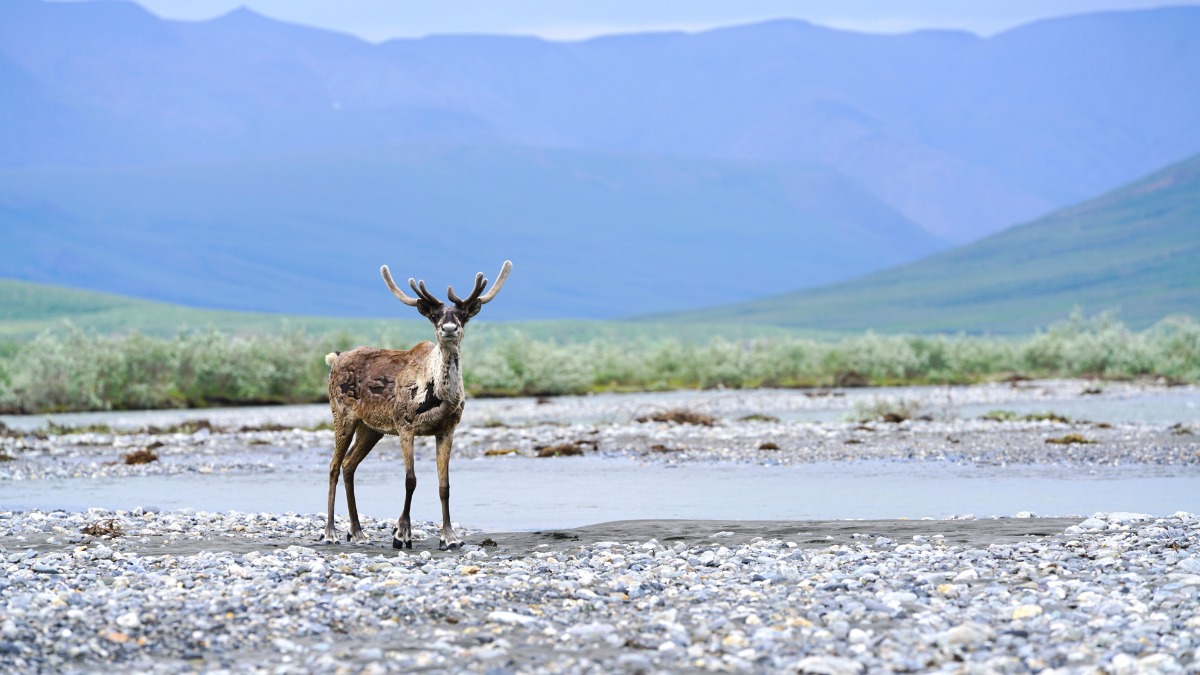
The U.S. government just scheduled another oil and gas lease sale for Alaska’s Arctic National Wildlife Refuge, setting the stage for a fresh battle over a region that’s home to wildlife like grizzly bears, polar bears, gray wolves, caribou, muskoxen and migratory birds and land sacred to the Gwich’in Indigenous people. The Bureau of Land Management announced the sale will take place June 5.
This marks the third attempt to auction off drilling rights in the refuge’s coastal plain, and the first under a law passed last year that mandates four lease sales over the next decade. This latest auction comes after two previous sales fell flat. According to AP, the first, held near the end of the last administration’s first term, has been tied up in litigation ever since.
The second, in early 2025, didn’t attract a single bid. Supporters of drilling, including Alaska’s political leaders, blamed the lack of interest on the limited number of parcels offered. But critics argue the real issue is that the refuge’s fragile ecosystem and cultural significance make it a non-starter for responsible companies.
For the Gwich’in, this is sacred land
The coastal plain, a sprawling stretch of tundra and rolling hills bordering the Beaufort Sea, is a critical habitat for a range of wildlife. For the Gwich’in, who call themselves “the caribou people,” the area is far more than just land. It’s the heart of their way of life. The Porcupine caribou herd, which relies on the coastal plain for calving and foraging, has sustained Gwich’in communities for thousands of years.
“The Trump Administration’s relentless push to auction off this sacred land despite overwhelming public opposition and industry that has already signaled they are not interested makes clear that this administration values corporate interests over the rights and lives of Indigenous peoples,” said Galen Gilbert, first chief of Arctic Village Council.
The fight over its future stretches back decades, with conservation groups and Indigenous leaders on one side and pro-drilling advocates on the other. The Bureau of Land Management estimates the coastal plain could hold between 4.25 billion and 11.8 billion barrels of recoverable oil, though the actual quality and quantity remain uncertain.
For conservationists, those numbers don’t justify the risk. “Any oil and gas company that is even thinking about buying these leases should know that, if they do, they will be sending a clear message to the American people that no place in Alaska is too sacred to drill in a quest for corporate profits,” said Andy Moderow, senior director of policy at Alaska Wilderness League.
The federal government has ignored its legal obligations to protect the land
The Gwich’in aren’t standing idly by. Three Gwich’in governments – Arctic Village Council, Venetie Village Council, and the Native Village of Venetie Tribal Government – filed lawsuits earlier this year to block the lease sales. Their argument? The federal government failed to properly consult with tribes and ignored its legal obligations to protect the land.
The Alaska National Interest Lands Conservation Act, requires federal agencies to safeguard cultural resources and uphold Indigenous subsistence rights. The lawsuits claim the government didn’t meet those obligations, particularly when it comes to the caribou herd. A 2024 study found that caribou are far more sensitive to human activity than believed, raising concerns that even limited development could disrupt their migration and calving patterns.
For Gwich’in communities, the stakes couldn’t be higher. The Porcupine caribou herd is a lifeline. High fuel costs and expensive groceries make subsistence hunting a necessity for many villages, as per Grist, “I’m the main protector of our land that we own, and I do it for all our tribal members,” said Raeann Garnett, 29, tribal chief of the Native Village of Venetie Tribal Government.
Garnett, who has spent her adult life watching the fight over the refuge intensify, worries about the future. “With climate change, as well as the threats of oil drilling, the weather has been changing a lot these past couple of decades,” she said. “I feel worried for the next generations, after us, after me. I want them to have what we have now.”
Climate change is already reshaping the Arctic
The National Oceanic and Atmospheric Administration’s 2024 Arctic Report Card confirmed the region is warming faster than the global average, with fossil fuel use playing a major role. For the Gwich’in, the combination of climate threats and drilling pressure feels like a double blow.
“We condemn these actions, and encourage officials in the Trump administration and our representatives in the Alaska delegation to acknowledge and accept what we as Gwich’in know, and what the majority of the American people agree on,” said Kristen Moreland, executive director of the Gwich’in Steering Committee. “The Arctic Refuge is no place for drilling. It deserves to be protected and preserved for the wildlife that depend on it, and for all our futures.”
Not everyone in Alaska opposes drilling, though. Leaders in Kaktovik, an Iñupiaq community within the refuge, see responsible development as key to their economic future. The Trump administration has framed its push for more lease sales as a way to boost Alaskan energy opportunities.
Bill Groffy, the Bureau of Land Management’s acting director, pointed to last month’s lease sale in the National Petroleum Reserve-Alaska, which drew hundreds of bids, as proof of “robust and continuing demand for Alaskan energy.” That sale, however, is also facing legal challenges, and a separate auction in the Cook Inlet basin last month failed to attract any bidders.
(Featured image: Danielle Brigida)
Have a tip we should know? [email protected]