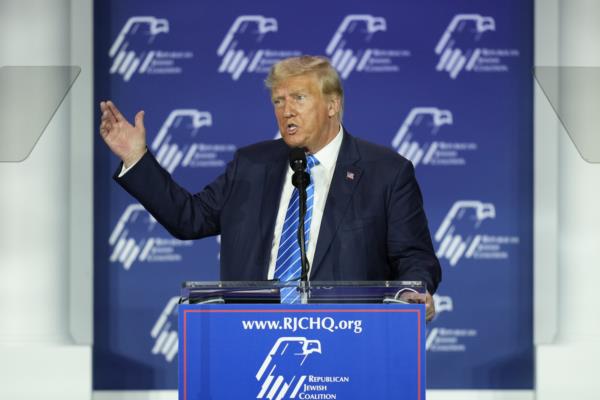
Donald Trump's recent comments regarding Jewish Democrats have sparked controversy within the American Jewish community. Throughout his political career, Trump has made statements that play on stereotypes about Jews and politics. From suggesting that Jews use money to control politicians to accusing Jewish Democrats of being disloyal to Israel, his remarks have drawn both criticism and support.
Trump's comments have highlighted the divide within the Jewish community, with some viewing his statements as promoting harmful antisemitic stereotypes while others see them as addressing valid political concerns. The president's remarks have also brought attention to the complex relationship between American Jews and their political affiliations.

While some Jewish leaders have denounced Trump's statements as divisive and wrong, others have defended him, citing the context of the Israel-Gaza conflict and Democratic criticisms of Israel. The debate over Jewish political allegiance and support for Israel has become a contentious issue, particularly as the Democratic Party grapples with tensions between its pro-Israel Jewish constituency and its more pro-Palestinian progressive wing.
Trump's policies during his time in office, such as moving the U.S. embassy to Jerusalem and supporting Jewish settlements in occupied territories, have garnered support from some segments of the American Jewish community. However, his comments about Jewish Democrats have raised concerns about dual loyalty and antisemitism.
American Jews have historically based their voting decisions on a range of issues and values, including inclusion, diversity, and civil rights. While many American Jews care deeply about Israel, they also express concern for the wellbeing and self-determination of Palestinians.
The controversy surrounding Trump's comments underscores the complexity of Jewish political identity in the United States and the ongoing debate over the relationship between American Jews, Israel, and domestic politics.