President Donald Trump is set to hit the campaign trail in 2026 to solve a key problem for MAGA Republicans: The prospect of running without his name at the top of the ticket.
His association will either end up being a life raft or an anchor for vulnerable Republican candidates in what is shaping up to be a contentious midterm season.
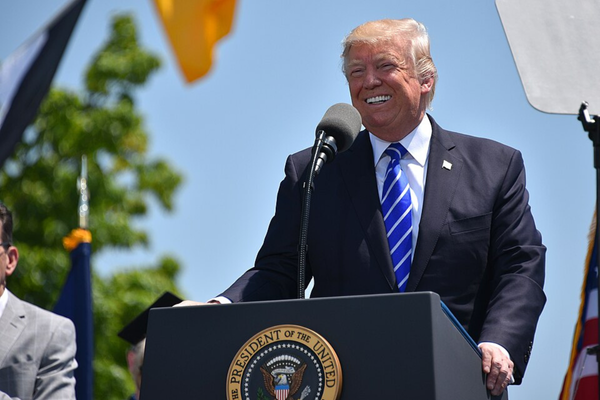
With his poll numbers dropping among many of the new demographics among which he made gains in 2024, the president is at a crossroads. One year into his second presidency Trump is facing possibly his most brutal midterms beatdown yet, as economic conditions have complicated his ability to tout the success of his tariff agenda and issues such as the Jeffrey Epstein investigation have allowed Democrats and even his own conservative critics to paint him as increasingly out of touch with regular Americans.
But there are other parts of the MAGA coalition whose support Trump can seek to turn out even as he works to repair his image among swing voters who backed him over Kamala Harris. Those working class, often rural voters who joined the Trump train in 2016 and swung parts of battleground states such as Pennsylvania to the reddest they’d been in decades could still bolster the MAGA coalition next year. The problem? Experience proves that those voters don’t typically turn out for Republicans unless Trump is on the ballot, too.
Enter the president’s midterm strategy: Near-weekly rallies, two White House insiders told The Washington Post, throughout 2026 to energize the MAGA coalition to the levels of excitement and fervor currently felt by many of the president’s opponents.
White House chief of staff Susie Wiles, one of the key minds behind Trump’s 2024 return to power, hinted at the strategy in a podcast interview this month.
"I haven't quite broken it to him yet, but he's going to campaign like it's 2024 again,” Wiles said on a show run by the right-wing group Moms for America.
“Typically, in the midterms, it’s not about who's sitting at the White House; you localize the election. And you keep the federal officials out of it. We’re actually going to turn that on its head and put him on the ballot,” she continued.
While some are questioning the GOP’s strategy for winning an election on behalf of a party whose president is recovering from some of his worst approval ratings ever, it could work in the party’s overall favor. Generating support among low-propensity members of the MAGA coalition may seem to the White House to be Trump’s best option, given the bleeding occurring among his strongest supporters.


The strategy could be key to saving Senate seats for his party in states such as Ohio, North Carolina and Georgia, which Trump won last year but are the sites of three pitched battles that could decide the upper chamber’s majority next year.
At the same time, it could put frontline House Republican members in a tight spot. Republicans have been warning for months that members in states such as New York, California and purple states across the country are in danger if the president doesn’t course-correct and refocus on an economic agenda that addresses cost of living issues that are now ranked No. 1 in importance for millions of people.
The Post reported that advisers including Mark Mitchell of Rasmussen Reports have made this argument to Trump personally in recent days.
“To the extent to which we were talking about the economic populism message, he wasn’t as interested as I would have hoped,” Mitchell told the paper.
In the months immediately ahead, the president’s ability to reform his coalition will likely be decided on two main economic factors: His ability to address cost of living, including grocery, energy and housing prices, and the broader Republican Party’s bid to address an imminent spike in health care premiums for millions of Americans who purchase insurance plans from the Affordable Care Act (Obamacare) public exchanges.
Subsidies passed as part of the 2022 Inflation Reduction Act expire at the end of the month, and twin Republican majorities in the House and Senate are scrambling to come up with a plan that can win enough support from the factional House GOP majority as well as win enough Democratic votes to pass the Senate, where it will need votes from seven Democrats to pass the 60-vote filibuster threshold.
Those imminent premium spikes could be the nail in the coffin for Trump’s efforts to repair his image among both low-income and middle-income voters, many of whom will be priced out of their plans entirely as annual costs are expected to double or more in January.
Russia open to Ukraine joining EU after peace deal, US officials say
US Army names 2 Iowa Guard members killed in attack in Syria
Ukraine war latest: Trump to offer Kyiv ‘Nato-style security guarantee’
Trinidad and Tobago to open its airports to US military as tensions with Venezuela escalate
Self-described ‘centrist’ channel NewsNation taps another Fox star to host own show
MTG leads outcry after Trump blamed Rob Reiner’s stabbing on his politics