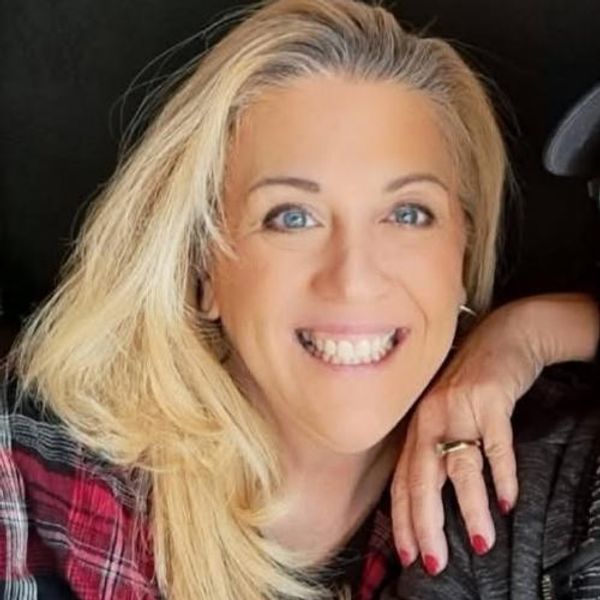
Lethal injections 'shouldn't be very difficult', President Donald Trump said in his first public response to the failed attempt to execute Tennessee prisoner Christa Pike, who survived a double dose of the drug pentobarbital in Nashville on Wednesday evening.
The remarks followed the botched procedure on Pike, 50. Her lawyer, Randy Spivey, said on Thursday that she remained in a critical condition, while her legal team condemned the procedure as 'chemical torture'.
Trump Calls Botched Lethal Injection an 'Interesting Situation'
Trump was asked whether he would push for changes to capital punishment following the failed execution. He called Pike's case an 'interesting situation', with his comments focusing on what he saw as the difficulty of administering a lethal injection.
His remarks contained no specific proposal for changing execution procedures. They also offered no explanation of what had gone wrong during the attempt to put Pike to death at a maximum-security prison.
The attempt ended with Pike alive and requiring medical treatment. Spivey said she was receiving 'life-saving medical care' after surviving the drugs administered by the execution team.
Amnesty USA and the United Nations commissioner on human rights called the execution attempt 'cruel'. Their criticism, alongside the legal team's description of the procedure, concerned an attempt that had failed to kill Pike and left her critically ill.
Seven Needles Used as Staff Struggled To Find a Vein
According to Spivey, the team went through at least seven needles while trying to find a vein in Pike's arms to administer the lethal injection. The search for a suitable vein formed part of the attempt to deliver the drug that was meant to end her life.
The report did not state how much pentobarbital was administered in either dose or how long the procedure lasted. Spivey's update on Thursday described a prisoner who had survived but still needed medical care.
The account does not establish whether the difficulty finding a vein contributed to her survival. It describes the attempts to administer the injection and the failure of the drugs to kill her, without providing a medical explanation linking the two.
Experts cited in the report described her survival as unprecedented. They were not identified, and no supporting assessment was included, leaving the basis for that description unclear.
No separate medical statement or explanation from prison officials was included in the account. The details about the needles, the doses and Pike's condition were attributed to Spivey.
Court Reversed Late Stay
Pike was on death row for the 1995 murder of Colleen Slemmer, her classmate in Knoxville. She had been due to become the first woman put to death in Tennessee in 206 years.
A late stay of execution had intervened before the procedure. A court subsequently overturned that stay, allowing the attempt to proceed on Wednesday evening. The report does not identify the court, set out the grounds for its decision or explain why the late stay had initially been granted.
Pike's condition was the focus of Spivey's update the following day. She remained critically ill and was receiving medical treatment after the attempt to carry out her death sentence.