President Donald Trump has revived one of the most controversial tactics in modern US political history, invoking Willie Horton as he campaigns on crime ahead of the midterms.
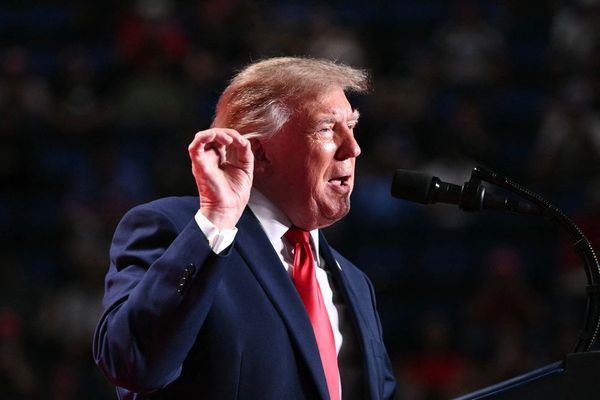
Speaking Wednesday in Gastonia, North Carolina, at a rally for Republican Senate candidate Michael Whatley, Trump repeatedly referenced Horton, the Black convicted murderer whose image became central to a notorious 1988 attack on Democratic presidential nominee Michael Dukakis.
Horton was serving a life sentence in Massachusetts when he was released under a weekend furlough program and failed to return. While on the run, he assaulted a man and raped a woman.
His case was seized on during George H.W. Bush's presidential campaign against Dukakis, then Massachusetts governor. A political action committee supporting Bush produced an advertisement featuring Horton's grainy black-and-white mug shot while attacking Dukakis over the furlough program.
The ad and the broader use of Horton's case became one of the most controversial episodes of the campaign, with critics arguing that it exploited racial fears about Black criminality.
More than three decades later, Trump invoked Horton while attacking former North Carolina Gov. Roy Cooper, the Democrat running against Whatley.
"Willie Horton was a bad guy, really bad guy," Trump said.
Trump compared Horton's case with that of Decarlos Brown Jr., the Black man charged with murdering 23-year-old Ukrainian refugee Iryna Zarutska on a Charlotte commuter train in August 2025.
"Same thing as this, same as, same exact thing," Trump said.
It was the second time in recent weeks that Trump had invoked Horton. During a Las Vegas speech last month, he described Zarutska's killing as a "Willie Horton — modern day" tragedy.
Andra Gillespie, a political scientist at Emory University, said the original Horton campaign had proved politically effective for Bush but was widely criticized over its racial imagery.
"After the Willie Horton ad dropped, Bush established a lead in the polls and never looked back," Gillespie told The Associated Press. "They showed the picture, and you ascribed race onto it. It wasn't sufficiently condemned as racism."
Trump used Wednesday's rally to portray Cooper as soft on crime, at one point gesturing toward a screen displaying mug shots that overwhelmingly featured Black people.
He claimed Cooper had released "some of the worst criminals in the nation into North Carolina" and blamed the former governor for Brown being free before Zarutska's killing.
However, state corrections officials have said Brown was not released early from prison, or under the COVID-era prisoner-release settlement Trump referenced.
Brown had been released before Zarutska's killing in connection with a misdemeanor case. A magistrate ordered that release after Cooper left office.
Trump also described North Carolina as "one of the most violent, one of the worst in the whole nation." FBI data for 2024 ranked the state 19th among the 50 states for its violent-crime rate.
The Republican National Committee defended Trump's remarks.
"Roy Cooper emptied prisons and released thousands of violent monsters onto North Carolina streets," RNC National Press Secretary Natalie Baldassarre said in a statement to the AP.
Cooper campaign chief strategist Morgan Jackson accused Trump of invoking Horton to "stoke racial division" and distract voters from issues including inflation and the cost of living.
The renewed focus on crime comes as Republicans and Democrats battle for control of Congress in November, with North Carolina's Senate contest among the races that could help determine which party controls the chamber.