
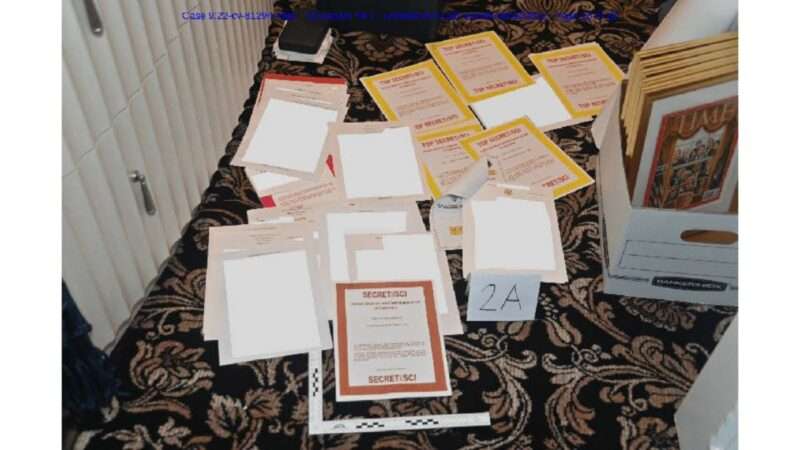
On June 3, in response to a grand jury subpoena served on May 11, former President Donald Trump's lawyers gave the FBI 38 classified documents that he had taken to his residence at Mar-a-Lago, his Palm Beach resort, when he left office in January 2021. Trump lawyer Christina Bobb signed a sworn statement saying "a diligent search was conducted of the boxes that were moved from the White House to Florida." That search, Bobb said, "was conducted after receipt of the subpoena, in order to locate any and all documents that are responsive to the subpoena," which sought material marked as classified. "To the best of my knowledge," she said, "any and all responsive documents accompany this certification."
Despite that certification, according to a brief that the Justice Department filed last night, the FBI found "over one hundred unique documents with classification markings" when it searched Mar-a-Lago on August 8. That discovery provided further evidence that Trump or his underlings violated three federal laws cited in the FBI's search warrant by willfully retaining government records and deliberately obstructing attempts to recover them. But if the Justice Department ultimately decides to prosecute Trump, proving those charges will be difficult, because his cavalier treatment of the records at Mar-a-Lago plausibly reflected habitual carelessness rather than criminal intent.













