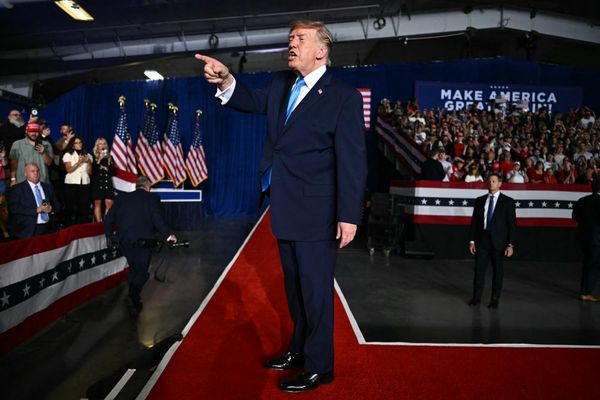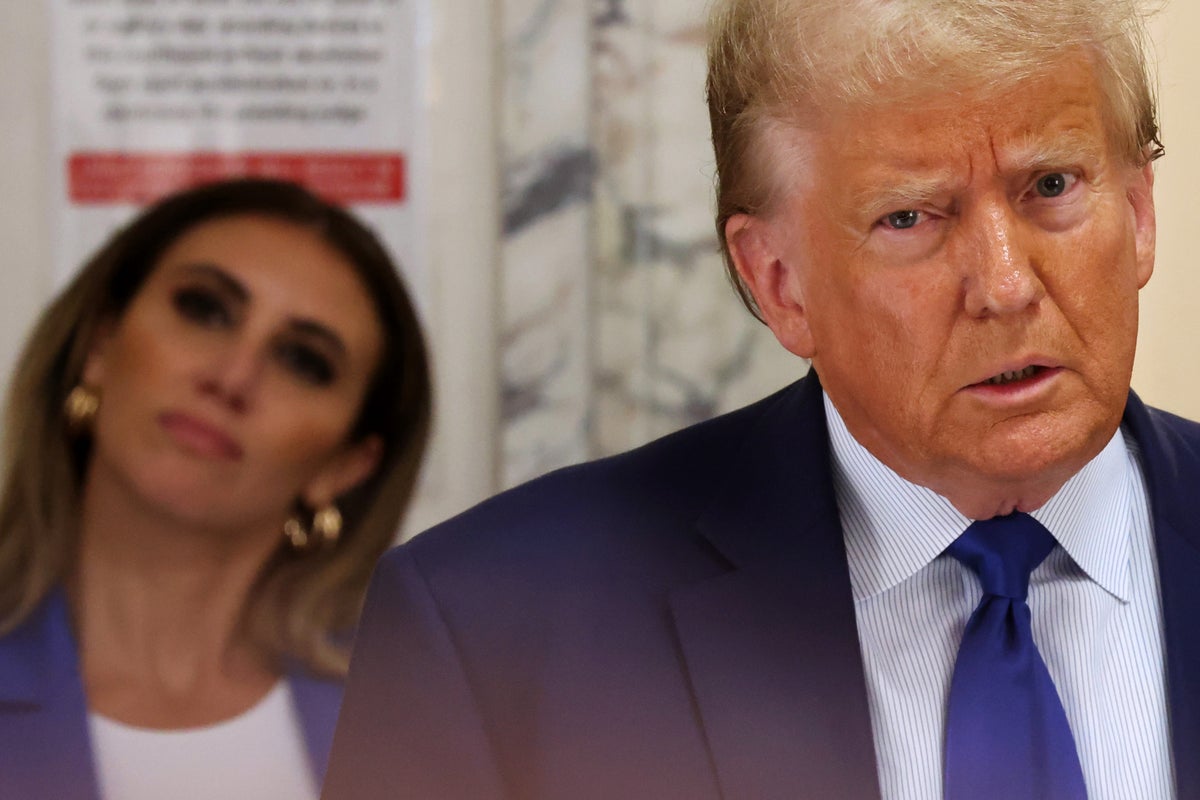
When he left the courtroom in his civil fraud trial on 24 October, Donald Trump learned that another one of his former campaign attorneys pleaded guilty in Georgia, and that his White House chief of staff knew his 2020 election claims were bogus.
The next day, after spending two days fuming at the defence table, arms crossed, shoulders hunched, staring into a middle distance and forced to listen to his former attorney Michael Cohen testify against him, the former president stood outside the lower Manhattan courtroom’s heavy wooden doors and violated a gag order in the case a second time.