-
Mexico remains one of 23 countries Washington classifies as a major drug transit or producing nation for fiscal year 2027, under a determination President Trump sent Congress on Sept. 15.
- Only Afghanistan, Bolivia, Burma and Colombia landed in the harsher category — nations the White House said failed outright to meet their counternarcotics duties. Mexico avoided that label.
- President Sheinbaum used her Thursday morning briefing to demand Washington produce its own accounting of drug use, money laundering and gun trafficking.
-
Mexico points to 92 alleged cartel operators handed to U.S. custody since February 2025 and a standing deployment of 10,000 National Guard troops on the border as evidence of cooperation.
A List Mexico Can't Shake, A Response It Didn't Soften
Every September for years, the State Department has sorted the world's drug-trafficking map into a roster of two dozen or so "major" nations, and Mexico has never come off it. This year's edition, delivered to lawmakers on Sept. 15 and formally entered into the Federal Register on Sept. 18, kept the country in that company alongside 22 others, from Afghanistan to Venezuela. What changed wasn't the list — it was how loudly Mexico's president pushed back.
What the Fine Print Actually Says
Buried inside the designation is a sharper distinction than the headline suggests. Of the 23 nations named, the White House singled out only four — Afghanistan, Bolivia, Burma and Colombia — as having failed over the past year to meet international counternarcotics commitments. That's the category that can carry real consequences. Mexico sits in the milder bracket, credited in the same document with seizing larger drug volumes, dismantling labs and deploying more troops and police along the border, according to reporting from The Latin Times that cited the memorandum's language.
The document paired that credit with a punch list: tighter oversight of supply chains, more private-sector cooperation, sharply increased inspections at ports of entry, bigger security budgets, and — the line that stung hardest — the prosecution of officials accused of shielding the cartels. Washington's most wanted name on that front is Sinaloa Gov. Rubén Rocha Moya, indicted in April by federal prosecutors in New York alongside nine other current or former Mexican officials, and still free, still on leave from his post, nearly five months later.
Sheinbaum's Counterpunch: Judge Yourselves First
Sheinbaum didn't quarrel with Washington's seizure numbers. At her Thursday press conference, she asked for something Washington has never volunteered: a report on what the United States is doing about its own drug consumption, its money laundering, and the flow of weapons crossing south into Mexican territory. "Nosotros no necesitamos que nos juzguen desde afuera," she said — Mexico doesn't need to be judged from outside — framing the fight as a shared failure rather than a one-way report card.
A Sovereignty Speech Built for a Wider Audience
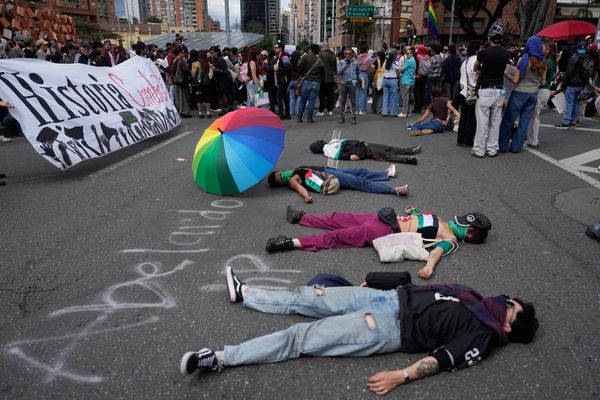
The pushback fit a pattern she'd set the day before. Leading the military parade marking Mexico's 216th Independence anniversary on Sept. 16, Sheinbaum closed her remarks with a line built to travel: "México no se doblega, no se arrodilla," Mexico doesn't bow, doesn't kneel, according to El Universal's account of the ceremony. Paired with her Thursday remarks, the framing turns a technical State Department filing into a sovereignty stand — one aimed as much at Mexican-Americans and the wider diaspora watching the relationship as at Trump himself.
The Receipts Mexico Keeps Handing Over
On substance, Sheinbaum's government leans on a running tally it has built since Trump's second term began. Mexico has transferred 92 alleged cartel operators to U.S. custody in three separate waves — 29 in February 2025, including long-fugitive boss Rafael Caro Quintero; 26 that August; and 37 more in January, all using national-security powers that bypass ordinary extradition, according to a Justice Department announcement and a security-ministry tally. Those transfers run alongside a 10,000-strong National Guard deployment to the northern border that Mexico committed to in February 2025 and has kept in place since, per Mexico News Daily's reporting at the time.
Sheinbaum has also reached for American data to make her case. CDC figures published in late August project 67,798 U.S. overdose deaths for the 12 months ending in March 2026 — a 12.3% drop from the year before — numbers Mexican officials cite as proof the crisis is shaped as much by U.S. demand as by supply crossing the border.
Rubio Raises the Stakes From Ecuador
The sharper edge came days earlier from Secretary of State Marco Rubio, who told reporters in Quito on Sept. 9 that Mexico represents "an even graver challenge" than its neighbors because, in his telling, vast stretches of Mexican territory sit outside government control. It wasn't a new argument from the administration — in January, days after a U.S. operation captured Venezuelan President Nicolás Maduro, Trump told Fox News the U.S. was "going to start now hitting land, with regard to the cartels," a line Sheinbaum has consistently treated as a red line, insisting any unauthorized American military presence on Mexican soil would breach national sovereignty.
Trade, Tariffs and an Election on Both Sides of the Border
None of this happens in a vacuum. Mexico and the U.S. are still working through the fallout of July's mandatory USMCA review, when Washington declined to renew the pact outright and triggered a rolling annual review process instead of a clean 16-year extension, per trade-law analysis of the review. Tariff threats tied to fentanyl have shadowed that process for more than a year. And on Sept. 10, Sheinbaum asked Washington directly not to turn Mexico into what she called a "piñata" for November's U.S. midterm campaign, nor to involve itself in Mexico's own midterms next June, a request reported by the Associated Press.
What Comes Next
Thursday's exchange changes nothing about Mexico's formal status on the list. What it confirms is a rhythm that's held all year: Washington credits Sheinbaum's cooperation, then adds a new demand on top of it, while trade, migration enforcement and the drug fight all sit one flashpoint from colliding. The blacklist renewal is the paperwork. Sheinbaum's bet is that refusing to kneel in public won't cost Mexico at the negotiating table — a wager exporters, migrants and Mexican-American communities on both sides of the border have real reason to watch play out.