Get all your news in one place.
100’s of premium titles.
One app.
Start reading
InsideEVs
InsideEVs
Technology

Trump Is Ready For Chinese EVs: 'Let China Come In'

Less than a year ago, automakers found themselves on the cusp of tariff hell. Car companies were suddenly hit with a gut-punch of tariffs on their supply chains and completed vehicles. 

The U.S. imposed some hefty import duties on all things China in the hopes of protecting domestic manufacturers. Now President Trump is welcoming Chinese cars into the U.S.—as long as they build them here. 

Get Critical Materials in your inbox.

The must-read auto and tech briefing, every weekday.

Welcome back to Critical Materials, your daily roundup for all things electric and tech in the automotive space. Also on deck: which three automakers were crowned as EV innovators and inside Ford's multi-billion-dollar EV reversal. Let's jump in.

25%: 'Let China Come In'

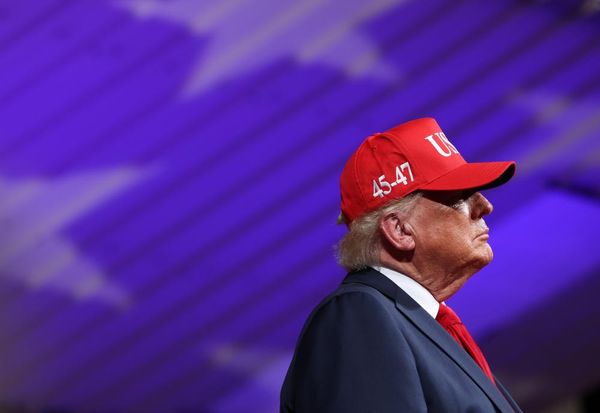
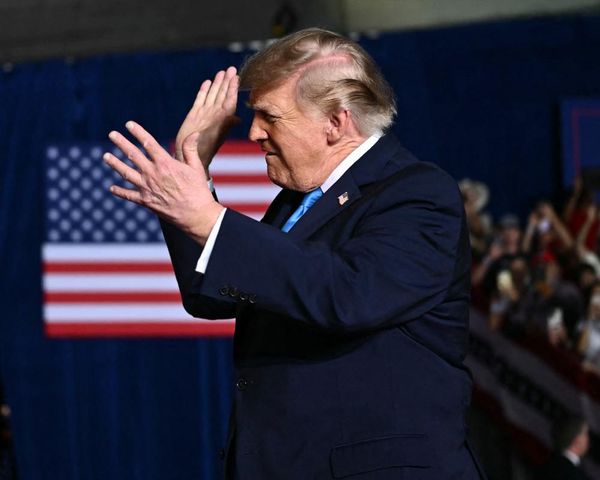
During a speech at the Detroit Economic Club this week, President Donald Trump made it clear that he's perfectly fine with Chinese automakers setting up shop in the States. With just four words, he effectively welcomed brands like BYD and Xiaomi to compete with Detroit in their own backyard: "Let China come in."

On one condition, of course: These companies are welcome as long as they build a plant in America and hire Americans to work the factory floor.

Automotive News spills the details:

“If they want to come in and build a plant and hire you and hire your friends and your neighbors, that’s great, I love that,” Trump said during remarks at a Jan. 13 meeting of the Detroit Economic Club. “Let China come in, let Japan come in.”

Notably, Chinese car companies have been eyeing the U.S. for ages—after all, we have the world's second-largest car market after China itself. Some of the firms were in attendance at CES in Las Vegas last week, apparently testing the waters for their products. 

Geely, the parent company of Volvo and Polestar, confirmed at CES that it was “actively evaluating” a U.S. launch and planned an announcement within the next few years. This would mark the first major Chinese car company to bring its vehicles to Americans without obfuscating them behind a more familiar brand name.

The Big Three know just how disruptive this could be. Ford's Jim Farley admitted to loving China's Apple car (the Xiaomi SU7), and Americans are beginning to warm up to the idea of buying EVs on both side of the political aisle. In fact, new car buyers under 44 are more open to buying a Chinese EV than ever, and that could spell big trouble for little Detroit.

Trump's plan is a bet that Americans win either way. Between more jobs and potentially cheaper cars, it looks like a victory when sketched out on paper. But for Detroit, it spells the possibility of more competition at home than ever before.

50%: These Are The Most Innovative EV Companies

The world's most important EV innovation apparently isn't happening in some R&D building in Silicon Valley, according to a new report. 

Analysis by the Center of Automotive Management (CAM) at Germany's University of Applied Sciences for Economics indicates that the real innovators in the auto trade are none other than BYD, Geely and Volkswagen. The trio manage to best balance three factors—range, energy consumption and charging power. Hence, they lead innovation in the BEV sector in ways that matter most to everyday consumer use.

Electrive explains CAM's findings:

CAM highlights specific examples of innovations that contributed to the success of the top-ranking manufacturers: Geely, for instance, improved range and battery performance through continuous optimisations across brands like Zeekr and Polestar, including new battery systems and efficiency enhancements across multiple model generations. BYD set benchmarks in charging power and system integration with high-performance battery systems and a megawatt charging solution for EVs.

The VW Group focused on the industrial scaling of electric mobility and scored points with range and efficiency improvements in high-volume models such as the ID. family. 

The report shows that Tesla has slipped in the ranks more than any other automaker, falling to eighth place after holding strong at the top of the report from 2016 until 2020. Newcomers Lucid and Rivian sit at 14th and 15th place, respectively, while other legacy automakers pepper the chart.

It's worth mentioning that CAM believes that its rankings also represent the potential for growth. Brands that consistently innovate in the EV sector lay the foundation for sustainable long-term success.

The project's leader, Dr. Stefan Bratzel, also noted that German automakers are quickly catching up to China's fast-moving innovation. He mentions that the German models "exhibit high innovation strength" and can "compete technologically" with Chinese automakers. That's admittedly impressive considering all the praise Chinese automakers have received for in-car tech.

75%: Ford Execs Defend Its Costly EV Reversal

When a company tells you that it's written down nearly $20 billion, it might feel a bit like admitting defeat. But according to CEO Jim Farley, that's far from what it meant at Ford—even if it looked like that on paper.

Ford announced in December that it was scrapping large portions of its EV program. That meant effectively killing off products like the F-150 Lightning EV and repurposing a battery plant for stationary energy storage instead of cars. In Detroit this week, Farley insisted that this was more of a recalibration rather than a full torching of its EV plans.

From AutoCar:

Farley said: “We’re not going backwards on EVs.” Speaking at the Detroit Auto Show, he added: “We're actually accelerating the amount of EVs we're bringing to market. We're just going to do less than we had originally planned. That's why we had to do the write-down.”

Farley's note on doing less means that Ford is simply shrinking its ambitions back a bit. That means scaling back the plan to electrify everything down to just what makes sense.

That next era starts with the EV skunkworks project, which ultimately morphed into the Universal EV (UEV) architecture. This is the Blue Oval shifting its sights towards affordability with a $30,000 EV truck, alongside future low-cost models intended to compete with China. 

AutoCar continued:

Farley insisted that, despite the write-down, Ford has a “full plan” for electric models. He said: “UEV is a full plan that we’ll build in Louisville – 300,000 units. We were number two to Tesla [in EV sales] for many years, and we’re accelerating our pure EVs with UEV, but we're focusing it on the most affordable EV. 

[...]

“One of the big reasons why we had our best sales in a decade is because our affordable models are really hot-selling," he said. "So part of our write-down is that we're retooling for affordable vehicles."

Ultimately, the long-term path remains clear: EVs are the future. Automakers just jumped the gun and tried to push forward too quickly—and then were slammed by utter policy whiplash from the Trump administration. Hence the need for an industry-wide retraction in spending and scaling. 

Did Ford hit the brakes too hard? We’ll know that in due time.

100%: What's The Most Innovative EV Company?

Tesla was once the clear answer. Who do you think is doing the most to push the boundaries of EV and car tech these days?

Got a tip for us? Email: tips@insideevs.com
Sign up to read this article
Read news from 100’s of titles, curated specifically for you.
Already a member? Sign in here
Related Stories
Top stories on inkl right now
One subscription that gives you access to news from hundreds of sites
Already a member? Sign in here
Our Picks
Fourteen days free
Download the app
One app. One membership.
100+ trusted global sources.