US households could face an additional $6,500 (£4,920) in cumulative energy costs through 2040 under federal energy-policy changes made since Donald Trump returned to office, with households in states he won in 2024 projected to face a larger average increase.
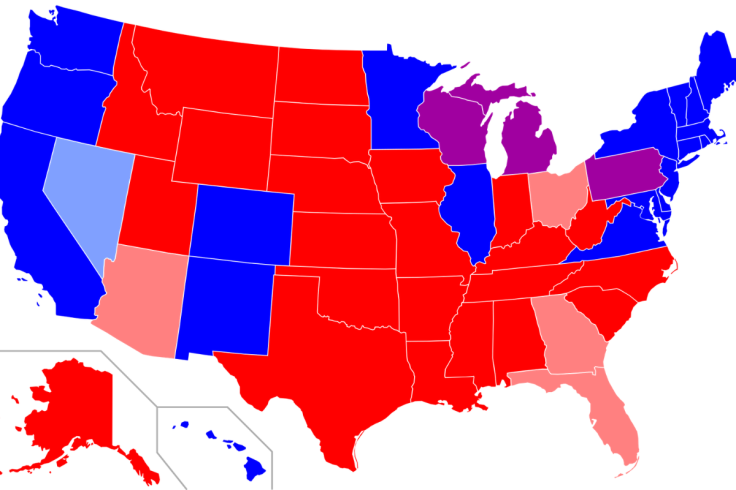
The modelling puts the average additional cost at about $7,000 (£5,298) per household in Trump-voting states, compared with $5,800 (£4,390) in states won by Kamala Harris. The figures cover the 48 contiguous states and represent projected spending over 2026 to 2040, rather than an annual increase in electricity bills.

That distinction matters because the projected hit extends beyond household electricity. The analysis incorporates both power and transport costs, including the effect of policies affecting vehicle efficiency and the development of new energy supplies.
Red-State Exposure Is Not Uniform
The state-level picture is more complicated than a simple Republican-versus-Democrat divide. Oregon, Mississippi, South Dakota, Virginia, and Wyoming are projected to record the largest cumulative household increases, at roughly $9,000 (£6,812) or more through 2040. Oregon is projected to see the biggest increase, at about $9,300 (£7,039) per household.
Three of those five states have Republican governors, showing that the projected financial impact does not map neatly on to party control at state level. The broader Energy Innovation model estimates that federal policy decisions could add $920B (£696B) to household energy spending across the 48 states between 2026 and 2040. It also projects an average additional household cost of $640 (£484) in 2035 alone.
Transport Costs Could Become a Bigger Part of the Bill
The projected increase is not simply about what appears on an electricity statement. Energy Innovation estimates that changes affecting vehicle efficiency and transport-sector innovation could push petrol prices 54 cents (41p) per gallon higher in 2035 and 93 cents (70p) higher in 2040, compared with the policy baseline used in its modelling.
That creates a second route through which energy policy could affect household budgets. Drivers could face higher fuel costs while households also absorb changes in electricity and heating expenses.
The modelling incorporates the effect of the Iran war on energy-price forecasts but says it did not explicitly model individual tariffs. It also describes its household-cost assessment as conservative because some inflationary and technology-price effects are incorporated only where underlying data captures them.
Electricity Prices Are Already Rising
The projections arrive as US residential electricity prices are already increasing. The latest US Energy Information Administration data shows the average residential electricity price reached 18.31 cents (14p) per kilowatt-hour in July 2026, up 4.9% from 17.45 cents (13p) a year earlier.
The new modelling therefore addresses a wider affordability question: whether changes to the US energy mix and transport system could add to costs that households are already experiencing. Energy Innovation also estimates the policy changes could produce $72B (£54.5B) in additional healthcare costs and 37,000 premature deaths from increased air pollution through 2040. Those are modelled impacts, not current recorded household expenses.
White House Disputes the Affordability Outlook
The Trump administration has argued that its energy strategy should reduce rather than increase household costs. The White House says expanding domestic energy production, protecting existing generation, and accelerating new power infrastructure will improve reliability and affordability.
Its March 2026 Ratepayer Protection Pledge also requires participating technology companies to cover new power-generation and infrastructure costs associated with their data centres, rather than passing those costs on to households. The Energy Innovation modelling, however, assesses a different set of federal policy changes, including the One Big Beautiful Bill Act, environmental-rule changes, restrictions affecting renewable projects, and measures affecting vehicle emissions and efficiency.
The result is a significant gap between the administration's stated affordability goals and the model's projected household costs. For consumers, the key figure is not a guaranteed future bill, but the estimated cumulative effect of policy choices on the cost of powering homes and fuelling vehicles through 2040.