The Federal Reserve raised interest rates on Wednesday for the first time since 2023, defying President Donald Trump's demand for cuts to 1% or less. The unanimous move came from a board led by his own hand-picked chairman, Kevin Warsh.
The decision upended months of political pressure. Trump nominated Warsh to succeed Jerome Powell precisely to lower borrowing costs. Instead, Warsh delivered the opposite.

A 12-0 Vote the President Did Not Want
The Federal Open Market Committee (FOMC) voted 12-0 to lift the benchmark federal funds rate by a quarter point to a range of 3.75% to 4%. The increase, the first since July 2023, is designed to cool spending and stop inflation from settling in.
Warsh left little doubt about the reasoning. 'The plain fact is that inflation is too high and has been for too long,' he told reporters in Washington. He added that recent readings 'do not tell me that underlying trends have meaningfully improved'.
The Fed said the action would 'support a timelier return' to its 2% inflation goal. Prices have climbed again in recent months as the US war with Iran, launched in February, pushes oil and energy costs higher and feeds through into petrol, heating bills and a wide range of everyday household goods.
Trump Calls the Board 'Hostile'
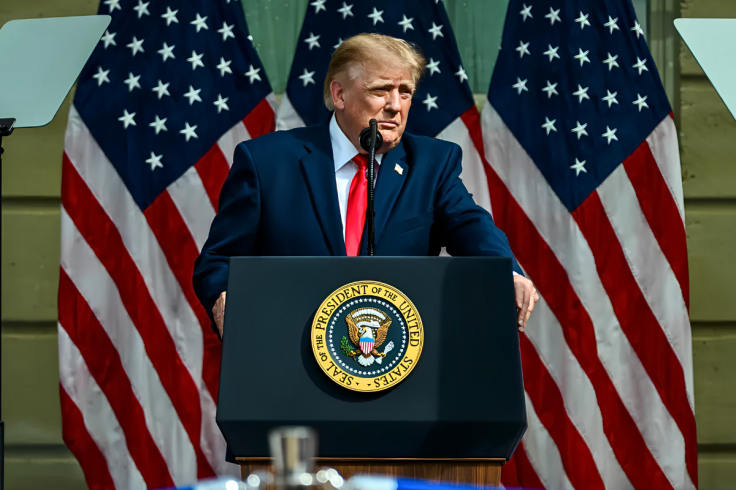
Trump did not hide his frustration. Speaking to reporters in North Carolina before a campaign event, he called the Fed board 'hostile' and repeated that rates 'should be 1% or less' because the country has 'the Best Credit in the World'.
Yet he stopped short of turning on the man he chose. 'I do, I mean I'm relying on Kevin,' Trump said when asked whether he still had confidence in Warsh.
Warsh, for his part, refused to be drawn into the politics. 'We stay in our lane,' he said, declining to discuss the president or questions over the central bank's independence.
What It Means for Your Wallet
The hike hits American households directly. Higher rates make it more expensive to buy a home, finance a car, or carry a credit-card balance.
The yield on the 10-year Treasury note, a benchmark for mortgages and other loans, pushed above 5% this week to its highest level since 2007. The average 30-year fixed mortgage sat near 7.02% on Wednesday, according to Zillow.
Relief is not close. In the Fed's updated projections, officials do not see inflation back at 2% until 2029, a year later than they forecast in June.
More Hikes May Be Coming
The Summary of Economic Projections pointed to further tightening. A strong majority of officials pencilled in at least one more increase this year, and four saw two more as possible. The committee's median forecast now puts the benchmark rate near 4.1% by the end of 2026.
Analysts expect the Fed to skip its October meeting given how close it falls to November's midterm elections. Warsh framed the squeeze as help for those with the least, saying the 'least well off have the most to gain' from stable prices.
Markets disagreed. The Dow Jones Industrial Average closed more than 600 points lower, its worst day in nearly a month.