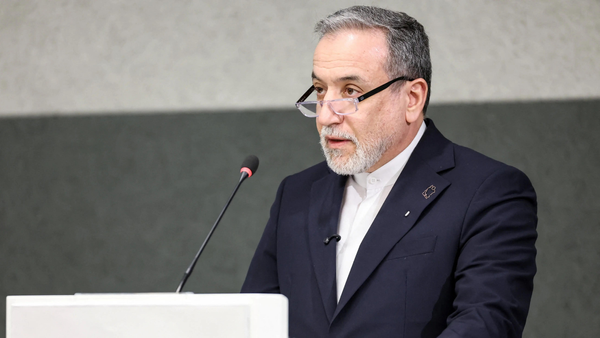
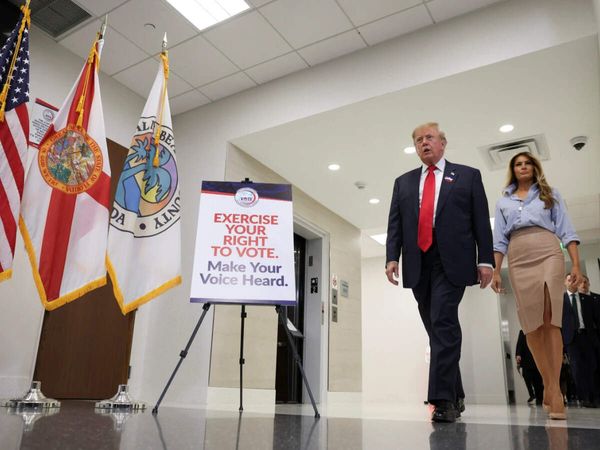
President Donald Trump defended Ohio data centres at a campaign rally in Vandalia on Saturday, 3 October, warning that rejecting artificial intelligence projects would send investment to China.
His remarks came as Republican Senator Jon Husted's Ratepayer Protection Act faced opposition in the Senate and growing concern over household electricity bills.

The rally took place outside Dayton, where Trump urged Ohio voters to support Husted and Republican gubernatorial candidate Vivek Ramaswamy in the 3 November midterm elections. He also asked supporters to 'pretend that I'm on the ballot' and turn out for a Republican victory.
Trump's intervention placed an increasingly awkward local issue at the centre of his national argument about artificial intelligence. Ohio wants the investment and jobs linked to the technology boom. Residents, utilities and consumer advocates are asking who will pay for the electricity infrastructure required to sustain it.
Why Trump Says Ohio Data Centres Matter
'There's so much money to be made for Ohio. You can't just turn them off. They'll go to China,' Trump told the crowd, according to a rally transcript.
He said his administration was taking 'historic action' to ensure large technology companies benefited surrounding communities. Trump also described the United States as ahead of China in the race for what he called 'superintelligence', telling supporters, 'We're beating China.'
Trump's audience is Ohio is totally silent as he simps for data centers and suggests opposition to them is a Chinese psyop pic.twitter.com/dLLTuUGjv8
— Aaron Rupar (@atrupar) October 4, 2026
That argument is politically useful, but it does not settle the bill facing Ohio households. Large data centres require substantial electricity, new substations and transmission infrastructure. They can also place pressure on water supplies and local land, while creating relatively few permanent jobs once construction ends.
Amazon Web Services has announced plans to invest an estimated $10 billion (£7.57 billion) in additional Ohio data centre infrastructure. The company has said its wider investment in the state could exceed $23 billion (£17.41 billion) by 2030, including previous commitments. Ohio's Consumers' Counsel says companies could invest up to $40 billion (£30.28 billion) more in the state's data centres by that year.
Those figures explain the enthusiasm among state officials. They also explain the backlash. The money is enormous, the facilities are difficult to miss and the benefits are not distributed evenly.
Ratepayer Protection Act Faces Test
Trump endorsed legislation introduced by Husted, the Ratepayer Protection Act, which would require states to consider standards for large electricity users such as data centres.
The bill is intended to make major technology companies cover the cost of power generation, transmission lines and other infrastructure needed to serve their facilities. Husted's office said the measure would prevent those expenses being shifted to families and small businesses through higher bills.
'My bill ensures that large data centres pay their fair share of electricity costs,' Husted said in a statement. He said the legislation would make developers responsible for infrastructure costs rather than shifting them to other ratepayers.
The Senate vote on 30 September was 57 to 43, short of the 60 votes needed to advance the bill. Four Democratic senators supported it, according to PolitiFact, while almost all other Democrats opposed the motion. The legislation had passed the House on 16 September by 417 votes to three.
Trump told Ohio voters he would sign the bill 'immediately within 24 hours' if Republicans retained control and could send it to his desk. Yet the bill's protections have already become a point of dispute. PolitiFact reported that the proposed provisions would not impose an absolute federal requirement for technology companies to pay every related cost.
Senate Minority Leader Chuck Schumer called the measure 'a toothless messaging bill' and said its protections were voluntary. That criticism reflects the central disagreement. Supporters say the bill creates a necessary national standard. Opponents argue it does not go far enough to shield consumers.
Ohio has already taken steps of its own. The Public Utilities Commission of Ohio approved an American Electric Power tariff requiring new large data centres to pay for at least 85 per cent of their contracted electricity capacity for up to 12 years, even if they use less.
The policy is designed to prevent ordinary customers from carrying the cost of unused capacity. It has not ended the argument over whether Ohio's incentives, approvals and infrastructure plans offer residents enough protection.
For Husted, the issue is especially sensitive. His previous support for data centre development has become a campaign target for Democrat Sherrod Brown, who accused him of giving 'billions in tax breaks to Big Tech' while making Ohioans 'foot the bill'.
Trump's message offered Husted a clear defence. Turn away the facilities, he argued, and China will take the lead. But voters are being asked to accept a difficult bargain: welcome the artificial intelligence economy while trusting that its power demands will not land on their own bills.
That promise, rather than the technology itself, may decide how Ohio receives the next wave of projects.