Get all your news in one place.
100’s of premium titles.
One app.
Start reading
International Business Times UK
Politics
Jaja Agpalo

Trump Confirms He Is Taking More Aspirin Than Doctors Recommend—Is It Even Safe?

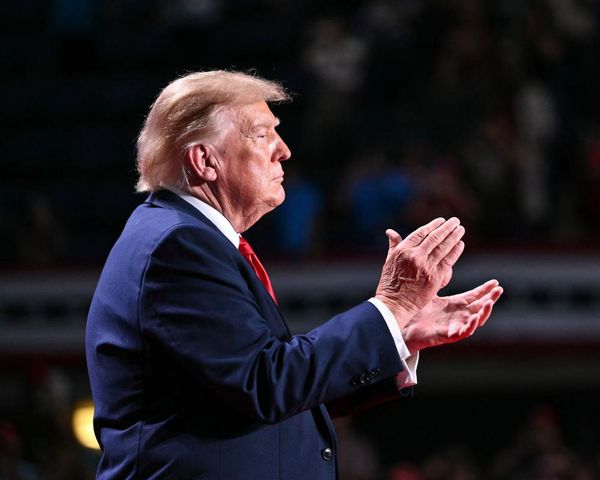
The oldest man ever to occupy the Oval Office sits in his gilded office, popping aspirin tablets like breath mints and casually admitting to his doctors that he's ignoring their guidance.

Donald Trump, now deep into his second term at an age when most world leaders have retired to their estates, has revealed a startling medical habit: he consumes more aspirin than his physicians recommend.
In an interview with The Wall Street Journal, Trump offered no apology, no explanation – merely the bald acknowledgement that he knows better than the medical professionals advising him.

'In retrospect, it's too bad I took it because it gave them a little ammunition,' Trump told the Journal regarding his October cardiovascular and abdominal imaging scans. But nestled within his broader complaints about medical scrutiny lay a more troubling admission: his aspirin consumption exceeds what his doctors have advised.

For a man in his late seventies, leading the world's most powerful nation, this casual disregard for pharmaceutical guidance raises urgent questions – not about politics, but about basic health and safety.

Trump Aspirin Use: What Medical Experts Say About Excessive Consumption

Aspirin, seemingly benign, carries real risks when consumed beyond recommended doses. The standard guidance from the American Heart Association suggests low-dose aspirin – typically 81 milligrammes daily – for individuals with established cardiovascular disease or significant risk factors. For primary prevention in otherwise healthy older adults, the benefits increasingly appear marginal, offset by genuine dangers.

Excessive aspirin consumption carries documented risks. Gastrointestinal bleeding tops the list – chronic overuse can erode the stomach lining, triggering potentially life-threatening haemorrhage.

Haemorrhagic stroke, paradoxically, increases with higher aspirin doses; the very medication meant to prevent clotting can cause uncontrolled bleeding in the brain.

Kidney damage, particularly concerning in older patients, accumulates with prolonged overuse. Tinnitus and hearing loss, though often dismissed as minor, reflect deeper systemic stress from excessive salicylate consumption.

No physician would knowingly recommend the regimen Trump has described. Yet Trump frames medical guidance as optional – something to consider, weigh, and ultimately reject if it conflicts with his preferences or sense of invulnerability.

'I would have been a lot better off if they didn't,' he said of the imaging scans, 'because the fact that I took it said, "Oh gee, is something wrong?"' His concern wasn't medical; it was presentational.

This pattern extends beyond aspirin. Trump briefly attempted wearing compression socks to manage swollen ankles – a standard intervention for circulatory strain and oedema – but abandoned them because he disliked their appearance.

Swollen ankles in an elderly patient warrant attention; they can signal heart failure, venous insufficiency, or kidney problems. Yet aesthetic preference trumped medical prudence.

Presidential Health Transparency: Why Trump's Aspirin Habit Matters

The broader issue transcends Trump's personal health decisions. A sitting president who admits to ignoring medical advice signals something troubling about his approach to governance.

If Trump dismisses his own doctors' guidance on aspirin dosage, what other expert counsel does he discount? Does he similarly override intelligence briefings that contradict his instincts? Does he bypass economic advice because it conflicts with his political messaging?

White House aides insist Trump maintains a vigorous schedule that would exhaust younger men. They emphasise his energy, his work rate, his apparent vitality. Yet the private details paint a portrait of a man managing his body's betrayals through wilful neglect and pharmaceutical self-medication. This isn't vigour; it's denial masquerading as strength.

The question isn't whether Trump is medically fit – his doctors have presumably certified that he is. The question is whether a president who knowingly deviates from medical guidance, who treats doctor's recommendations as suggestions rather than wisdom, can be trusted to make sound decisions when the stakes involve national security, economic policy, or military intervention.

A man who pops aspirin without medical approval whilst dismissing imaging scans as 'ammunition' for critics is signalling a dangerous disconnect between his self-perception and medical reality. For Americans, that's the real health concern.

Sign up to read this article
Read news from 100’s of titles, curated specifically for you.
Already a member? Sign in here
Related Stories
Top stories on inkl right now
One subscription that gives you access to news from hundreds of sites
Already a member? Sign in here
Our Picks
Fourteen days free
Download the app
One app. One membership.
100+ trusted global sources.