While unveiling a flashy new Navy fleet, Trump claimed that “we’re going to have more jobs than we’ve ever had.” But it won’t come from hiring people at scale. They’ll come from machines that don’t unionize, don’t strike, and don’t vote.
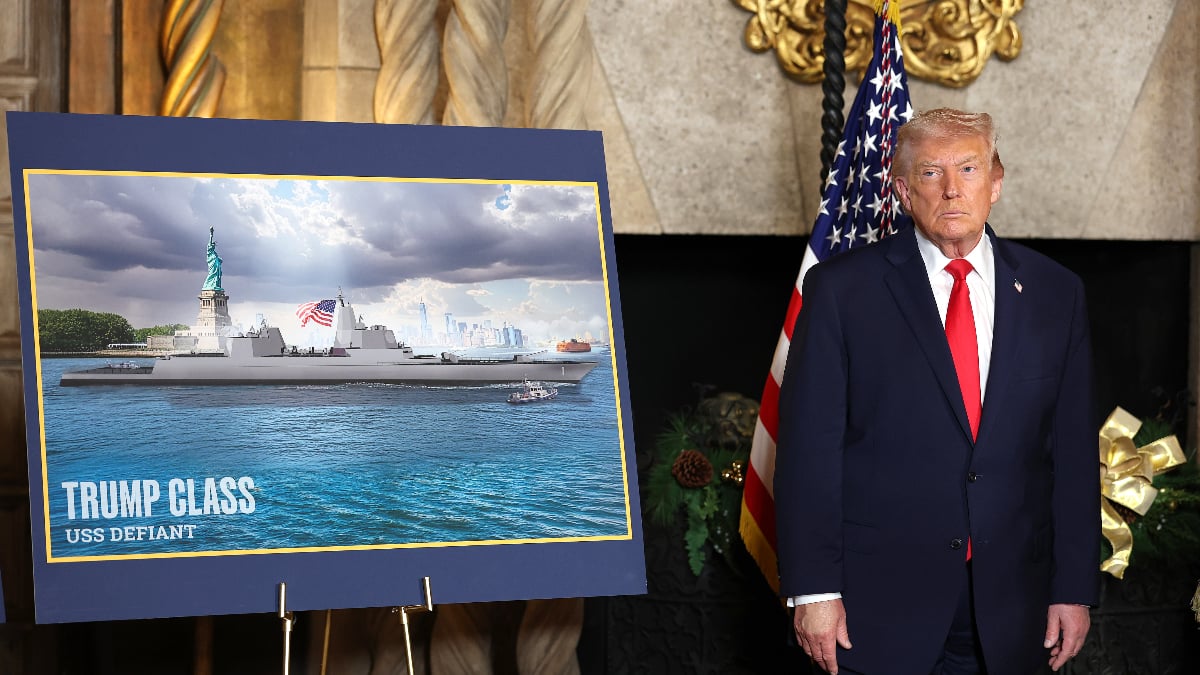
On Monday, Dec. 22, President Donald Trump announced a new generation of U.S. Navy surface warships he claims will be the largest, deadliest, and most technologically advanced vessels ever built. Standing alongside Pete Hegseth and Navy Secretary John Phelan, Trump framed the project as a show of American dominance. He dubbed it the “Golden Fleet,” with more firepower, more lasers, more everything.

But during the press gaggle, Trump messed up his scripted speech, as always. One reporter asked how the administration plans to ensure sufficient workforce availability to build these ships. And then, Trump launched into an answer that unintentionally undercut his own economic messaging. Yes, he said, there will be people. But also robots. A lot of robots. “Robotic factories plus manpower,” as he put it. And then the key line: “We will be employing a lot of artificial things.”
And then the promise landed: “The beauty is, we’re going to have more jobs than we’ve ever had.” But Trump’s vision of job growth appears to include machines. He has long bragged about “record jobs” while blurring the line between labor participation, raw employment numbers, and technological expansion. This time, he’s counting automation, AI-assisted manufacturing, and robotics as part of the employment miracle itself.
The Golden Fleet announcement itself leaned heavily on spectacle. Trump described the ships as armed with advanced missiles and “the most sophisticated laser in the world.” He promised that construction would begin “almost immediately” and that the designs date back to his first term. But behind the theatrics, there was a familiar contradiction.
Trump is selling industrial revival while simultaneously boasting about the automation that historically replaces human labor. U.S. naval shipyards already struggle with workforce shortages, aging labor pools, and long construction delays. The solution Trump offered wasn’t higher wages, training pipelines, or labor protections. It was robots and other forms of… something.
In that light, the “more jobs than ever” claim rings hollow. Automation can boost output and profits, but it does not translate into increased employment. Advanced manufacturing does create some high-skill positions, as Trump puts it “You could have robots but you have to get someone to start the robots and improve the robots.” But it also simultaneously reduces overall labor demand, particularly for blue-collar workers Trump claims to champion.
Social media users picked up on the disconnect immediately. As one user on X put it, “At this point, you know that he’s referring to jobs for robots. The robot job numbers will be used to inflate the job numbers.” So yes, Trump may well deliver “more jobs than we’ve ever had.” He just didn’t say they’d belong to humans.
Have a tip we should know? [email protected]